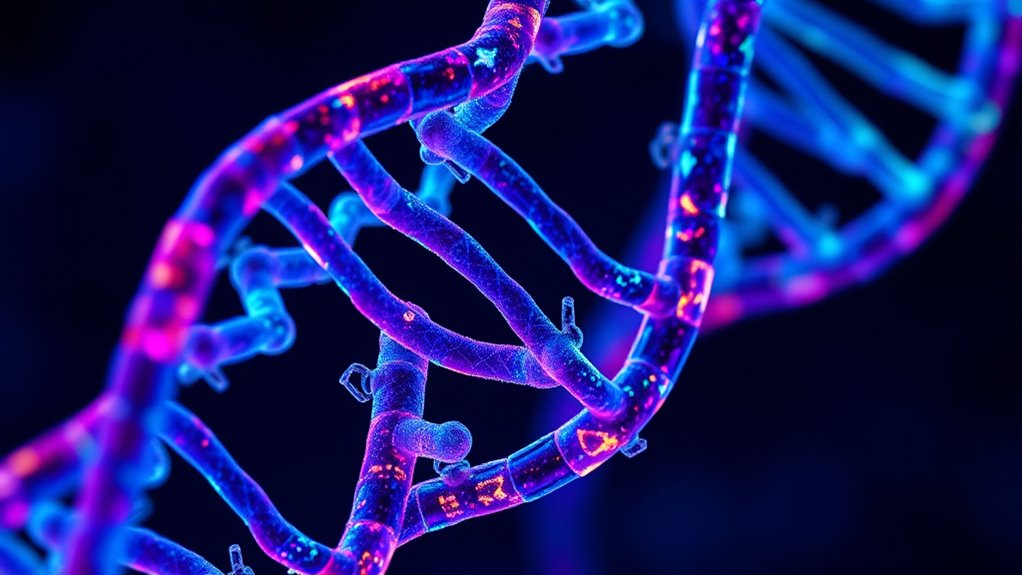

When UV radiation hits your DNA, it causes thymine bases to form dimers, creating bulky lesions that block the replication machinery. This damage stalls or halts the replication fork, leading to incomplete copying of DNA. If not repaired, these lesions can cause mutations and genetic instability. Fortunately, cells have repair systems to fix such damage, but understanding how UV affects DNA replication can reveal ways to protect your genetic health. Keep exploring to learn more.

Get beauty and skincare favorites delivered free with Prime
- Fast, free delivery on millions of items
- Prime Video, Amazon Music and more included
- Member-only deals all year
Key Takeaways
- UV radiation causes thymine dimers, forming bulky DNA lesions that distort the DNA helix.
- These lesions obstruct DNA polymerases, leading to replication fork stalling or slowing.
- The presence of UV-induced damage increases the risk of replication errors and fork collapse.
- Cells activate repair mechanisms like nucleotide excision repair to remove lesions and resume replication.
- Translesion synthesis polymerases bypass lesions, allowing replication to continue but potentially introducing mutations.
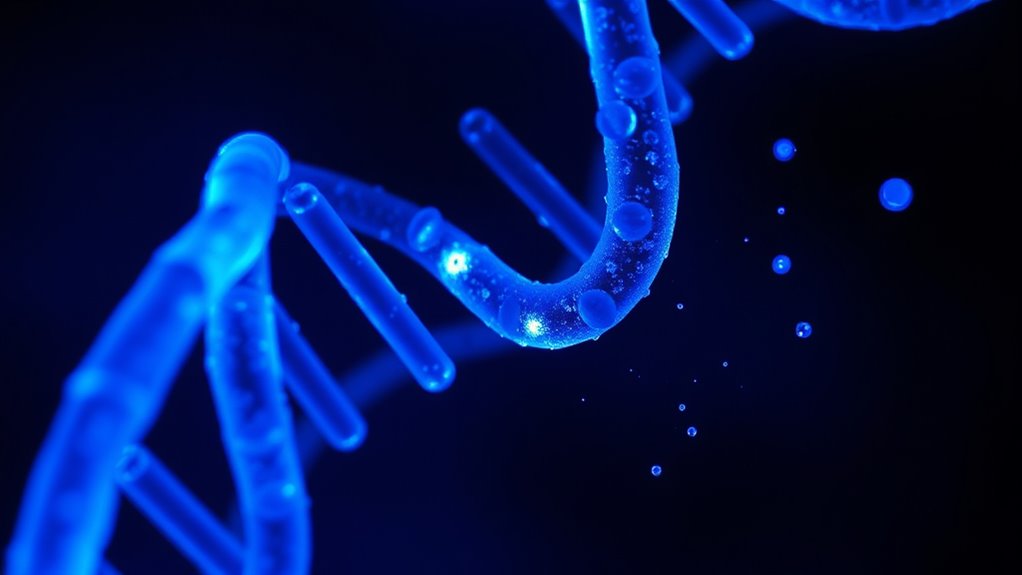
Ultraviolet (UV) radiation can profoundly impact DNA replication by causing specific types of damage to the genetic material. When your skin or cells are exposed to UV rays, the energy from the radiation can induce chemical changes in the DNA, leading to the formation of lesions such as thymine dimers. These abnormal structures occur when two adjacent thymine bases bond together, distorting the DNA helix and obstructing the normal replication process. If left unrepaired, these damages can cause replication forks to stall or collapse, resulting in incomplete or faulty DNA copying. This disruption threatens the integrity of your genetic code and can lead to mutations if the errors are passed on during cell division. Repair mechanisms such as nucleotide excision repair (NER) are essential for correcting these damages and maintaining genetic stability. To combat the harmful effects of UV-induced damage, your cells have evolved sophisticated mechanisms for DNA repair. These repair systems recognize and correct lesions before they cause permanent mutations. For example, nucleotide excision repair (NER) is a key pathway that detects bulky lesions like thymine dimers. It excises the damaged section and synthesizes a new, correct segment using the undamaged strand as a template. By efficiently repairing DNA damage, your cells prevent mutations from becoming permanent fixtures in your genome. This process is crucial for mutation prevention, helping to maintain genetic stability and protect against diseases like skin cancer, which can develop when UV damage accumulates over time.
During DNA replication, the presence of UV-induced damage can cause the replication machinery to slow down or stop altogether. When the replication fork encounters a lesion like a thymine dimer, specialized translesion synthesis polymerases may be recruited to bypass the damage. While this allows replication to continue, it often comes with a risk: these polymerases are more error-prone, increasing the chance of introducing mutations. However, the cell’s repair systems usually step in afterward to fix any mistakes. The balance between damage tolerance and repair is critical for mutation prevention, ensuring that replication proceeds efficiently while minimizing errors that could compromise cell health or lead to disease.
As an affiliate, we earn on qualifying purchases.
Frequently Asked Questions
Can UV Exposure Cause Mutations During DNA Replication?
Yes, UV exposure can cause mutations during DNA replication. When UV light hits your skin, it forms DNA photoproducts like thymine dimers, which can lead to errors during replication. These damage sites often become mutation hotspots, increasing the risk of mutations. If the cell’s repair systems don’t fix these errors, you might develop genetic mutations that could lead to skin cancers or other genetic issues later on.
How Do Cells Repair Uv-Induced DNA Damage?
When your cells repair UV-induced DNA damage, they rely on specialized mechanisms. Photolyase enzymes detect and directly reverse thymine dimers caused by UV light, restoring DNA integrity. Additionally, DNA polymerase fidelity guarantees accurate copying during repair, minimizing errors. These processes work together to maintain your genetic stability, preventing mutations and allowing your cells to recover from UV exposure effectively.
Is UV Damage to DNA Reversible?
UV damage to DNA is reversible through DNA repair mechanisms. Your cells use processes like nucleotide excision repair to fix UV-induced lesions, preventing mutations. When damage occurs, the repair machinery identifies and removes affected nucleotides, restoring the DNA’s integrity. This active repair helps you avoid mutations and maintain healthy genetic information, demonstrating the remarkable ability of your cells to counteract UV damage and ensure proper DNA replication.
What Roles Do Specific Enzymes Play in UV Damage Response?
You won’t believe the superhero team inside your cells fighting UV damage! Enzymes like DNA polymerase guarantee high fidelity during replication, catching mistakes caused by UV. Meanwhile, nucleotide excision repair enzymes act like meticulous detectives, slicing out damaged DNA segments and filling in the gaps. Together, these enzymes protect your genetic blueprint, preventing mutations and maintaining your health even after intense UV exposure.
Are Some DNA Regions More Susceptible to UV Damage Than Others?
Some DNA regions are more susceptible to UV damage because of differences in DNA sequencing and chromatin structure. You’ll find that areas with open chromatin are more exposed and prone to damage, while tightly packed regions are less accessible. UV causes thymine dimers, and these are more likely to form in accessible, actively transcribed regions. Understanding these differences helps explain why certain parts of your DNA are more vulnerable.
Conclusion
Now that you understand how UV light can damage your DNA during replication, it’s clear that prevention is key. UV rays can throw a wrench in your cells’ plans, leading to mutations or even cancer if left unchecked. Think of it as a wake-up call—you need to shield your skin and stay protected. After all, an ounce of prevention is worth a pound of cure, so don’t leave your health to chance when it comes to UV exposure.
Halloween Picks
halloween
As an affiliate, we earn on qualifying purchases.