
You might think a tan looks vibrant and healthy, but it actually hides skin damage caused by UV rays. When your skin darkens, it’s a sign of your body trying to protect itself, not good health. Prolonged sun exposure breaks down collagen and elastin, speeding up aging and increasing cancer risk. So, that glowing tan isn’t a sign of liveliness—it’s a warning sign of damage. Keep going to find out how to protect your skin better.

Get beauty and skincare favorites delivered free with Prime
- Fast, free delivery on millions of items
- Prime Video, Amazon Music and more included
- Member-only deals all year
Key Takeaways
- A tan creates a vibrant appearance that people associate with vitality, despite indicating skin damage.
- External skin color changes can mask underlying cellular damage caused by UV exposure.
- Tanned skin is often perceived as a sign of health, but it actually reflects stress and injury to skin cells.
- The bronzed look is a superficial illusion that hides signs of aging and damage beneath the surface.
- People mistakenly equate a desirable glow with good health, ignoring the long-term risks of UV damage.

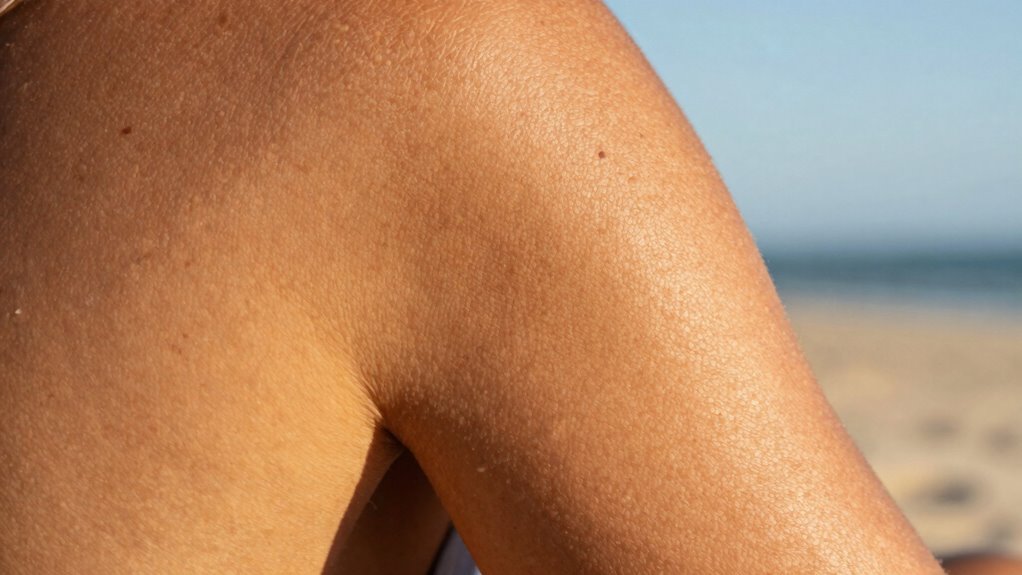
Have you ever wondered why many people associate a tan with good health? It’s a common belief, but the truth is, that sun-kissed glow often masks more than it reveals. When you spend time in the sun without protection, your skin responds by producing more melanin, which gives you that darker, bronzed appearance. This is a natural defense mechanism against UV radiation, but it’s also the reason why many perceive tanned skin as a sign of vitality and well-being. Unfortunately, this misconception can lead you to overlook the hidden dangers lurking beneath the surface.
Sun exposure, especially when excessive or unprotected, accelerates skin aging. UV rays penetrate deep into your skin, breaking down collagen and elastin fibers, which are essential for maintaining firmness and elasticity. Over time, this damage causes wrinkles, fine lines, and sagging skin—hallmarks of premature aging. When you see someone with a deep tan, it might seem as if they’re healthier or more vibrant, but in reality, their skin has been compromised. The outward appearance of a glow can be misleading, as it often hides signs of underlying damage that will manifest years later.
Tanning can also lead to uneven skin tone and age spots, further emphasizing how sun exposure accelerates skin aging. The more you expose your skin to harmful UV rays, the more likely you are to develop these signs of aging early. This creates a false impression that a darker complexion equals better health, but in truth, it’s a sign that your skin has been subjected to stress and damage. Many people don’t realize that the tan they’re proud of could be the result of cellular damage, which increases the risk of skin cancer, and other skin conditions.
Furthermore, the pursuit of a tan often encourages prolonged exposure to the sun, compounding the problem. The more you stay in the sun without protection, the more you accelerate skin aging and increase your risk of serious health issues. It’s a cycle that many fall into because the visible results seem positive—more color, a more energetic look—but the long-term effects are far less appealing. A healthy glow should come from good skincare and proper protection, not from risking your skin’s health for temporary beauty.
In addition, understanding UV radiation and its effects can help you make informed decisions about sun safety and skin health. In the end, it’s important to recognize that a tan isn’t an indicator of good health. Instead, it’s a sign that your skin has been exposed to damaging UV radiation, speeding up skin aging and increasing health risks. That youthful glow you admire may come at a much higher cost than you realize.
As an affiliate, we earn on qualifying purchases.
Frequently Asked Questions
Does a Tan Provide Any Long-Term Skin Protection?
A tan doesn’t provide long-term skin protection. While it offers some temporary sun protection, it’s not enough to prevent skin damage or skin aging. Sun protection should include broad-spectrum sunscreen, protective clothing, and seeking shade, rather than relying on a tan. Tanning can mask skin damage, but it doesn’t promote true skin rejuvenation. Prioritize proper sun protection to maintain healthy, youthful skin over time.
How Does Tanning Affect Different Skin Types?
Sure, tanning affects every skin type differently. Your skin’s response to UV rays depends on your skin type, with fair skin reacting more dramatically and dark skin showing less noticeable change. Tanning can lead to skin damage regardless of your skin type, but it might be less obvious in darker skin. So, whether you burn or just darken, remember: tanning’s impact isn’t uniform, and damage doesn’t discriminate.
Are There Safer Alternatives to Tanning for a Healthy Glow?
You can achieve a healthy skin glow with natural alternatives like self-tanning lotions, sprays, or gradual tanning moisturizers. These options give you a bronzed look without exposing your skin to harmful UV rays. Additionally, maintaining a good skincare routine, staying hydrated, and eating antioxidant-rich foods can enhance your skin’s natural radiance. These methods are safer and help you maintain a vibrant, glowing complexion without the risks associated with tanning.
Can Tanning Cause Premature Skin Aging?
Tanning definitely causes premature skin aging, busting common tanning myths. When you expose your skin to UV rays, whether from the sun or tanning beds, you accelerate skin aging, leading to wrinkles, age spots, and loss of elasticity. You might think a tan looks healthy, but it actually damages your skin’s collagen and elastin. So, avoid tanning to protect your skin’s youthfulness and maintain a youthful, vibrant appearance naturally.
What Are the Signs of Skin Damage From Tanning?
You can spot skin damage from tanning through signs like uneven pigmentation changes and increased sunburn risk. Your skin might look darker in some areas, develop rough patches, or show redness and peeling from sunburn. These signs indicate your skin’s protective barrier is compromised, raising your risk of further damage and premature aging. It’s crucial to protect your skin by avoiding excessive sun exposure and using broad-spectrum sunscreen.
Conclusion
Remember, a tan might make you glow like a sunset, but it’s just a fleeting shimmer hiding the true health beneath. Don’t let the golden hue fool you into thinking you’re invincible; real energy shines from within. Like a house built on a solid foundation, genuine health radiates from good habits and self-care. So, don’t chase the illusion of sun-kissed perfection—nurture your inner glow, and let your true health be your brightest, most enduring light.
Halloween Picks
halloween
As an affiliate, we earn on qualifying purchases.