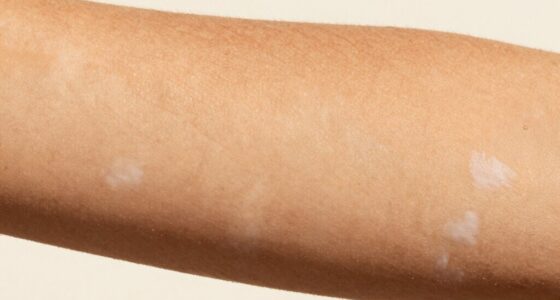
A deep tan doesn’t mean your skin is stronger; in fact, it signals past UV damage. Melanin increases as your skin tries to protect itself, but this isn’t a sign of resilience—it’s an ongoing response to harm. Tanning might give the appearance of tougher skin, but it’s actually a last-ditch effort to prevent further damage. If you want to understand how UV exposure affects your skin, there’s more to uncover below.

Get beauty and skincare favorites delivered free with Prime
- Fast, free delivery on millions of items
- Prime Video, Amazon Music and more included
- Member-only deals all year
Key Takeaways
- A deep tan results from increased melanin production due to UV damage, not from stronger or healthier skin.
- Melanin absorbs UV radiation, indicating prior harm, not enhanced skin resilience or strength.
- UV rays damage collagen and elastin, causing aging and vulnerabilities regardless of skin color.
- Tanning can conceal underlying damage, giving a false impression of skin robustness.
- Protecting skin requires sun safety measures, as darkening does not prevent UV-related harm.

Getting a deep tan might give your skin a sun-kissed glow, but it can also impact your skin’s strength in unexpected ways. When you spend time in the sun, your body responds by increasing melanin production, which darkens your skin and offers some protection against UV damage. However, this process doesn’t mean your skin is becoming stronger or more resilient. Instead, it’s a sign that your skin is trying to shield itself from harmful rays. The darker your tan gets, the more UV damage your skin has absorbed, even if it looks healthy on the surface.
A deep tan often creates a false sense of security. You might think that a darker hue indicates thicker or more robust skin, but the truth is quite the opposite. The increased melanin production is your skin’s last-ditch effort to prevent further harm. It’s not strengthening your skin; it’s signaling that your skin has already been compromised. The UV rays penetrate deep into your skin layers, damaging collagen and elastin fibers that keep your skin firm and elastic. Over time, this damage accumulates, leading to premature aging, wrinkles, and even skin cancer. So, the darker your skin gets, the more you’re exposing yourself to this invisible harm.
Furthermore, a deep tan doesn’t mean your skin has become more resistant to UV rays. In reality, it’s more vulnerable once the protective effects of melanin reach their limit. The more you tan, the more UV damage is inflicted, regardless of how dark your skin appears. This damage can weaken your skin’s natural barrier, making it less capable of repairing itself and more prone to dryness, irritation, and other issues. UV damage can cause long-term harm even if your skin appears darker and healthier temporarily. Additionally, understanding the effects of UV exposure can help you better appreciate why prevention is essential for maintaining skin health. Recognizing that melanin production is a response to harm, not resilience, underscores the importance of protective measures. Proper sun protection measures are crucial to prevent cumulative damage and preserve your skin’s health over time. Protecting your skin involves more than just chasing a deep tan. It’s about understanding that UV damage isn’t visible on the surface and that melanin production is a response to harm, not a sign of resilience. Wearing broad-spectrum sunscreen, seeking shade, and avoiding prolonged sun exposure are the best ways to keep your skin healthy and strong. Remember, a natural, unblemished complexion free from excessive UV damage is far more valuable than a deep tan that masks underlying harm. Your skin’s true strength comes from prevention, not from the superficial appearance of a darker shade.
As an affiliate, we earn on qualifying purchases.
Frequently Asked Questions
Can a Deep Tan Cause Long-Term Skin Damage?
Yes, a deep tan can cause long-term skin damage. Indoor tanning exposes your skin to concentrated UV rays, increasing the risk of premature aging and skin cancers. The darker pigmentation from tanning may seem protective, but it doesn’t prevent damage. UV exposure harms your skin’s DNA, leading to wrinkles, age spots, and increased cancer risk over time. Protect your skin by avoiding indoor tanning and using broad-spectrum sunscreen.
How Does Tanning Affect Skin Aging?
Tanning subtly accelerates skin aging by affecting skin pigmentation and collagen. As you expose your skin to UV rays, it stimulates melanin production, which can lead to uneven pigmentation over time. Simultaneously, UV exposure promotes collagen breakdown, reducing skin elasticity and causing fine lines and wrinkles. So, while a tan might seem charming, it quietly ages your skin, making it less resilient and more prone to early signs of aging.
Are There Safer Ways to Achieve a Darker Skin Tone?
Yes, there are safer ways to achieve a darker skin tone. Artificial tanning, like spray tans or tanning lotions, offers a risk-free alternative to UV exposure. These products work with your skin’s pigmentation, giving you a darker look without damaging your skin. Remember, avoiding prolonged sun exposure and using broad-spectrum sunscreen also helps protect your skin’s health while maintaining a tan.
Does Sun Exposure Increase Skin Cancer Risk?
Yes, sun exposure can increase your skin cancer risk, especially if you’re not careful. While you might feel confident with a deeper tan, it’s also boosting your chances of sunburn and long-term damage. Protecting your skin is essential for maintaining healthy Vitamin D levels, but overexposure raises the risk of skin cancer. Limit your time in the sun, wear protective clothing, and always use sunscreen to stay safe.
How Can I Protect My Skin After Tanning?
After tanning, you should focus on protecting your skin by staying hydrated and using gentle skincare. Applying moisturizer helps maintain skin hydration and repair damage. Consider sunless tanning products to keep your glow without additional sun exposure. Avoid harsh chemicals and always wear broad-spectrum sunscreen when you go outside. These steps help preserve your skin’s health, prevent premature aging, and reduce the risk of skin damage, even after you’ve achieved a tan.
Conclusion
So, don’t be fooled into thinking a deep tan turns your skin into an impenetrable fortress. It’s more like a fragile, painted masterpiece—beautiful to look at but vulnerable to the slightest scratch or burn. Remember, that golden glow isn’t a shield, but a warning sign of damage beneath the surface. Protect your skin, respect its true strength, and let your natural beauty shine through without the reckless illusion of invincibility.
Columbus Day / Indigenous Peoples' Day Picks
long weekend sales
As an affiliate, we earn on qualifying purchases.