Using UV apps and wearable gadgets helps you monitor your sun exposure in real time, so you can make smarter choices to protect your skin. These tools provide instant alerts when UV levels get high, remind you to apply sunscreen or seek shade, and even track your cumulative exposure throughout the day. With personalized tips and continuous monitoring, you’ll stay aware and proactive about your sun safety. Keep exploring to discover how you can maximize these tech benefits for better skin health.
Key Takeaways
- UV apps provide real-time UV level updates to help users make immediate sun safety decisions.
- Wearable UV monitors track individual exposure, offering personalized data for better skin protection.
- These tools include reminders and tips for sunscreen use, enhancing proactive sun safety habits.
- Combining apps and gadgets promotes awareness of UV radiation variations and long-term skin health.
- Using UV technology encourages consistent, informed sun protection practices during outdoor activities.
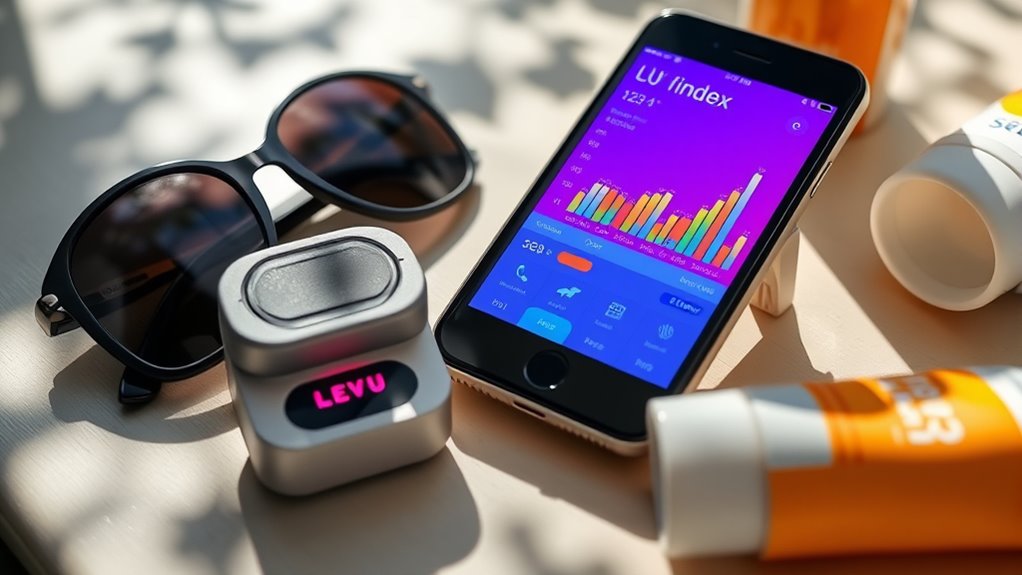
Have you ever wondered how UV apps and gadgets can help protect your skin and health? With the increasing awareness about skin cancer and sun damage, technology offers practical tools to keep you safer during your outdoor activities. One of the main features these devices provide is UV exposure tracking, which gives you real-time information about your current UV levels. This helps you make smarter decisions about when to seek shade, apply sunscreen, or cover up. By monitoring UV exposure, you can avoid overexposure that might lead to burns or long-term skin damage. These apps and gadgets are designed to be user-friendly, providing instant feedback that encourages you to stay vigilant while enjoying the sun. Wearable UV monitors are especially useful because they keep track of your UV exposure throughout the day. Unlike relying solely on weather reports or sun intensity charts, these devices measure your specific exposure in real-time, often using sensors embedded in wristbands, clips, or even integrated into sunglasses. When the UV levels rise to a dangerous point, the device alerts you with a gentle buzz or visual cue, prompting you to take protective measures. This personalized approach ensures you’re not just relying on general weather conditions but are aware of the actual amount of UV radiation reaching your skin. It’s a proactive way to manage sun safety, especially if you spend extended periods outdoors or participate in outdoor sports. Many UV apps also incorporate features like sun safety tips, sunscreen reminders, and personalized advice based on your skin type and activity level. As you use these tools, you develop better awareness of how UV radiation varies throughout the day and how your habits influence your sun exposure. Combining UV exposure tracking with wearable UV monitors gives you a detailed picture of your sun safety. You can see patterns over time, adjusting your routines to minimize damage and reduce the risk of skin cancers. Additionally, UV protection awareness is a crucial aspect of using these gadgets effectively, ensuring you maximize their benefits for your health. Plus, these gadgets are portable and discreet, seamlessly fitting into your daily life without hassle.

Wearable UV Monitors Standard Requirements
As an affiliate, we earn on qualifying purchases.
As an affiliate, we earn on qualifying purchases.
Frequently Asked Questions
How Accurate Are UV Index Readings From Apps and Gadgets?
The accuracy of UV index readings from apps and gadgets varies, but they’re generally reliable if they have well-calibrated UV sensors. Keep in mind, UV sensor calibration can drift over time, impacting precision. You should also consider app data privacy, as some apps collect location info to improve accuracy but may share your data. For best results, use trusted devices and stay aware of calibration updates for superior sun safety.
Can UV Gadgets Replace Traditional Sun Protection Methods?
Think of UV gadgets as a lighthouse guiding your sun safety journey, but they can’t replace the sturdy foundation of traditional protection. While these devices add convenience, their reliability varies and they shouldn’t be your only defense. Sunscreen, hats, and shade remain essential. Relying solely on gadgets risks a false sense of security, so use them as supplements, not substitutes, to keep your skin safe under the sun’s rays.
Are UV Apps Suitable for All Skin Types?
You might wonder if UV apps suit all skin types. While they can be helpful, they don’t account for individual factors like skin tone and skin sensitivity. If you have fair or sensitive skin, you need to be extra cautious, as UV exposure impacts everyone differently. These apps are useful tools but shouldn’t replace personalized advice from a dermatologist. Always combine tech with traditional sun protection methods for the best safety.
What Are the Best Times of Day to Use UV Gadgets?
You should use UV gadgets when sun exposure is highest, typically between 10 a.m. and 4 p.m., to get accurate readings. Make sure your device is properly calibrated for reliable results. Avoid using gadgets during early morning or late afternoon hours, as UV levels are lower and less relevant for sun safety. This way, you can better protect your skin and plan safe outdoor activities.
Do UV Apps Require Internet Access to Function Properly?
Did you know that around 80% of UV apps rely on internet access? You might wonder if they need internet to work properly. Some UV apps depend on internet connectivity for real-time updates and accurate data, while others offer offline functionality. If you often go off-grid, choose an app with offline features. This way, you stay protected without worrying about internet dependency, especially during outdoor adventures.

Hidden Camera Detectors, Anti Spy Camera Finder, GPS Tracker Detector, Hidden Devices Detector for Airbnb, Hotels, Bathroom, Home, Office (Black)
【Professional Hidden Camera Detectors】Our camera detector has 3 powerful detection functions: 1. Camera Detector: such as wireless cameras,…
As an affiliate, we earn on qualifying purchases.
As an affiliate, we earn on qualifying purchases.
Conclusion
By using UV apps and gadgets, you can take control of your sun safety and enjoy the outdoors confidently. These tools make it easy to monitor UV levels and protect your skin, but are you really maximizing their potential? Embracing technology helps you make smarter choices and stay safe every day. So, why not leverage these innovative solutions to keep your skin healthy and sunburn-free? After all, your skin deserves the best protection—are you ready to make that change?

QJF Camera Sunglasses for Cycling, 1080P HD Recording Glasses for Outdoor Sports, Hands-Free Video Glasses with Voice Control & UV Protection, App Live Preview
【All-in-One Smart Glasses with HD Camera & Open-Ear Audio】 These smart glasses combine a 5MP HD camera for…
As an affiliate, we earn on qualifying purchases.
As an affiliate, we earn on qualifying purchases.

UV Detection Stickers For Sunscreen – Sunblock Reminders, 24 Pieces Smart Patches For Skin Safety, Photochromic Indicator With Adhesive Back, Hardware, Sun Alert Sheet For Beaches
Engineered with advanced photochromic technology that changes color in response to UV radiation intensity, providing a clear visual…
As an affiliate, we earn on qualifying purchases.
As an affiliate, we earn on qualifying purchases.