
To apply sunscreen correctly, avoid common mistakes like not reapplying every two hours or after swimming or sweating. Make sure you use enough—about a shot glass full for your whole body—and apply it 15 minutes before sun exposure. Don’t forget often-missed areas like ears, neck, and tops of feet. Skipping reapplication or applying too little leaves your skin vulnerable. Keep these tips in mind, and you’ll learn how to maximize your sun protection effectively.
Key Takeaways
- Reapply sunscreen every two hours, especially after sweating, swimming, or towel drying.
- Apply enough sunscreen (about one ounce) for thorough coverage of all exposed skin.
- Avoid missing areas like ears, neck, and tops of feet to ensure comprehensive protection.
- Allow sunscreen to absorb for 15 minutes before outdoor exposure for maximum effectiveness.
- Use broad-spectrum formulas suited to your skin type and activity to prevent gaps in UV protection.
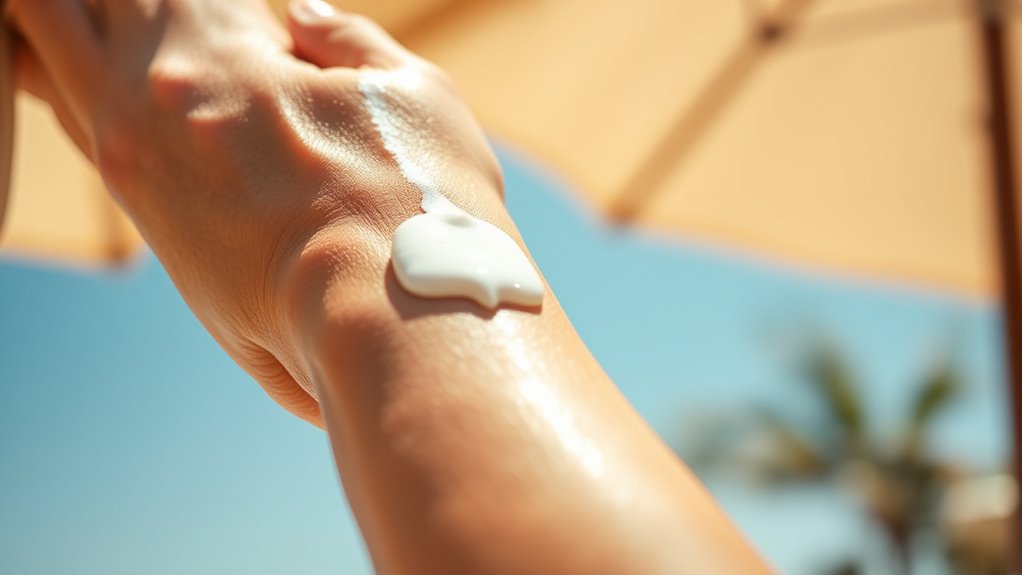
Have you ever wondered if you’re applying sunscreen correctly? It’s a common concern, especially since many people underestimate the importance of proper application. One of the biggest mistakes is neglecting sunscreen reapplication throughout the day. Even if you initially put on a generous amount, sunscreen can wear off due to sweating, swimming, or towel drying. To stay protected, you should reapply every two hours, or more often if you’re sweating heavily or swimming. Remember, applying sunscreen once in the morning isn’t enough if you’re outdoors for extended periods. Regular reapplication is key to maintaining effective coverage and preventing harmful UV rays from penetrating your skin.
Reapply sunscreen every two hours for continuous protection outdoors.
Another mistake often made is choosing SPF without understanding what it really means. Many assume that a higher SPF offers unlimited protection, but that’s not entirely true. When choosing SPF, consider your skin type, the intensity of sun exposure, and your activity level. For most daily activities, an SPF of 30 to 50 provides adequate protection. If you’re spending long hours outside or near water, opt for a water-resistant formula with a higher SPF. Just keep in mind that higher SPF numbers don’t mean you can skip reapplication or stay in the sun forever. They do, however, offer slightly more protection, especially if you tend to burn easily or have sensitive skin.
Applying sunscreen improperly is another common error. Many people don’t use enough, which dramatically reduces its effectiveness. You should generously coat all exposed areas—don’t forget your ears, neck, and the tops of your feet. A good rule of thumb is to use about one ounce (a shot glass full) for full-body coverage. Also, apply sunscreen about 15 minutes before heading outside to give it time to bind to your skin. Skipping this step can leave your skin unprotected during those vital initial minutes of sun exposure. When applying, use broad, circular motions to ensure an even layer, rather than just dabbing or lightly spreading it on. This helps avoid missed spots and ensures maximum coverage.
Additionally, understanding the importance of sunscreen formulation can help you choose the most effective product for your skin type and activities. Whether you prefer a physical (mineral) or chemical formula, pick one suitable for your skin type and activities. Physical sunscreens with zinc oxide or titanium dioxide are great for sensitive skin, while chemical sunscreens tend to be lightweight and easier to apply under makeup. Whichever you choose, ensure it offers broad-spectrum protection against both UVA and UVB rays. Making these small but essential adjustments—like proper reapplication, selecting the right SPF, and applying enough—can dramatically improve your sun protection routine and keep your skin healthier in the long run.
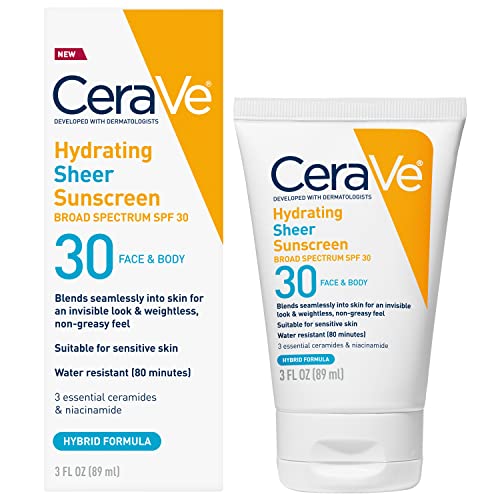
CeraVe Hydrating Sheer Sunscreen with SPF 30 for Face and Body, Mineral & Chemical Sunscreen for Men & Women with Zinc Oxide, Hyaluronic Acid and Ceramides, Paraben-Free + Fragrance-Free, 3 Ounces
[ FACE SUNSCREEN & BODY SUNSCREEN WITH SPF 30 ] CeraVe sunblock helps protect your skin against harmful…
As an affiliate, we earn on qualifying purchases.
As an affiliate, we earn on qualifying purchases.
Frequently Asked Questions
How Often Should I Reapply Sunscreen During the Day?
You should reapply sunscreen every two hours during the day to maintain protection. The right application timing is vital, especially if you’re sweating or swimming. Reapplication frequency depends on your activity and sun exposure, so don’t skip it even if the sunscreen claims to be long-lasting. Always reapply after towel drying or if you’ve been outdoors for a while. Staying mindful guarantees your skin stays protected from harmful UV rays.
Can I Use Expired Sunscreen Safely?
Imagine reaching for your sunscreen, only to find it’s expired. You wonder if it’s still safe. Generally, expired sunscreen might lose its effectiveness, especially if stored improperly—like in a hot car or humid bathroom. Always check the expiration date, as sunscreen with lower SPF may not offer the same protection. To stay safe, replace expired bottles and store sunscreen in cool, dry places to maintain its integrity and effectiveness.
Is Sunscreen Effective on Cloudy Days?
You might wonder if sunscreen works on cloudy days, and the answer is yes. Cloud cover protection still lets UV rays reach your skin, so sunscreen penetration remains important. Even when it’s overcast, UV rays can cause skin damage, so applying a broad-spectrum sunscreen helps shield you from harmful rays. Remember to reapply regularly, especially if you’re outdoors for extended periods, to guarantee continuous protection regardless of the weather.
How Much Sunscreen Is Enough per Application?
You might think a little sunscreen is enough, but proper application techniques demand enough product to cover your skin fully. Experts recommend about one ounce per application, ensuring even coverage of all exposed areas. Remember, the effectiveness of sunscreen ingredients, like zinc oxide or avobenzone, depends on using enough to form a protective barrier. So, don’t skimp—apply generously and evenly for maximum protection.
Do I Need Sunscreen if I Have Dark Skin?
Even with dark skin, you still need sunscreen because melanin provides some protection but isn’t enough. Your skin tone considerations mean you might think you’re less at risk, but UV rays can still cause damage and skin cancer. Sunscreen helps boost melanin protection, preventing premature aging and discoloration. So, don’t skip it—apply sunscreen daily, regardless of your skin tone, to keep your skin healthy and protected.

Banana Boat Sport Ultra SPF 50 Sunscreen Spray | Banana Boat Sunscreen Spray SPF 50, Water Resistant, Oxybenzone Free, Sunblock, 6oz each Twin Pack
SUPERIOR ENDURANCE VS. SWEAT & WATER — From family fun to hardcore competition, Banana Boat Sport Sunscreen provides…
As an affiliate, we earn on qualifying purchases.
As an affiliate, we earn on qualifying purchases.
Conclusion
To keep your skin protected, remember to apply sunscreen generously and evenly, covering all exposed areas. Don’t forget to reapply every two hours, especially if you’re sweating or swimming. Did you know that nearly 80% of skin cancers are caused by sun exposure? By avoiding common mistakes and following these tips, you can markedly reduce your risk. Stay vigilant and protect your skin — your future self will thank you!

Blue Lizard Sensitive Mineral SPF 50 Sunscreen Lotion, 100% Mineral Sunscreen, UVA/UVB Protection, Infused with organic Aloe Vera, Soothes and Hydrates, 5 fl oz
POWERFUL MINERAL SUNSCREEN – Protect sensitive skin from the sun’s harmful rays with Blue Lizard Sensitive Mineral SPF…
As an affiliate, we earn on qualifying purchases.
As an affiliate, we earn on qualifying purchases.

Neutrogena Beach Defense Sunscreen Spray SPF 50, Hawaii Reef Act 104 Compliant, Octinoxate & Oxybenzone Free, Broad Spectrum, Fast Absorbing & Lightweight, Face and Body Sunscreen, 6.5 Oz
One, 6.5 oz Can of Neutrogena Beach Defense Spray Sunscreen with Broad Spectrum SPF 50. Get ready for…
As an affiliate, we earn on qualifying purchases.
As an affiliate, we earn on qualifying purchases.