
Sun protection clothing science involves specially engineered fabrics designed to block or absorb harmful UV rays, helping prevent skin damage and cancer. These garments are woven or treated with UV-inhibiting substances, often achieving high SPF ratings like 50, which blocks 98% of UVB rays. Factors such as fabric weight, tightness of weave, and color influence protection levels. Wearing these clothes, combined with proper skin care, offers effective sun defense—so if you keep exploring, you’ll learn how to maximize your sun safety.
Key Takeaways
- UV protection clothing is engineered using tightly woven, fiber-treated fabrics that block or absorb ultraviolet rays.
- SPF ratings indicate how effectively clothing filters UVB rays, with higher ratings providing greater protection.
- Fabric weight, weave tightness, color, and fiber treatment significantly influence a garment’s UV shielding ability.
- Proper care and fabric integrity are essential to maintain the clothing’s UV protective properties over time.
- UV clothing complements sunscreen and other precautions for comprehensive sun protection through scientifically tested materials.
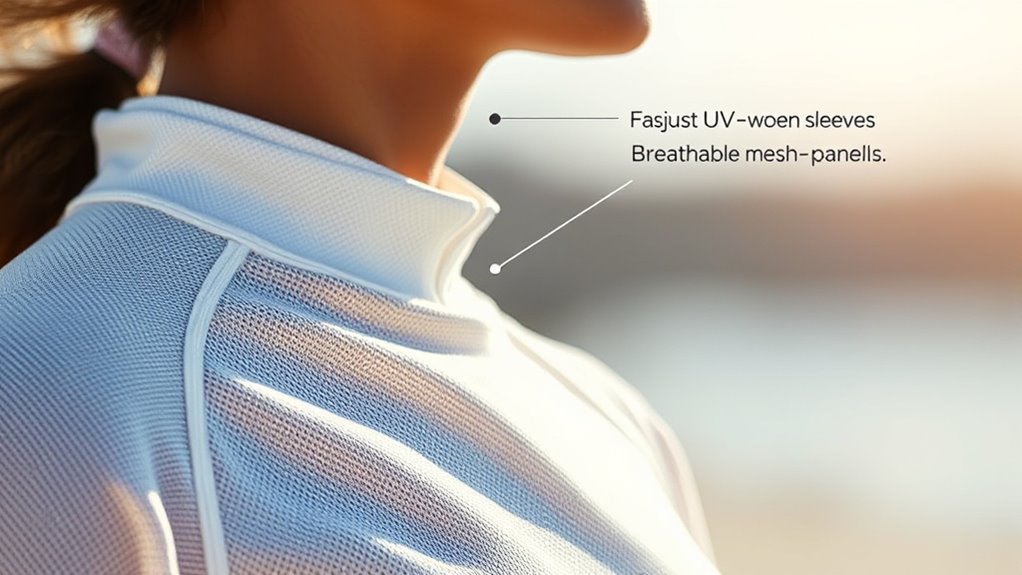
Have you ever wondered how clothing can protect you from the sun’s harmful rays? It all comes down to the science behind UV fabric and SPF ratings. UV fabric is specially engineered to block or absorb ultraviolet radiation, providing an extra layer of defense against sun damage. Unlike regular clothing, UV fabric is woven or knitted with fibers treated with UV-inhibiting substances, which help prevent ultraviolet rays from penetrating the material and reaching your skin. This treatment enhances the fabric’s protective qualities, making it more effective than standard cotton or polyester shirts when it comes to shielding your skin from UV exposure.
UV fabric is engineered with UV-inhibiting fibers to block harmful ultraviolet rays.
The SPF rating, or Sun Protection Factor, is a measure used to indicate how well clothing or sunscreen protects against UVB rays—the rays responsible for sunburn and contributing to skin cancer. When you wear clothing made from UV fabric, the SPF rating gives you a number that reflects its protective power. For example, a shirt with an SPF of 50 means it allows only 1/50th of the UVB rays to pass through, blocking 98% of harmful rays. The higher the SPF, the greater the level of protection, and clothing with an SPF rating of 30 or higher is generally recommended for extended outdoor activities.
Understanding how UV fabric works and its SPF rating can help you make smarter choices about sun protection. When shopping for sun-protective clothing, look for garments labeled with a specific SPF rating. These items have been tested to ensure they provide a consistent level of UV blockage. Keep in mind, though, that factors like fabric weight, weave tightness, and color also influence protection. Thicker, tightly woven fabrics and darker colors tend to block more UV rays, increasing the overall SPF rating. Additionally, the fabric weave and fiber treatment are critical factors that influence the protective qualities of UV clothing.
It’s important to note that UV fabric doesn’t replace sunscreen entirely but complements it. Wearing protective clothing with a high SPF rating reduces the amount of UV radiation reaching your skin, but you should still apply broad-spectrum sunscreen to uncovered areas for thorough protection. Also, remember that UV fabric’s effectiveness can diminish if the fabric gets stretched, worn out, or soiled, so proper care is essential to maintain its protective qualities.
Frequently Asked Questions
How Does Fabric Color Influence Sun Protection?
You might think fabric color doesn’t matter, but darker shades, like black or navy, absorb more UV rays, offering better sun protection. Fabric dyeing influences this, as deeply dyed fabrics tend to block more UV radiation. However, if the color fades over time due to washing or exposure, their protective ability diminishes. So, choose darker, well-dyed clothes and watch out for color fading to stay protected longer in the sun.
Are Synthetic or Natural Fibers More Effective for UV Protection?
Synthetic fibers generally offer better UV protection than natural fibers because they’re more durable and maintain their protective qualities longer. They tend to be less breathable but excel in fiber durability, which helps block UV rays effectively. Natural fibers, like cotton, are more breathable but may need additional treatments to provide similar UV protection. So, if you want long-lasting sun protection, synthetic fabrics are usually the better choice.
Can Laundry Detergents Degrade Sun Protection Clothing?
Yes, laundry detergents can affect sun protection clothing. Detergent effects, especially those with harsh chemicals or bleach, can cause fabric degradation over time. This weakens the fibers and reduces their ability to block UV rays effectively. To maintain your clothing’s sun protection properties, use gentle, mild detergents and avoid bleach. Proper washing extends the lifespan of your sun protective gear and keeps it functioning at its best.
How Does Stretch or Elasticity Affect UV Blocking Capabilities?
Stretch or elasticity can impact UV blocking capabilities by slightly reducing fabric stretch resilience and fabric flexibility. When clothing stretches, the fibers may become more spaced out, creating tiny gaps that allow more UV rays to pass through. However, high-quality sun protection clothing is designed with fabrics that maintain UV protection even when stretched, ensuring your skin stays protected while allowing for comfortable movement and flexibility during activity.
What Is the Longevity of UV Protection After Multiple Washes?
Your UV protection typically lasts through 20-30 washes, depending on fabric durability and washing frequency. If you wash your sun protection clothing gently and follow care instructions, the UV blocking capabilities can stay effective longer. However, frequent washing or harsh detergents can weaken the fabric’s ability to block UV rays over time. Always check for any fading or thinning to ensure continued protection.
Conclusion
As you slip into sun protection clothing, imagine a shield of woven fabric wrapping around you, blocking harsh rays like a gentle yet sturdy barrier. Feel the cool touch against your skin, knowing you’re guarding yourself from the blazing sun’s harmful glare. With each step outdoors, picture yourself basking in the warm glow without worry, your skin safe and secure. Embrace the science behind your gear, and let the radiant sun be a gentle companion, not a threat.