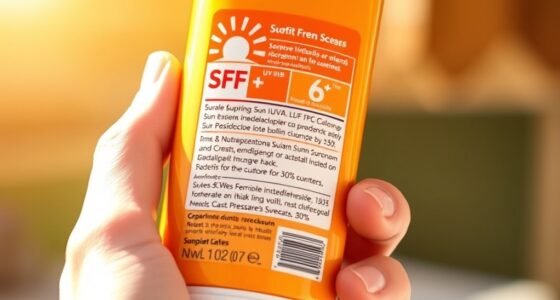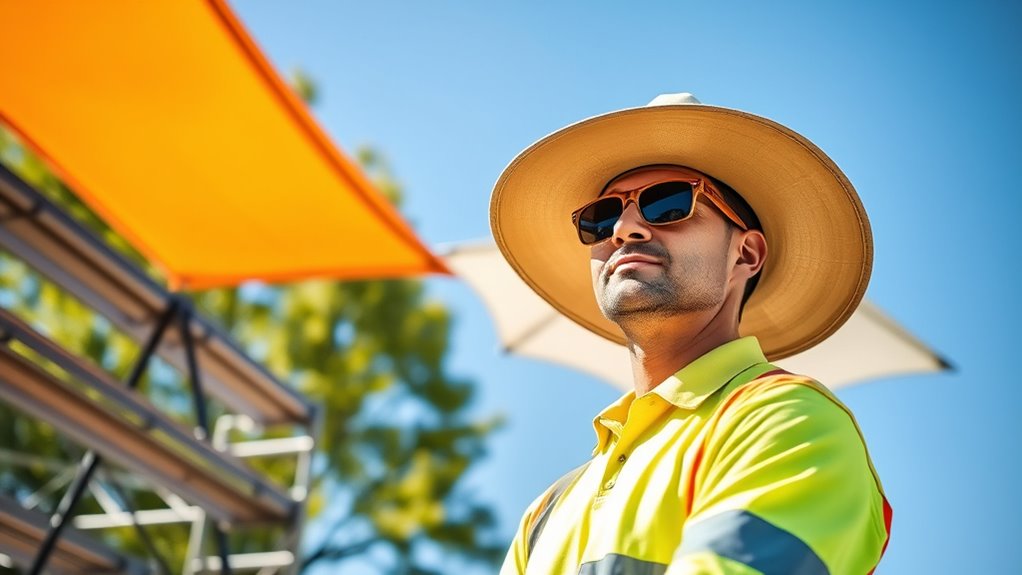

To stay safe from harmful UV rays during outdoor work, wear wide-brimmed hats, UV-protective clothing, and sunglasses. Apply broad-spectrum SPF 30+ sunscreen every two hours, covering all exposed skin, and reapply if you sweat or get wet. Seek shade during peak hours and take breaks regularly. Stay well-hydrated and watch for signs of heat exhaustion. Keep these tips in mind, and you’ll learn how to protect yourself all day long.
Key Takeaways
- Wear protective clothing, including wide-brimmed hats and UV-rated long sleeves and pants, for full skin coverage.
- Apply broad-spectrum SPF 30+ sunscreen every two hours, reapplying after sweating or water contact.
- Seek shade during peak hours (10 a.m. to 4 p.m.) and take regular breaks to minimize UV exposure.
- Stay hydrated with plenty of water and monitor for signs of heat exhaustion or heat stress.
- Use sunglasses, lip balm with SPF, and stay informed about UV index levels to enhance all-day sun safety.
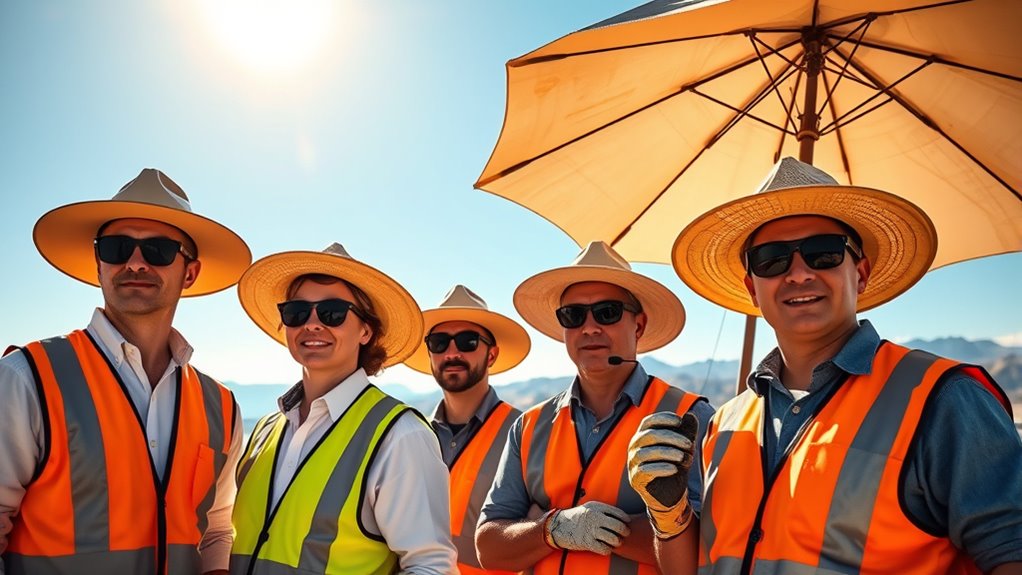
As outdoor workers spend extended hours under the sun, it’s essential to adopt comprehensive sun safety practices. Wearing wide-brimmed hats and UV-protective clothing can significantly reduce skin exposure, while applying broad-spectrum sunscreen with at least SPF 30 every two hours helps prevent harmful UV damage. Seeking shade during peak sunlight hours and taking regular breaks also contribute to safety. Additionally, staying hydrated and monitoring for signs of heat exhaustion are important. Incorporating effective sun protection strategies ensures all-day safety for outdoor laborers and helps prevent long-term health risks.
Frequently Asked Questions
How Often Should Outdoor Workers Reapply Sunscreen During the Day?
You should reapply sunscreen every two hours to maintain protection. The reapplication frequency depends on sunscreen durability; if you’re sweating or swimming, you may need to reapply more often. Keep in mind that even water-resistant formulas require frequent reapplication. To stay protected all day, reapply regularly, especially during prolonged outdoor activities, ensuring your skin stays shielded from harmful UV rays.
Are Certain Clothing Materials Better for Sun Protection?
Clothing choices can make a major difference in your sun safety. Opt for UV resistant fabrics that block harmful rays and breathable materials that keep you comfortable and cool. These fabrics create a barrier against the sun’s severity while allowing air to circulate. By choosing clothing that combines protection and breathability, you prevent overheating and enhance your outdoor endurance, ensuring you stay safe and stylish under the sun’s relentless rays.
What Are the Signs of Sunstroke or Heat Exhaustion?
You should recognize symptoms of sunstroke or heat exhaustion early to act quickly. Signs include heavy sweating, weakness, dizziness, headache, nausea, and a rapid heartbeat. If you notice these symptoms, respond immediately by moving to a cooler place, hydrating, and applying cool cloths. Emergency response is vital—call 911 if symptoms worsen or don’t improve, as heat-related illnesses can escalate quickly. Recognizing these signs helps prevent serious health risks.
Can Sunglasses Fully Protect Eyes From UV Rays?
Sunglasses provide good UV protection, but they can’t fully shield your eyes from UV rays. To guarantee eye safety, choose sunglasses labeled with 100% UV protection or UV400. Wearing broad-brimmed hats and seeking shade also helps. Remember, prolonged UV exposure can harm your eyes over time, so combining sunglasses with other protective measures offers better overall eye safety, especially during outdoor activities.
How Can Employers Ensure Outdoor Workers Stay Protected Consistently?
You can guarantee outdoor workers stay protected by implementing work schedule adjustments to avoid peak sun hours, encouraging regular hydration strategies to prevent heat-related issues, and providing proper sun protection gear like hats and sunscreen. Educate your team about the importance of taking breaks in shaded areas and staying hydrated. Consistent enforcement of safety policies helps reduce UV exposure, keeping workers safe and healthy throughout their shifts.
Conclusion
Protecting yourself from the sun is essential when working outdoors. By applying sunscreen, wearing protective clothing, and seeking shade whenever possible, you reduce your risk of sun damage and health issues. Are you ready to prioritize your safety and enjoy your workday without worry? Remember, taking simple steps now can make a big difference later. Stay vigilant, stay protected, and keep working safely under the sun!