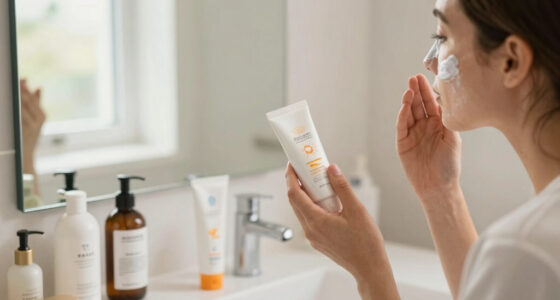
To prevent long-term sun damage, make daily habits like applying broad-spectrum SPF 30 sunscreen every morning, reapplying every two hours outside, and wearing protective clothing part of your routine. Keep your skin hydrated by drinking water and using moisturizers with hyaluronic acid or glycerin. Gently cleanse your skin after outdoor activities and include antioxidants like vitamin C serums. Staying consistent with these habits can preserve your skin’s health and youthfulness over time—discover more ways to protect your skin effectively.

Get beauty and skincare favorites delivered free with Prime
- Fast, free delivery on millions of items
- Prime Video, Amazon Music and more included
- Member-only deals all year
Key Takeaways
- Apply and reapply broad-spectrum sunscreen generously every two hours outdoors to maintain continuous protection.
- Incorporate daily skin hydration with moisturizers and drink plenty of water to support skin resilience.
- Wear protective clothing, such as wide-brimmed hats and UV-protective sunglasses, to block UV rays consistently.
- Use antioxidants like vitamin C serums to neutralize free radicals and repair UV-induced skin damage.
- Establish a routine of gentle cleansing and nourishing moisturization after outdoor exposure for skin recovery.

Sun damage accumulates over time, but adopting simple daily habits can considerably reduce your risk. Your daily routine plays an essential role in protecting your skin from the harmful effects of UV rays. One of the most effective ways to do this is by prioritizing sun protection. Every morning, make it a point to apply a broad-spectrum sunscreen with at least SPF 30, even if it’s cloudy outside. Reapply every two hours if you’re outdoors or sweating, and don’t forget to protect often overlooked areas like your ears, neck, and the backs of your hands. Wearing protective clothing, such as wide-brimmed hats and UV-protective sunglasses, further shields your skin from direct UV exposure. These habits create a physical barrier, reducing the cumulative damage caused by UV rays over the years.
Consistently apply sunscreen and wear protective clothing to shield your skin from UV damage.
In addition to sun protection, maintaining skin hydration is essential in preventing long-term damage. Hydrated skin stays resilient and better able to repair itself, which can slow down the formation of fine lines, wrinkles, and sun spots. Incorporate a good moisturizer into your daily routine, especially after cleansing or showering, to lock in moisture. Look for products with ingredients like hyaluronic acid or glycerin, which are excellent for attracting and retaining water in your skin. Drinking plenty of water throughout the day also boosts your skin’s hydration from within, making it more resistant to environmental stressors, including sun exposure. Avoiding excessive alcohol and caffeine can help, as these can dehydrate your body and skin. Additionally, understanding the importance of UV protection technology can help you choose more effective sunblock options. Incorporating natural filtration systems, like mineral-based sunscreens, can provide additional protection by reflecting UV rays away from your skin. Recognizing the role of antioxidants in your skincare routine can also bolster your defense against UV-induced free radicals. Using proper application techniques ensures that your sunscreen remains effective throughout the day and provides the intended level of protection. Being aware of affiliate marketing disclosures can help you make informed choices when selecting sun protection products online.
It’s equally important to develop habits that promote skin recovery and health. After spending time outdoors, gently cleanse your skin to remove sweat, dirt, and sunscreen residues. Follow up with a nourishing moisturizer to support your skin’s barrier. Incorporate antioxidants, like vitamin C serums, into your routine, as they neutralize free radicals generated by UV exposure, helping to prevent long-term damage. Consistency is key—making these habits part of your daily life will yield the best results over time. Regularly assessing your sun protection strategies and updating them as needed can further optimize your skin’s defense.
Ultimately, protecting your skin from sun damage requires a combination of physical barriers, hydration, and smart habits. By making sun protection a daily priority and ensuring your skin remains well-hydrated, you actively combat the aging process and reduce your risk of developing serious skin issues later in life. Small, consistent efforts now will pay off by preserving your skin’s health, vibrancy, and youthful appearance for years to come.
Products Worth Considering

Levoit Eleva 300X HEPA Air Purifier for Home and Bedroom

LEVOIT Vital 200S-P Smart Air Purifier for Large Rooms

Oura Ring 4 Smart Ring – Silver – Size 8
As an affiliate, we earn on qualifying purchases.
Frequently Asked Questions
Can I Still Get Sun Damage on Cloudy Days?
Yes, you can still get sun damage on cloudy days because UV penetration can occur through cloud coverage. Clouds don’t block all UV rays; some still reach your skin, increasing the risk of long-term damage. That’s why it’s essential to wear broad-spectrum sunscreen daily, even when it’s overcast. Protecting your skin consistently helps prevent premature aging and reduces skin cancer risk, regardless of the weather.
Do Different Skin Tones Need Different Sun Protection?
Yes, different skin tones need tailored sun protection because skin tone considerations affect sunscreen efficacy. People with darker skin have more melanin, which offers some natural protection but still need sunscreen to prevent long-term damage. Lighter skin tones are more vulnerable, requiring a broader spectrum SPF. Always choose a sunscreen suited for your skin tone and apply it generously and regularly for effective protection against harmful UV rays.
How Often Should I Replace My Sunscreen?
Sunscreen consistency is key, and you should replace your sunscreen every one to two years. Despite choosing the right SPF, it loses effectiveness over time. Think of your sunscreen like fresh produce; if it’s past its prime, it won’t protect as well. So, regularly check the expiration date and replace it promptly to guarantee maximum sun protection. This habit keeps your skin safe from long-term damage.
Are There Natural Remedies to Repair Sun Damage?
Natural remedies like aloe vera, honey, and coconut oil can support skin repair after sun damage. Aloe vera soothes and heals, while honey promotes regeneration with its antioxidants. Coconut oil nourishes and moisturizes, aiding recovery. Incorporating these remedies into your routine can help your skin repair itself naturally. Remember, consistent use and protecting your skin from further sun exposure are key to long-term skin health and minimizing damage.
Does Sun Exposure Affect Skin Aging Differently at Various Ages?
Sun exposure is like a sculptor shaping your skin differently at each age. In your youth, it mainly damages collagen, leading to early wrinkles and loss of skin elasticity. As you age, it accelerates collagen degradation and worsens skin aging signs. Your skin’s ability to bounce back diminishes over time, making sun protection essential at every age to maintain elasticity and prevent premature aging.
Conclusion
By making these daily habits your shield, you’re planting seeds of protection that grow stronger over time. Think of your skin as a delicate garden—regularly watering it with sunscreen, seeking shade, and staying hydrated keeps it thriving and resilient against the sun’s harsh rays. Consistency turns small actions into a mighty fortress, safeguarding your skin’s future. Remember, each mindful choice today is a brushstroke painting a healthier, sun-safe tomorrow.