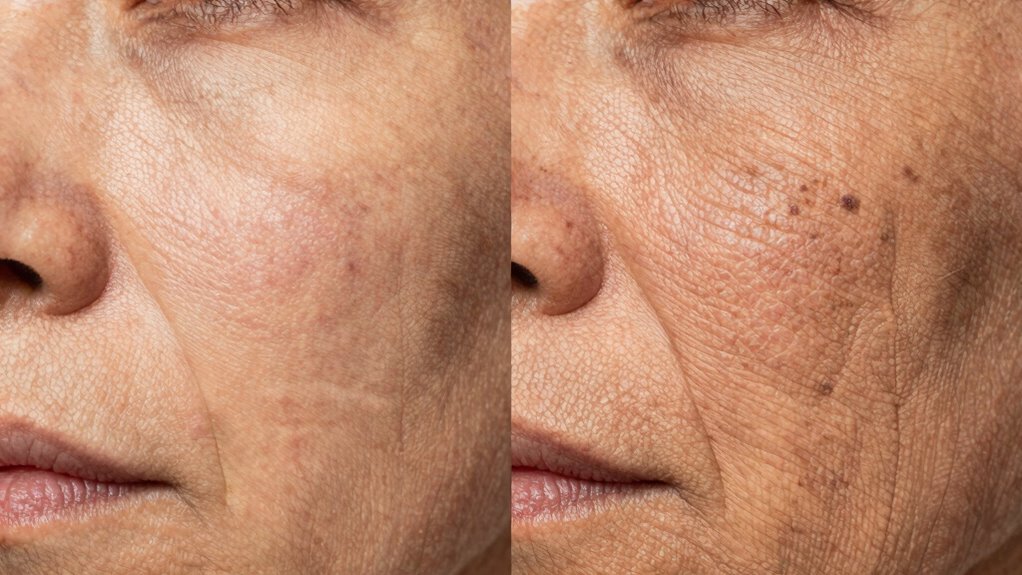

UV light speeds up visible skin aging by penetrating your skin’s surface and damaging key fibers like collagen and elastin, which keep your skin firm and elastic. This damage causes wrinkles, sagging, and uneven spots over time. UV rays also generate free radicals that attack your skin cells, impairing DNA and slowing repair processes. To learn how to better protect your skin and minimize aging signs, keep exploring the details below.

Get beauty and skincare favorites delivered free with Prime
- Fast, free delivery on millions of items
- Prime Video, Amazon Music and more included
- Member-only deals all year
Key Takeaways
- UV radiation damages collagen and elastin fibers, leading to loss of skin firmness and elasticity.
- It causes the formation of free radicals that accelerate cellular aging and DNA damage.
- UV exposure breaks down the skin’s moisture barrier, resulting in dryness and roughness.
- It promotes pigmentation irregularities like age spots and uneven skin tone.
- Long-term UV damage accelerates skin aging signs such as wrinkles and sagging.
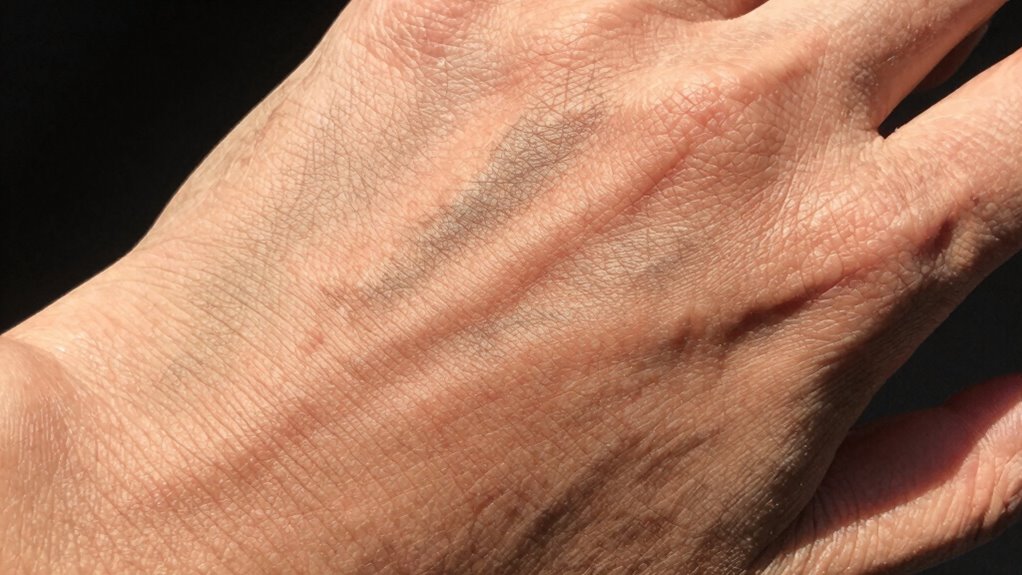
Have you ever wondered how UV light affects your skin over time? When you’re outdoors, exposure to UV radiation becomes a constant part of your day, whether you realize it or not. This type of radiation penetrates your skin’s surface, causing more than just a sunburn. Over time, it contributes notably to skin damage, accelerating the visible signs of aging. The longer your skin is exposed to UV radiation without protection, the more your skin’s natural structure begins to break down. This process isn’t immediate; it’s a gradual deterioration that accumulates, leading to wrinkles, fine lines, and age spots.
UV exposure gradually damages skin, leading to wrinkles, age spots, and loss of elasticity over time.
UV radiation damages the collagen and elastin fibers in your skin, which are essential for maintaining firmness and elasticity. When these fibers weaken or break down, your skin loses its ability to bounce back, resulting in sagging and the formation of wrinkles. This breakdown occurs because UV rays generate free radicals—unstable molecules that attack your skin cells. These free radicals damage the DNA in your skin cells, impairing their ability to function properly and repair themselves. Over years of exposure, this ongoing damage accelerates the appearance of age-related changes, making your skin look older than it actually is.
In addition to affecting the deeper layers of your skin, UV radiation also causes surface-level damage that manifests as pigmentation irregularities. Sunspots, age spots, and uneven skin tone develop as a direct response to the skin’s attempt to protect itself from further UV damage. These spots are a visible reminder of the ongoing harm caused by UV radiation, which can make your skin look dull and aged. The damage isn’t limited to just surface discoloration; UV exposure also leads to the breakdown of your skin’s moisture barrier, which can be further exacerbated by environmental pollutants. This results in dryness, roughness, and a less youthful appearance overall. Microplastics in dust can also contribute to skin irritation and damage, further emphasizing the importance of protecting your skin from environmental pollutants. Understanding the long-term effects of UV exposure can help you better appreciate the importance of protecting your skin from environmental pollutants, which can compound the damage caused by UV rays.
Protection is your best defense against UV-induced skin aging. Regular use of broad-spectrum sunscreen, wearing protective clothing, and seeking shade can considerably reduce your skin’s exposure to harmful UV radiation. Additionally, antioxidants in skincare can help neutralize free radicals and mitigate some of the damage caused by UV exposure. Incorporating protective measures into your daily routine is essential to slowing the aging process and maintaining healthy skin. By minimizing your exposure, you slow the cascade of skin damage and preserve your skin’s youthful resilience. Remember, the effects of UV light aren’t just about immediate sunburns—they’re about long-term changes that shape the way your skin ages. Taking proactive steps now can help you maintain healthier, more resilient skin for years to come.
As an affiliate, we earn on qualifying purchases.
Frequently Asked Questions
Can UV Light Affect Skin Aging Differently Across Various Skin Types?
Yes, UV light affects skin aging differently across skin types. If you have a darker skin type, your higher melanin protection helps absorb UV rays, reducing some damage. However, lighter skin types with less melanin are more vulnerable to UV-induced aging signs like wrinkles and spots. You should always use sun protection tailored to your skin type, as it plays a essential role in preventing premature aging caused by UV exposure.
Are There Specific Wavelengths of UV Light More Harmful to Skin Aging?
Think of the UV spectrum as a spotlight, with certain wavelengths more like a laser beam that damages your skin. UVB rays, with shorter wavelengths, are particularly harmful, especially for skin pigment, speeding up aging. Studies show these wavelengths penetrate deeply, damaging collagen and causing wrinkles. So, yes, specific UV wavelengths are more harmful, and protecting your skin from these can slow down visible aging effects.
How Does UV Exposure Compare to Other Environmental Factors in Skin Aging?
UV exposure plays a significant role in skin aging, often more than other environmental factors, because of UV penetration deep into your skin. It damages collagen and elastin, speeding up wrinkles and sagging. Your skin pigmentation can influence how much UV damage you sustain; darker skin offers some protection, but it doesn’t eliminate aging signs. Overall, minimizing UV exposure is essential for slowing skin aging compared to other environmental stressors.
Does Uv-Induced Skin Aging Vary With Geographic Location?
Think of your skin as a delicate garden that faces different weather patterns depending on where you are. In sunny, tropical locations, UV rays are like relentless gardeners, speeding up aging faster. Your sun protection acts as a shield, helping maintain your skin’s resilience. So, yes, UV-induced skin aging varies geographically—those in sunnier regions need extra care to keep their youthful glow, just like tending a cherished garden.
Can UV Light Accelerate Aging in Already Aged Skin?
Yes, UV light can accelerate aging in already aged skin. Sun protection becomes even more essential, as UV exposure worsens wrinkles, fine lines, and age spots. To combat this, you should prioritize daily sun protection and consider skin rejuvenation treatments to repair damage. Shielding your skin from UV rays helps slow further aging and maintains healthier, more youthful skin, even in older skin that’s already showing signs of aging.
Conclusion
Now that you understand how UV light accelerates visible skin aging, it’s clear you should protect your skin as diligently as you’d shield delicate artwork. Think of UV rays as an uninvited guest that slowly wears down your skin’s beauty, much like a relentless artist eroding a masterpiece. By wearing sunscreen and seeking shade, you’re taking control, preserving your youthful glow. Remember, your skin’s health is your own canvas—keep it vibrant and resilient for years to come.
Halloween Picks
halloween
As an affiliate, we earn on qualifying purchases.