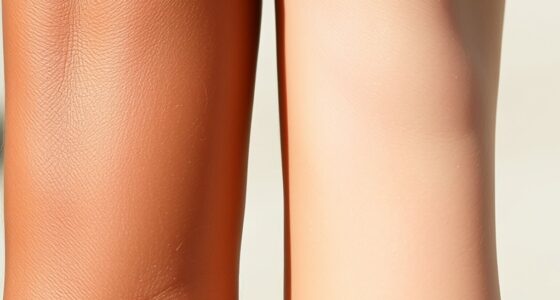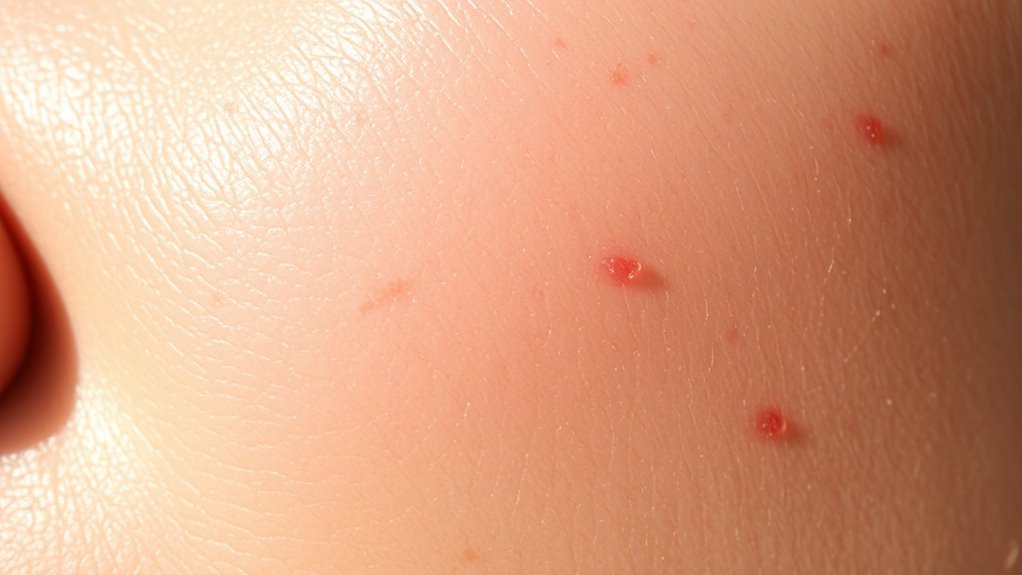

You might notice early signs of UV-induced microdamage, like dullness, uneven skin tone, or fine lines that gradually appear. As UV rays penetrate deep into your skin, they weaken collagen and elastin, impacting firmness and texture. Even if your skin looks fine, damage could be silently progressing beneath the surface. Keep an eye on these subtle changes, and you’ll discover how ongoing care can help protect your skin from further harm.
Key Takeaways
- Early UV microdamage often manifests as dull, uneven skin tone and fine lines.
- Loss of skin elasticity and firmness indicates ongoing structural weakening.
- Rough texture and surface irregularities are signs of collagen breakdown.
- Persistent dullness and uneven tone suggest cumulative UV-induced damage.
- Regularly assessing skin for these subtle changes helps detect early microdamage.
Skin microdamage often occurs subtly and gradually, yet it can substantially impact your skin’s health and appearance over time. It’s easy to overlook these tiny imperfections because they aren’t immediately visible, but they silently accelerate skin aging and increase your risk for more serious skin issues. The primary culprit behind this damage is UV exposure from the sun, which penetrates deep into your skin layers, damaging cells and collagen fibers. Over time, this leads to a breakdown in skin structure, causing wrinkles, fine lines, and loss of elasticity.
If you want to preserve your skin’s youthful look, sun protection should become your daily habit. Applying broad-spectrum sunscreen with at least SPF 30, even on cloudy days, shields your skin from harmful UV rays that cause microdamage. Wearing protective clothing like wide-brimmed hats and sunglasses further reduces exposure. Remember, UV rays don’t just hit you during summer or at the beach—they’re present year-round, and their damaging effects accumulate over time. This cumulative damage is what accelerates skin aging, making your skin look older than your actual age.
You might not notice immediate signs of microdamage, but signs of aging—such as dullness, uneven skin tone, and the appearance of fine lines—are often early indicators. These subtle changes result from the loss of collagen and elastin, which are essential for maintaining skin firmness and suppleness. Continuous UV exposure weakens these structural proteins, leading to sagging and a rough texture. If you neglect sun protection, these microdamages pile up, making your skin less resilient and more prone to visible aging signs. Additionally, early detection of skin microdamage can help you take proactive measures to protect your skin’s health before more serious issues develop.
Preventing skin microdamage isn’t just about avoiding long-term skin aging; it’s about maintaining your skin’s overall health. Incorporate habits like seeking shade during peak sunlight hours and using skincare products with antioxidants, which help neutralize free radicals generated by UV exposure. These antioxidants bolster your skin’s defenses, reducing the extent of microdamage.
In essence, understanding that microdamage happens gradually should motivate you to be proactive. Consistent sun protection isn’t just about avoiding sunburn—it’s a essential step in preventing early skin aging and preserving your skin’s youthful vitality. Prioritizing these habits today can save you from more significant skin problems down the road, keeping your skin healthier, smoother, and more vibrant longer.
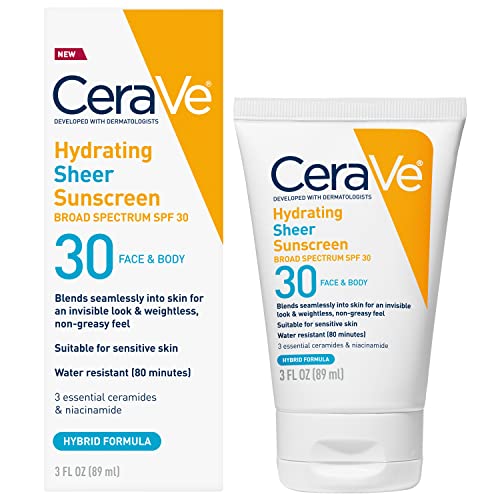
CeraVe Hydrating Sheer Sunscreen with SPF 30 for Face and Body, Mineral & Chemical Sunscreen for Men & Women with Zinc Oxide, Hyaluronic Acid and Ceramides, Paraben-Free + Fragrance-Free, 3 Ounces
[ FACE SUNSCREEN & BODY SUNSCREEN WITH SPF 30 ] CeraVe sunblock helps protect your skin against harmful…
As an affiliate, we earn on qualifying purchases.
As an affiliate, we earn on qualifying purchases.
Frequently Asked Questions
Can Microdamage Be Completely Reversed Naturally?
Microdamage from UV exposure can often be reversed through natural healing, but it depends on the extent of the damage. You can support this process with lifestyle modifications like protecting your skin from further UV rays, staying hydrated, and using antioxidants. While minor damage may heal naturally over time, significant microdamage might require additional skincare treatments. Consistent care and sun protection are key to helping your skin recover effectively.
How Quickly Does UV Exposure Cause Visible Microdamage?
In an era where time travel is possible, you’d see how UV damage can cause microdamage within hours of exposure. Typically, your skin’s resilience varies, but visible signs like redness and fine lines often appear after just one to three days of UV exposure. The speed depends on skin type, intensity of sunlight, and duration. Protecting your skin with sunscreen and antioxidants helps slow down this visible microdamage process.
Are Certain Skin Types More Prone to Microdamage?
Certain skin types are more prone to microdamage due to skin type susceptibility and genetic factors. Fair-skinned individuals with less melanin production tend to experience more UV-induced harm, as melanin provides some protection against UV rays. Conversely, darker skin types have higher melanin levels, offering better defense. Recognize your skin’s vulnerability, and take proactive steps like using sunscreen and avoiding peak sun hours to minimize early UV damage.
What Are the Latest Treatments to Repair Skin Microdamage?
Imagine you’re in a world where microdamage is like a silent thief stealing your skin’s essentiality. To repair it, you should try antioxidant serums packed with vitamins to boost recovery, and laser therapies that stimulate collagen production. These treatments target early signs of UV harm, helping to restore your skin’s health and glow. Act now to prevent further damage and keep your skin looking youthful and radiant.
Can Microdamage Lead to Long-Term Skin Health Issues?
Microdamage can definitely lead to long-term skin health issues like skin aging and pigmentation changes. When UV damage accumulates, your skin’s collagen weakens, causing wrinkles and loss of elasticity. You might notice uneven skin tone or dark spots developing over time. Protecting your skin early on helps prevent these issues, so using sunscreen and skincare with antioxidants is essential to maintain healthy, youthful skin and avoid long-term damage.

Sleeping lip mask, Nourish & Hydrate Lip Mask With Vitamin C, Antioxidants, Lip Balm, Lip Skin Care, Improve Lip Color, Reduce Lip Lines
Moisturizes lip skin: The sleeping lip mask contains functional ingredients that moisturize the lips. Using the sleeping lip…
As an affiliate, we earn on qualifying purchases.
As an affiliate, we earn on qualifying purchases.
Conclusion
Think of your skin as a delicate canvas, quietly bearing the scars of UV exposure day after day. When you notice microdamage, it’s like tiny cracks forming in that canvas—subtle, yet telling of deeper harm. By catching these signs early, you hold the brush to repair and protect your masterpiece. Treat your skin with care, shielding it from further damage, so it can continue to glow and tell its story with vibrant resilience.

IUGA Rash Guard for Women UPF 50+ SPF UV Protection Long Sleeve Workout Tops with Pockets Dry Fit Hiking Swim Shirt
UPF 50+ for Sun Protection: Want to enjoy the outdoors without being damaged by UV rays? Putting on…
As an affiliate, we earn on qualifying purchases.
As an affiliate, we earn on qualifying purchases.
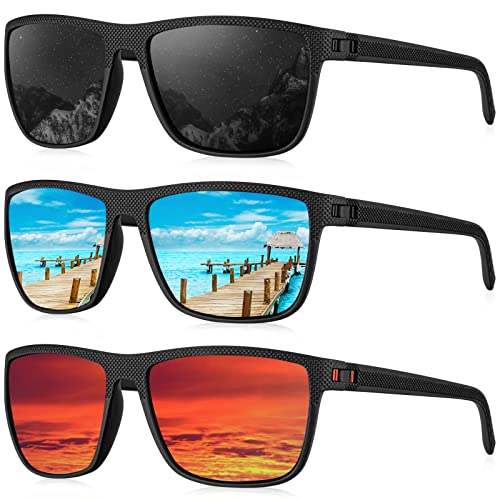
KALIYADI Polarized Sunglasses Men, Lightweight Mens Sunglasses Polarized UV Protection Driving Fishing Golf (Black/Ice Blue/Red)
HD Polarized Lens: To prevent your eyes from the harmful UV rays, all of KALIYADI mens sunglasses polarized…
As an affiliate, we earn on qualifying purchases.
As an affiliate, we earn on qualifying purchases.