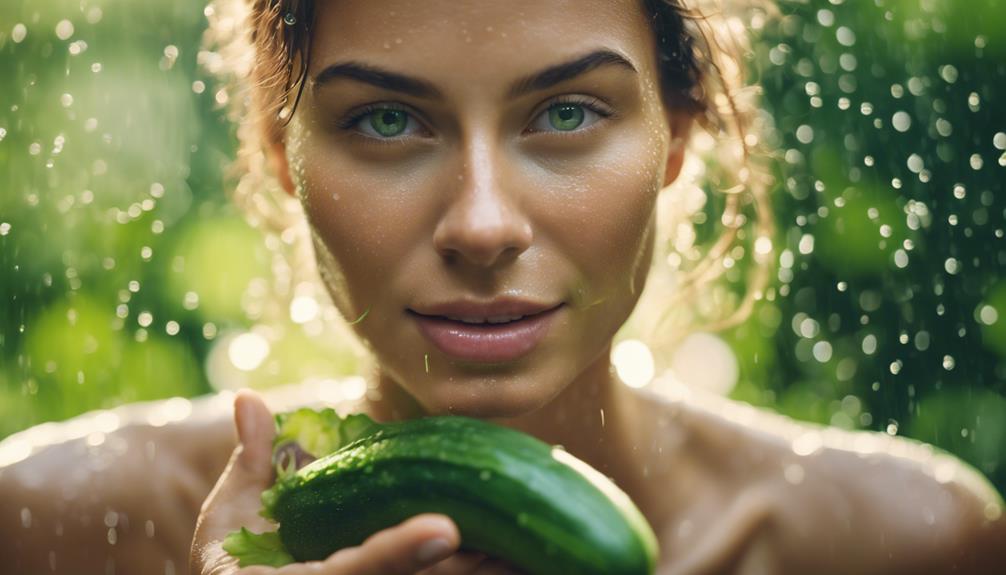
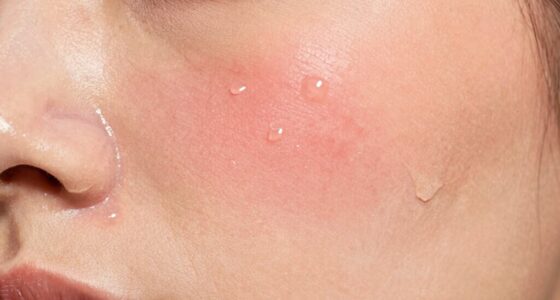
Melanin acts as your skin’s natural shield, protecting you from UV damage by absorbing harmful rays. When exposed to sunlight, your skin produces more melanin, causing a tan, which is a protective response. However, increased pigmentation can also indicate skin damage, especially if accompanied by redness, inflammation, or uneven tone. Recognizing the difference helps you gauge your skin’s health, so keep exploring to understand how melanin balances protection and signs of harm.

Get beauty and skincare favorites delivered free with Prime
- Fast, free delivery on millions of items
- Prime Video, Amazon Music and more included
- Member-only deals all year
Key Takeaways
- Increased melanin production during sun exposure serves as a natural protective response against UV damage.
- Darkening skin can indicate protection but may also signal harm if accompanied by inflammation or irregular pigmentation.
- Signs of damage include sunburn, skin inflammation, and uneven pigmentation, which differ from normal adaptive tanning.
- Melanin’s protective role varies with skin tone; lighter skin offers less natural UV defense, increasing damage risk.
- Advanced diagnostics now help distinguish between beneficial melanin responses and signs of skin injury or damage.
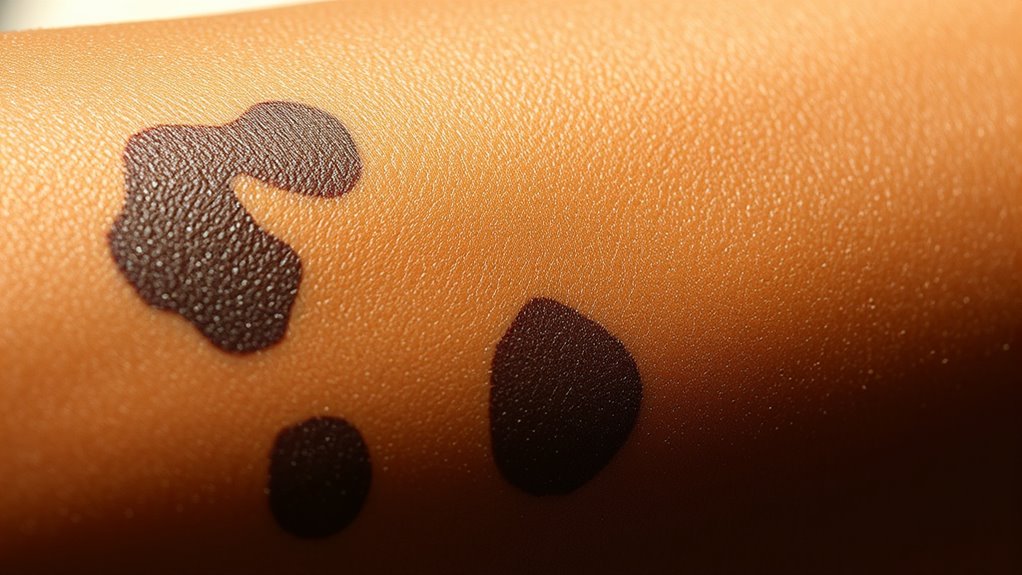
Have you ever wondered how your skin determines its color? The answer lies in melanin, the pigment responsible for the wide range of skin tones across different populations. Your skin’s color isn’t random; it results from a complex interplay of genetic variation and environmental impact. These factors influence how much melanin your body produces and how it’s distributed, shaping your appearance and how your skin responds to the world around you.
Genetic variation plays a *fundamental* role in determining the baseline level of melanin in your skin. Your genes carry instructions for enzymes like tyrosinase, which are essential for melanin synthesis. Variations in these genes mean that some people naturally produce more melanin, resulting in darker skin, while others produce less, leading to lighter skin tones. These genetic differences have evolved over thousands of years, often as a response to geographic and climatic conditions. For example, populations in regions with intense sunlight tend to have higher melanin levels, which provides a natural shield against harmful UV rays, protecting their skin from damage.
Genetic differences influence melanin levels, shaping skin tone and adaptation to environmental conditions over thousands of years.
But your environment also impacts melanin production in real-time. When exposed to sunlight, your skin responds by increasing melanin synthesis in a process called tanning. This is your body’s way of protecting deeper layers of skin from UV damage by thickening the pigment barrier. However, this adaptive response can sometimes be mistaken for damage, especially if your skin is exposed excessively or unexpectedly. Over time, chronic exposure to UV rays can cause real damage to your skin cells, leading to sunburns, premature aging, and even skin cancer. In these cases, the presence of dark spots or uneven pigmentation isn’t just a protective reaction but a sign that your skin has been harmed.
It’s important to recognize that not all darkening of the skin is beneficial. While increased melanin production in response to sun exposure can be protective, it can also be a sign of damage when accompanied by other symptoms like inflammation or irregular pigmentation. Conversely, lighter skin offers less natural protection against UV rays, making it more vulnerable to damage. This vulnerability underscores the importance of sun safety, regardless of your skin tone.
Additionally, ongoing research into AI-driven diagnostics is improving our ability to distinguish between protective pigmentation and signs of damage, enhancing skin health management. In essence, melanin’s role is *pivotal*: it acts as a shield, protecting you from environmental damage, but changes in its levels can also signal harm. Your skin’s color reflects a history of adaptation to your environment, shaped by both genetic variation and ongoing environmental impacts. Understanding this balance helps you appreciate why your skin reacts the way it does and highlights the importance of protecting it from unnecessary damage.
As an affiliate, we earn on qualifying purchases.
Frequently Asked Questions
Does Melanin Affect Skin Aging Process?
Yes, melanin influences your skin aging process. It provides some protection against UV rays, reducing damage from environmental influences like sun exposure, which accelerates aging. However, your genetic factors also play a role in melanin production and how your skin ages over time. If you have more melanin, you might experience slower aging signs, but environmental influences can still cause damage. Protect your skin to maintain a youthful appearance.
Can Melanin Production Be Increased Naturally?
Yes, you can increase melanin production naturally. Your genetic factors play a big role in determining your baseline melanin levels, but dietary influences also matter. Consuming foods rich in antioxidants, vitamins A, C, and E, and minerals like copper can support melanin synthesis. Spending moderate time in sunlight encourages melanin production, but always protect your skin to avoid damage. Balance is key to naturally boosting melanin safely.
How Does Melanin Influence Vitamin D Synthesis?
Did you know that about 90% of your vitamin D comes from sunlight? Melanin influences vitamin D synthesis by affecting how much sunlight your skin absorbs. Higher pigmentation, especially in darker skin, reduces vitamin D production because melanin acts as a natural sunscreen. So, if you have darker skin, you might need more sun exposure to produce enough vitamin D, highlighting how pigmentation directly impacts your health.
Are There Health Risks Associated With High Melanin Levels?
High melanin levels can pose health risks, especially if your genetic variation results in reduced vitamin D synthesis. While more melanin offers protection against UV damage, it may also lead to vitamin D deficiency if you have limited sun exposure. To stay healthy, balance your sun exposure and consider supplements if your skin’s melanin content is high, ensuring you get enough vitamin D without increasing skin damage risk.
Does Melanin Impact Susceptibility to Skin Cancers?
Yes, melanin impacts your susceptibility to skin cancers. Genetics play a role, as individuals with higher melanin levels generally have lower risks due to increased natural protection. Environmental influences, like sun exposure, can affect this protection, especially if you don’t use sunscreen or spend lots of time outdoors. So, while darker skin provides some defense, it’s still essential to take precautions against UV damage to reduce your skin cancer risk.
Conclusion
In the end, understanding how melanin functions helps you appreciate its dual role—protecting your skin and signaling damage. Remember, “forewarned is forearmed,” so by recognizing melanin’s signs, you can take better care of yourself. Embracing this knowledge empowers you to make smarter choices about sun exposure and skin health. After all, awareness is the first step toward prevention, ensuring your skin remains resilient and vibrant for years to come.
Columbus Day / Indigenous Peoples' Day Picks
long weekend sales
As an affiliate, we earn on qualifying purchases.