
TL;DR
Self-tanning mousse for Halloween can create a temporary bronzed base without sun exposure, but it develops over several hours and does not replace makeup for precise designs. Patch test first, prep and apply evenly according to the label, allow the stated development and rinse time, and remember that DHA self-tan offers no sun protection.
A Halloween costume can be almost finished, then your pale ankles or bare shoulders catch the light and make the whole look feel unfinished. Self-tanning mousse for Halloween can add a temporary bronzed base without sun exposure—but it is a developing skin product, not instant costume paint.

Get beauty and skincare favorites delivered free with Prime
- Fast, free delivery on millions of items
- Prime Video, Amazon Music and more included
- Member-only deals all year
This guide helps you decide whether mousse fits your character, choose when to apply it, and avoid the familiar traps: streaky knees, orange knuckles, and tan on a favorite costume. You’ll also see when body makeup makes more sense, how to patch test, and what to do if the result comes out darker than planned.
The goal is a look that feels intentional and comfortable, whether you’re going for a warm fantasy-hero glow or simply want your arms and legs to match. Think of the mousse as the background wash on a painting: useful for broad color, but not the right tool for every sharp line.
Use mousse for a broad bronzed base; choose body makeup for bright colors, stripes, and precise costume details.
Patch test an unfamiliar product at least a day ahead and stop if irritation occurs.
Apply to clean, dry skin with a mitt, using less product on elbows, knees, ankles, hands, and feet.
Follow the exact development and rinse instructions, and wear loose, dark clothing while the product develops.
A self-tan does not protect against UV radiation; use sunscreen outdoors and keep mousse away from eyes and mucous membranes.
What self-tanning mousse can—and can’t—do for your costume
Self-tanning mousse for Halloween creates a temporary bronzed color on the outermost layer of skin, so it works best as a broad, natural-looking base rather than detailed costume paint. Many formulas use dihydroxyacetone (DHA), which reacts with amino acids in the skin’s outer layer; the color develops over several hours and fades as that layer naturally sheds.
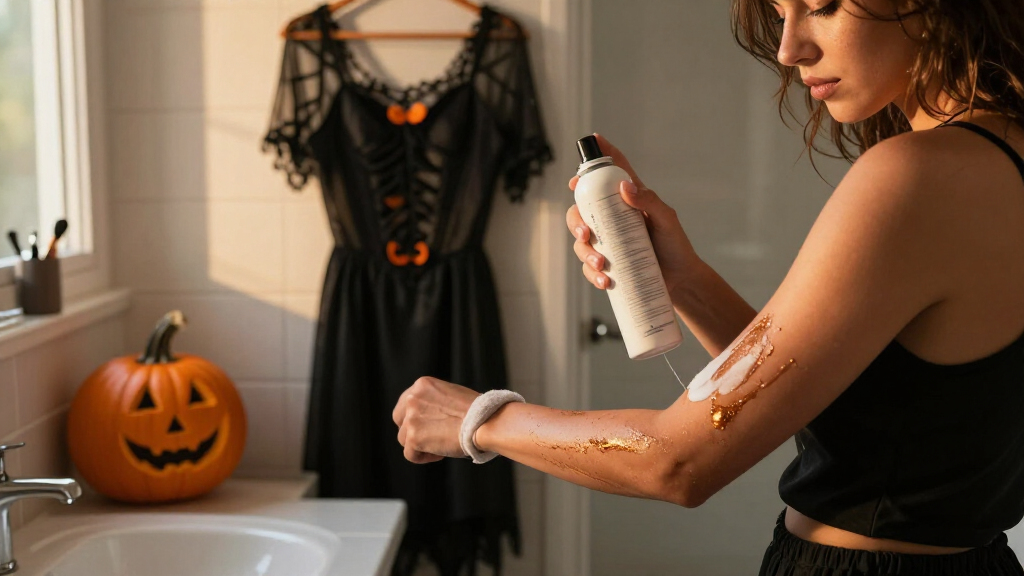
That makes mousse a practical match for a mermaid, adventurer, or sun-kissed festival character with lots of exposed skin. Say you’re wearing a sleeveless gold dress and want your shoulders and legs to look more even: a light, tested tan may provide that overall warmth. But if your costume needs green skin, sharp tiger stripes, or a vampire’s painted pallor, body makeup or costume paint offers more control.
Color depth is not the same as detail. A darker formula may give a more dramatic bronzed finish, but it will not draw clean patterns or reliably create a specific character shade. A useful pairing is mousse for the broad base and makeup for small, vivid accents. That’s like laying a smooth coat of paint before adding the fine brushwork.
Self-tan also does not protect you from ultraviolet (UV) radiation. If you’ll be outdoors, keep using sunscreen as directed; a bronze appearance does not signal sun protection. Avoid products or costume choices that imitate a real ethnic identity or rely on racial stereotypes. Build the character with clothing, props, and fantasy effects instead.
Products Worth Considering

Withings Body Smart Accurate Scale for Body Weight, Fat Percentage and Body Composition

Garmin Forerunner 165 GPS Running Smartwatch, 43 mm, Black

Garmin Forerunner 265S GPS Running Smartwatch, 42 mm, Black/Amp Yellow
As an affiliate, we earn on qualifying purchases.
Choose mousse for a glow, and makeup for sharp costume effects
Self-tanning mousse suits Halloween costumes that call for an even, bronzed base; body makeup is usually better for vivid colors and precise designs. The simplest choice depends on whether your look needs broad color across your skin or a pattern you can place exactly, such as scales, stripes, or theatrical pallor.
| Costume need | Better starting point | What to expect |
|---|---|---|
| Warm glow on arms and legs | Gradual or natural-looking mousse | Color develops over time; shade varies by product and skin |
| Dramatic bronze base | Deeper mousse, tested ahead | Can look stronger, but a test patch helps you judge the result |
| Bright fantasy colors or stripes | Body makeup or costume paint | More control over placement and color |
| Face color near eyes or lips | Only a product labeled for facial use | Follow directions and keep it away from eyes and mucous membranes |
For example, if you’re dressing as a forest-fantasy character, mousse can provide a subtle warm base on your arms while green makeup adds leaves or markings. If the whole look depends on bright blue skin, skip the tan and choose a suitable costume product instead; the mousse will not become blue no matter how dark the formula looks in the bottle.
Product trends include different undertones, development times, and formulas marketed as hydrating or lower-scent. Those descriptions are not guarantees of how a product will perform on your skin. Read the individual label, check whether it’s intended for the face or body, and choose based on your costume and comfort—not just a dramatic product photo.
How to apply mousse without streaks or dark knuckles
For a more even Halloween tan, prepare clean, dry skin, apply a thin layer with a mitt, and use less product on dry or bony areas. Follow your product’s instructions from start to finish because development and rinse times vary between formulas; there is no single timing rule that suits every bottle.
- Patch test at least a day ahead. Try a small area with the unfamiliar product, especially if your skin is sensitive. Stop using it if irritation occurs.
- Prep gently. Exfoliate beforehand without scrubbing hard, and shave in advance if you want to. If shaving or exfoliating leaves your skin feeling tender, let it settle before applying.
- Dry and moisturize selectively. Start with clean, dry skin. Put a small amount of moisturizer on elbows, knees, ankles, and knuckles, where color can collect.
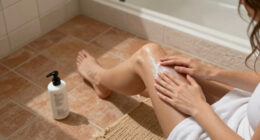
- Apply in sections. Use an applicator mitt and light, even strokes. Work from larger areas toward smaller ones, using less mousse on hands, feet, knees, and elbows.
- Check your hands and nails. If product gets on your palms or around your nails, wash those areas promptly. Let your skin dry, wear loose dark clothing during development, and rinse only when the label says to.
Imagine applying mousse after a shower the evening before your party. You use long, calm strokes on your legs, a lighter touch around your knees, and a small amount of moisturizer on your ankles; then you wear loose pajamas instead of squeezing into tight leggings. This simple routine gives you a chance to see the color before costume time and reduces the odds of friction marking a still-developing tan.
A mitt helps distribute product, but it cannot correct rushed application or overloading dry patches. If you notice a missed spot later, follow the product guidance rather than repeatedly layering mousse onto wet or uneven color. Thin and even beats thick and hurried.
Time your tan so it’s ready before the party
Apply mousse according to its label and leave enough time for its stated development and rinse instructions before you put on your costume. Many people plan to apply the evening before or earlier on event day, but the right schedule depends on the specific formula; check the bottle rather than guessing from another product’s routine.
Timing matters because a developing product can rub onto clothing or bedding before it dries or before any instructed rinse. Picture a black-cat costume with a fitted bodysuit: slipping into it while your legs still feel tacky can create smudges exactly where the fabric presses. Loose, dark clothing gives your skin breathing room and makes any transfer less noticeable.
Keep the night’s schedule realistic. If your label calls for a rinse after a set development period, plan to be near a shower and leave time to dry fully before dressing. Don’t leave mousse on longer than the directions suggest in a bid for extra color; a longer wait is not a reliable shortcut to a better shade.
Set the application time by the label, not the party invitation. Your costume is easier to protect when the product has dried and you have followed its rinse instructions.
Water, sweat, friction, and shaving can affect how a tan looks and fades. If you’ll dance in a warm room or wear a snug costume, that can matter more than the formula’s advertised development time. A loose robe while you get ready and a quick costume check under bright light can reveal damp spots or uneven patches before you head out.
Keep the look comfortable, and know when to skip it
Use self-tanning mousse only as directed, keep it away from your eyes and mucous membranes, and avoid breathing in any spray or mist. A topical DHA tan colors the outer layer of skin; it does not make you sun-safe, and some people can react to product ingredients, so a patch test is a sensible first step.
Skip application on irritated, freshly damaged, or sunburned skin. If a shave leaves your legs prickly or a costume fitting rubs your shoulders raw, wait until your skin feels settled rather than applying over the area. If irritation starts after use, stop and follow the product’s safety guidance; seek professional advice if you’re unsure, especially if you have a skin condition or a history of reactions.
Facial use needs extra care. Only use a mousse on your face if the label specifically permits it, and keep it away from your eyes and lips. For a skeleton or zombie look, makeup designed for the face gives you more control around delicate areas than an all-over body formula.
And remember, a Halloween tan should be a choice, not a costume requirement. A character can look complete through fabric, lighting, accessories, and makeup alone. If you’re uncertain how your skin will respond, choose a tested product or skip the mousse; no last-minute bronze is worth feeling uncomfortable at the party.
Fix fading color and protect your costume from transfer
Self-tan often fades over several days as the outer skin naturally sheds, though the exact duration varies with the formula, your skin, washing, and friction. Gentle bathing and exfoliation may help a fading tan look more even, but neither gives you instant erasure; avoid harsh scrubbing, bleach, or household cleaning products on your skin.
If you spot a darker patch on your wrist two days after Halloween, start with a warm bath and gentle exfoliation rather than attacking it with a rough scrub. The color sits in the outer skin layer, so it takes time to fade. Repeated harsh scrubbing can leave skin uncomfortable without producing the quick fix you hoped for.
Transfer is more likely while product is still developing or before an instructed rinse, so let your skin dry and follow the label before putting on a costume. Dark, loose clothing is a practical choice during development, and checking the product’s transfer guidance helps you decide when to wear a favorite garment. A pale satin cape may be a poor match for a freshly applied tan; a dark cotton robe is less risky.
Water, sweat, friction, and shaving can change the finish, too. If you plan a long evening of dancing, expect that the areas rubbed by straps or seams may fade differently from uncovered skin. Keep your routine gentle afterward, and treat fading as a normal part of a temporary cosmetic effect—not a problem that requires aggressive removal.
Frequently Asked Questions
How long before Halloween should I apply self-tanning mousse?
Follow the product’s directions for development and rinse timing. Many people apply the evening before or earlier on event day, leaving time to dry and complete any stated rinse before dressing.
How long does a self-tan last?
It often fades over several days, but the timing varies by formula, skin care, washing, and friction. The color fades as the outer layer of skin naturally sheds.
Will self-tanning mousse stain my costume or sheets?
Some products can transfer before they are fully dry or rinsed. Follow the label, let your skin dry, and wear loose, dark clothing during development; avoid dressing in a favorite pale costume too soon.
Can I use body mousse on my face?
Use it on your face only if the product is labeled for facial use. Patch test first, follow the instructions, and keep it away from your eyes and lips; face makeup may be a better option for a detailed costume effect.
Does self-tanner protect me from the sun?
No. Self-tanning mousse does not provide UV protection, even when the result looks like a natural tan. Use sunscreen outdoors as directed.
How can I fix streaks or remove a darker patch?
Gentle bathing and exfoliation may help the color fade more evenly, but results take time. Avoid harsh scrubbing, bleach, and household cleaners on skin; for the next application, prep gently and use a thin, even layer with a mitt.
Conclusion
Choose self-tanning mousse when your costume needs a broad, temporary bronze—not when it needs precise paint or a vivid fantasy color. Patch test, follow the label’s timing, and use a mitt with a light touch; those choices do more for an even result than rushing on an extra layer.
Let the mousse be the soft background wash, then build the character with clothes, props, and makeup. Your costume should turn heads for the idea, not for orange knuckles.