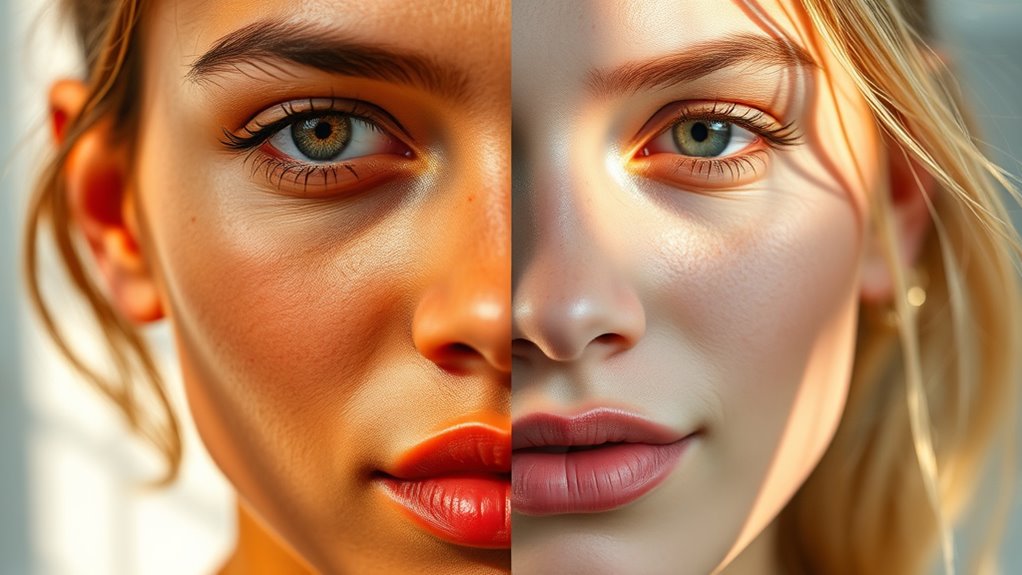

Seasonal changes in sunlight impact your skin tone by affecting vitamin D production and melanin levels. During winter, less UV exposure means less vitamin D, which can make your skin look dull or pale. In summer, increased sunlight boosts melanin, darkening your skin and giving it a tan. These shifts are natural responses to light, and understanding them can help you manage your skin’s health and appearance better throughout the year. If you want to know more, keep exploring this fascinating connection.
Key Takeaways
- Reduced sunlight in winter decreases UV exposure, lowering vitamin D production and making the skin appear paler or duller.
- Increased summer sunlight stimulates melanin production, causing the skin to tan or darken for natural UV protection.
- Seasonal changes in light influence skin’s hydration and vitality, often making it look less vibrant in darker months.
- Proper skincare adjustments, like moisturizing in winter and sun protection in summer, help maintain even skin tone year-round.
- Excessive UV from seasonal sunlight can accelerate skin aging and lead to uneven pigmentation or sun spots.

The changing seasons can substantially influence how your skin looks and feels, especially in relation to the light around you. As the seasons shift, so does the intensity and angle of sunlight reaching your skin, which directly impacts processes like vitamin D synthesis and melanin production. When sunlight is less intense during winter months, your body produces less vitamin D, a essential nutrient that supports immune function and overall health. You might notice your skin becoming paler or duller during these times because reduced UV exposure limits vitamin D production, which can also influence your skin’s vitality and glow.
Conversely, during summer, the increased sunlight exposure prompts your skin to produce more melanin—the pigment responsible for your skin tone and protection against UV damage. As melanin levels rise, your skin may tan or darken, providing a natural defense against harmful UV rays. This process is your body’s way of balancing protection and pigmentation, but it can also lead to uneven skin tone or sun spots if you don’t take proper precautions. The more consistent and intense sunlight, the more your melanin production ramps up, resulting in a darker or more even complexion, depending on your skin type and genetic predisposition.
Summer sunlight boosts melanin, darkening skin and enhancing your natural tone with proper precautions.
Your skin’s response to seasonal light is a delicate dance between these biological processes. During months with shorter days and weaker sunlight, your body’s ability to synthesize vitamin D diminishes, which can leave your skin looking less vibrant and sometimes more prone to dryness or irritation. On the other hand, increased melanin production during sunnier months can temporarily alter your skin tone, giving you a tan or darker appearance. However, this adaptation isn’t without risks, as excessive UV exposure can damage your skin cells and accelerate aging, making sun protection essential regardless of the season.
Understanding these changes can help you adjust your skincare routine appropriately. In winter, you might want to focus on moisturizing and vitamin D supplementation if sunlight is scarce. During summer, using broad-spectrum sunscreen and seeking shade can help prevent overproduction of melanin and reduce the risk of sun damage. Additionally, tuning your skincare routine to seasonal light changes can optimize your skin health and appearance. By being mindful of how seasonal light affects these processes, you can maintain healthier, more balanced skin year-round. Ultimately, your skin’s appearance and health are closely tied to the light around you, making it essential to adapt your care to the changing seasons.

CeraVe Moisturizing Cream, Body and Face Moisturizer for Dry Skin, Body Cream with Hyaluronic Acid and Ceramides, Daily Moisturizer, Oil-Free, Fragrance Free, Non-Comedogenic, 19 Ounce
[ HYALURONIC ACID MOISTURIZER ] With hyaluronic acid, ceramides and MVE technology for 24 hour hydration. Rich, velvety…
As an affiliate, we earn on qualifying purchases.
As an affiliate, we earn on qualifying purchases.
Frequently Asked Questions
How Quickly Does Skin Tone Change With Seasons?
Your skin tone can start to change within a few weeks as seasons shift. Increased sunlight boosts Vitamin D synthesis, prompting your body to produce more melanin, which darkens your skin. Conversely, less light leads to reduced melanin production, making your skin appear lighter. These changes happen gradually, so you might notice subtle differences over several weeks, depending on your exposure and skin type.
Can Seasonal Light Cause Permanent Skin Tone Alterations?
Think of your skin as a delicate canvas, and seasonal light as an artist’s brush. While UV exposure can cause temporary changes in your skin’s tone, it usually doesn’t lead to permanent alterations if you protect yourself. However, frequent or intense UV exposure can challenge pigment stability over time, risking long-term changes. To preserve your natural glow, shield your skin from excessive sunlight and maintain consistent skincare.
What Skincare Tips Help Mitigate Seasonal Light Effects?
To mitigate seasonal light effects, you should prioritize sun protection by applying broad-spectrum SPF daily, even when it’s cloudy. Incorporate skincare products with antioxidants to combat environmental stressors and maintain skin health. Don’t forget to get enough Vitamin D safely through diet or supplements, especially in winter. Staying consistent with these tips helps protect your skin from seasonal light changes and keeps your skin tone even and healthy year-round.
Does Geographic Location Influence Seasonal Light Impact on Skin?
The proof is in the pudding—your geographic location definitely influences how seasonal light impacts your skin. Latitude variations alter sunlight intensity, meaning those closer to the equator experience more consistent, stronger sunlight year-round, while higher latitudes face more dramatic seasonal changes. This affects your skin’s tone and vulnerability to damage. So, depending on where you live, you’ll need tailored skincare routines to protect against these seasonal light effects effectively.
Are Certain Skin Types More Affected by Seasonal Light Variations?
Yes, certain skin types are more affected by seasonal light variations. Your melanin response influences how your skin adapts, with lighter skin tones often showing more noticeable changes. Darker skin has higher melanin levels, which offer some protection and reduce visible shifts in tone. Your skin’s adaptability varies, but understanding your skin type helps you better manage seasonal changes and protect your skin from potential damage caused by fluctuating light.
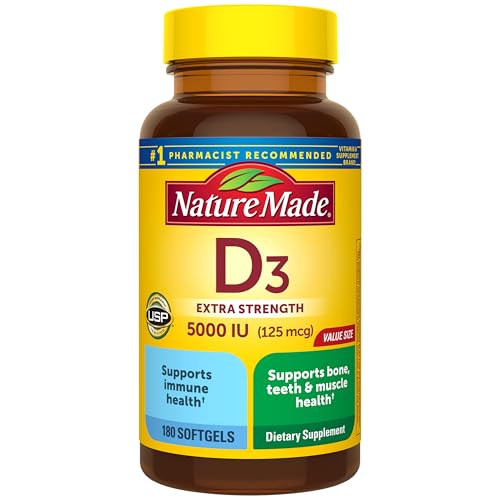
Nature Made Vitamin D3 5000 IU (125 mcg) Softgels, Extra Strength Vitamin D Supplement for Bone and Immune Health Support, 180 Count, 180 Day Supply
Immune, muscle, teeth and bone health support supplement: contains one 180 count bottle of Nature Made Extra Strength…
As an affiliate, we earn on qualifying purchases.
As an affiliate, we earn on qualifying purchases.
Conclusion
As seasons change, so does the light, subtly influencing your skin tone. Did you know that during summer, increased UV exposure can boost melanin production by up to 20%? This means your skin may appear darker and more vibrant, but it also increases the risk of damage. By understanding how seasonal light affects your skin, you can better protect and care for it year-round. Embrace the change while keeping your skin healthy and glowing.

Hawaiian Tropic Weightless Hydration Lotion Sunscreen for Face SPF 30, 1.7oz | Travel Size Sunscreen Lotion, Beach Essentials, Sun Protection, Travel Sunblock Face, Summer Essentials, 1.7 fl oz
WEIGHTLESS FACE SUNSCREEN SPF 30 feels as if it's barely on plus provides 12-hour hydration
As an affiliate, we earn on qualifying purchases.
As an affiliate, we earn on qualifying purchases.

Jergens Natural Glow +Firming Self Tanner Body Lotion, Fair to Medium Skin Tone, Sunless Tanning Moisturizer with Collagen and Elastin. Helps to Visibly Reduce Cellulite, 7.5 Fl Oz
SELF TANNER BODY LOTION – Create a flawless light bronze tan with gradual, natural-looking color while nourishing and…
As an affiliate, we earn on qualifying purchases.
As an affiliate, we earn on qualifying purchases.