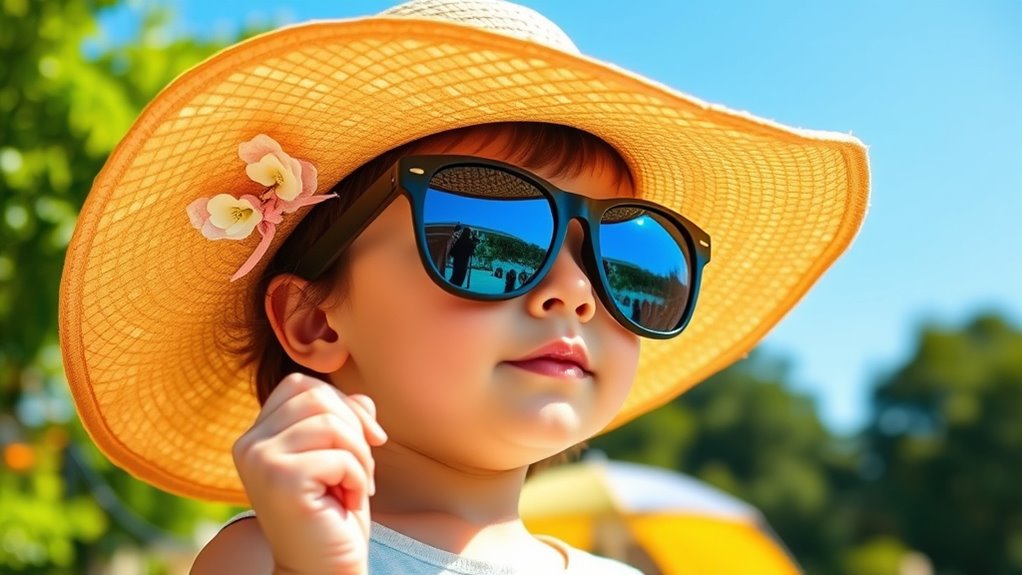

To protect your child’s eyes from sun damage, make certain they wear sunglasses that block 100% of UVA and UVB rays, preferably labeled “UV400.” Choose fun, comfortable styles like wraparounds and fit them well to encourage consistent use. Also, encourage wearing wide-brim hats, seek shade during peak hours, and use protective clothing. Combining these strategies guarantees thorough safety, and continuing will help you discover more tips to keep your child’s eyes safe.

Get beauty and skincare favorites delivered free with Prime
- Fast, free delivery on millions of items
- Prime Video, Amazon Music and more included
- Member-only deals all year
Key Takeaways
- Choose sunglasses that block 100% of UVA and UVB rays, ensuring they are labeled “UV400” for full protection.
- Select stylish, well-fitting sunglasses with wraparound styles to encourage consistent wear and shield sides from UV rays.
- Use wide-brim hats and protective clothing, and seek shade during peak sun hours (10 a.m. to 4 p.m.) for comprehensive protection.
- Make sun safety fun by involving children in selecting their sunglasses and emphasizing the importance of daily protection.
- Educate children on sun safety to promote consistent use of sunglasses and other protective measures for long-term eye health.
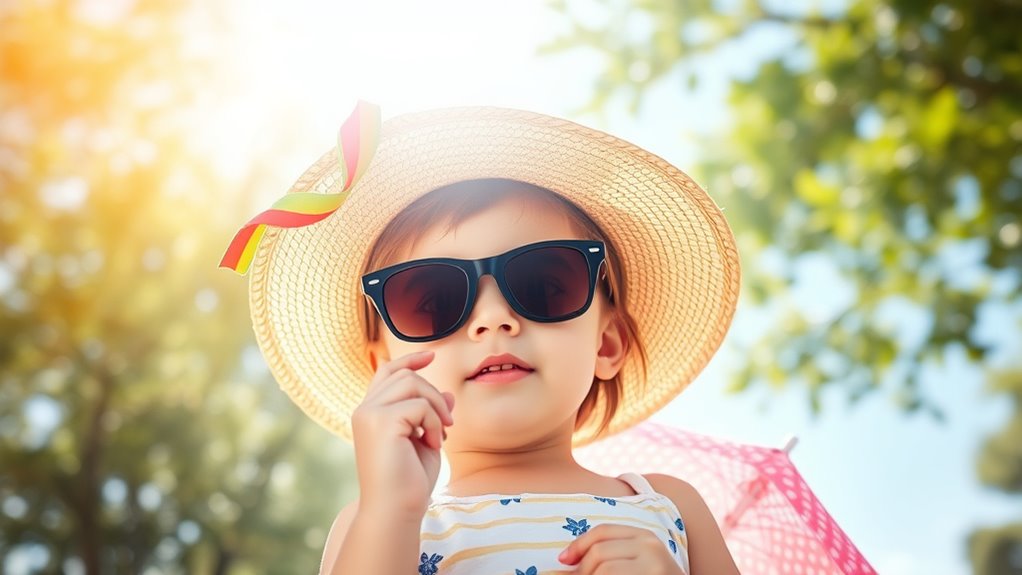
Since children’s eyes are more vulnerable to sun damage, it’s essential to take proactive steps to protect them whenever they’re outdoors. One of the most effective ways to do this is by ensuring they get adequate UV protection. The sun’s ultraviolet rays can cause long-term damage to developing eyes, increasing the risk of cataracts, macular degeneration, and other eye conditions later in life. To combat this, you should always choose sunglasses that block 100% of UVA and UVB rays. Not all sunglasses offer the same level of protection, so it’s important to read labels carefully. When shopping for sunglasses for your child, look for those that specify UV protection and are labeled as “UV400,” which guarantees full protection from harmful rays. Additionally, ensure the sunglasses fit well and stay comfortably on your child’s face, as ill-fitting glasses are less likely to be worn consistently.
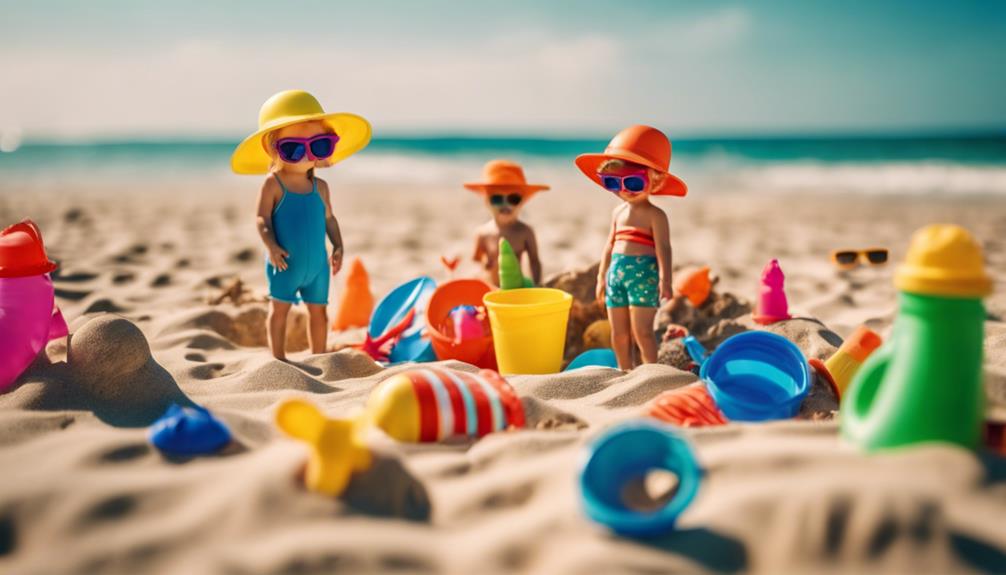
Sunglasses styles also matter because they can influence whether your child wants to wear them regularly. There are numerous fun and fashionable options available, from colorful frames to playful shapes, making sun protection both practical and appealing. Wraparound styles are particularly effective because they shield the eyes from light entering from the sides, providing extra protection against UV rays. If your child prefers smaller or sport-specific sunglasses, make sure they still offer full UV protection and fit snugly without slipping off during active play. The right sunglasses can become a favorite accessory, encouraging your child to wear them daily, especially during peak sun hours. Remember, the goal isn’t just style but ensuring maximum protection against UV exposure.
Furthermore, choosing sunglasses with up-to-date UV protection standards can help ensure your child’s eyes are adequately safeguarded against the latest UV-related risks. Beyond sunglasses, you can complement eye protection with wide-brim hats and protective clothing to block out direct sunlight. Seeking shade during the sun’s strongest hours—usually between 10 a.m. and 4 p.m.—also reduces exposure. Educate your children about the importance of sun safety and encourage them to wear protective gear consistently. Kids might resist at first, but making it a fun routine or choosing stylish sunglasses together can increase their willingness. The key is consistency; UV rays are strongest during midday, and repeated exposure over time can cause significant harm. By prioritizing UV protection with the right sunglasses styles and other protective measures, you’re helping safeguard your child’s eye health now and in the future.
As an affiliate, we earn on qualifying purchases.
Frequently Asked Questions
When Should Children Start Wearing Sunglasses Regularly?
You should start encouraging children to wear sunglasses regularly once they’re exposed to sunlight, especially during peak UV exposure times. Early eye health education helps them understand the importance of protecting their eyes from harmful rays. By modeling good habits and choosing sunglasses with UV protection, you guarantee their eyes stay safe and healthy as they grow, reducing future risks of eye damage caused by sun exposure.
Are There Specific UV Protection Standards for Children’s Eyewear?
You might wonder if there are specific UV protection standards for children’s eyewear. The answer is yes—regulations like Children’s eyewear regulations guarantee these glasses block 100% of UVA and UVB rays. Manufacturers must meet strict standards to protect young eyes from sun damage. When choosing sunglasses, look for those that clearly state they comply with UV protection standards, giving you peace of mind and safeguarding your child’s eyesight effectively.
How Can Parents Tell if Sunglasses Are Effectively Blocking UV Rays?
You can tell if sunglasses effectively block UV rays by checking the sunglasses labels for UV protection details. Look for UV testing labels that specify 100% UV protection or UV400, meaning they block all UVA and UVB rays. Don’t rely solely on color or style; always verify the labels and certification. This guarantees your child’s eyes are well-protected from harmful sun exposure.
Do Contact Lenses Provide Any Sun Protection Benefits for Children?
Contact lenses with UV protection can help improve children’s eye safety, but they shouldn’t be your only safeguard. While they block some UV rays, they don’t cover the entire eye area like sunglasses do. To guarantee thorough sun protection, encourage your child to wear UV-blocking sunglasses outdoors. Combining contact lens UV protection with proper sunglasses offers the best defense against sun damage, keeping your child’s eyes safe.
Are There Any Natural Remedies to Protect Children’s Eyes From Sun Damage?
Think of your child’s eyes as delicate flowers needing extra care. While natural remedies like herbal supplements and dietary adjustments can support overall eye health, they don’t replace sun protection. Encourage your child to wear wide-brimmed hats and sunglasses, and include foods rich in vitamins A, C, and E. These habits act like a shield, helping to keep their eyes safe from sun damage naturally.
Conclusion
By shielding your child’s eyes from the sun, you’re planting seeds for their future health. Remember, the sun’s rays can be just as sneaky as a fox, quietly causing damage over time. Make sunglasses a daily habit, seek shade, and encourage protective clothing. Think of it as wrapping their eyes in a cozy blanket of defense—because a little extra care today can keep their vision bright and clear for years to come.
Fall Picks
fall essentials
As an affiliate, we earn on qualifying purchases.