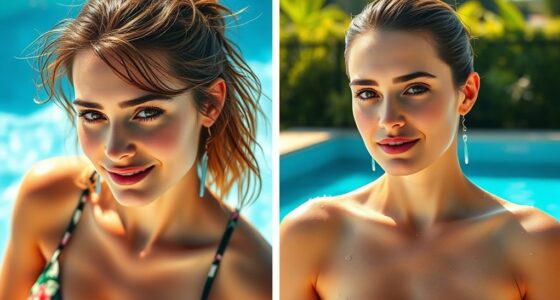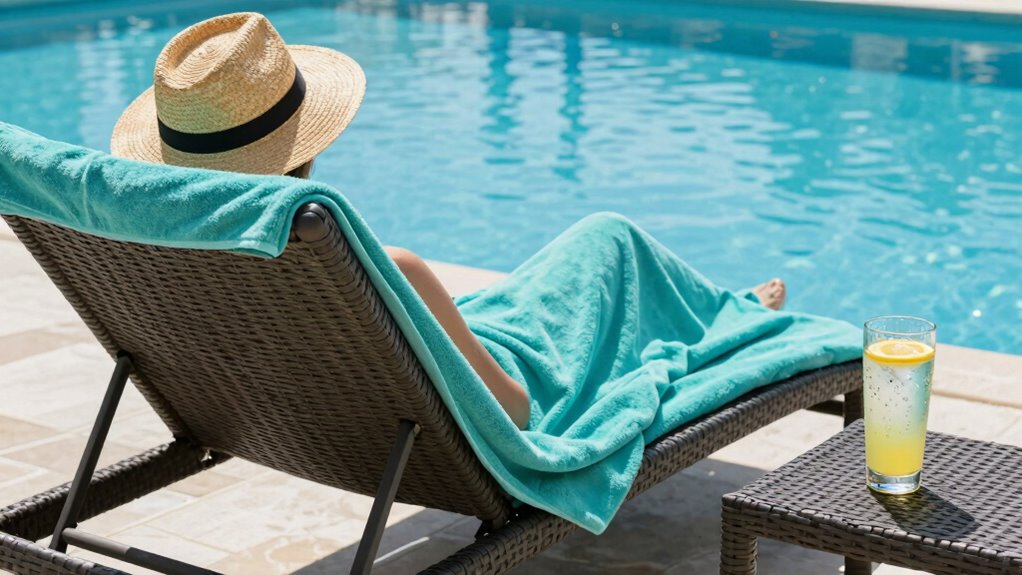
When you lounge poolside, you’re exposed to more UV rays than you might think because water reflects sunlight, bouncing UV rays from above and even underneath. This amplification can lead to higher risks of sunburns and skin damage, even if you’re under an umbrella. Water-resistant sunscreen, protective clothing, and shade can help, but understanding how reflective surfaces increase exposure is key. Keep going to discover ways to stay safer and enjoy your time in the sun more wisely.
Listen free for 30 days with Audible
Thousands of audiobooks and originals — cancel anytime.
As an affiliate, we earn on qualifying purchases.
Key Takeaways
- Water reflects UV rays, increasing skin exposure beyond direct sunlight.
- Swimmers and loungers remain vulnerable even under umbrellas due to UV reflection.
- Water-resistant sunscreens are essential as UV exposure is amplified during swimming and sweating.
- Reflection from water surfaces can cause UV rays to reach from multiple angles, not just overhead.
- Prolonged poolside lounging without adequate protection heightens the risk of sunburn and skin damage.

Spending time poolside offers a perfect chance to soak up the sun and unwind, but it also exposes your skin to harmful UV rays. Many people underestimate just how much more exposure they get when lounging by the water. It’s easy to think that sitting under an umbrella or on a sunbed provides enough protection, but the reality is that UV rays bounce off the water’s surface, intensifying your exposure. That’s why practicing sun safety becomes crucial when you’re relaxing by the pool. You need to be proactive about shielding your skin from UV damage because the sun’s rays aren’t just coming from above; they’re reflected from the water and surrounding surfaces, multiplying your risk of sunburn and long-term skin issues. Understanding how UV reflection from water amplifies exposure can help you better prepare and protect yourself.
Your skin protection routine should go beyond just applying sunscreen. While broad-spectrum SPF is essential, it’s not foolproof—especially if you don’t reapply regularly or miss spots. Remember, water-resistant sunscreens are a must, but don’t forget to reapply after swimming or sweating. Wearing protective clothing, such as wide-brimmed hats, UV-protective sunglasses, and lightweight long sleeves, can significantly cut down your UV exposure. Sitting under an umbrella provides some shade, but the effect can be limited if the umbrella is small or if you’re positioned at an angle where the sun’s rays still reach your skin. The key is to combine physical barriers with sun safety habits to maximize skin protection. Additionally, choosing appropriate poolside shade options can help reduce overall UV exposure during extended lounging periods. Incorporating landscaping features that provide natural shade can also be an effective way to stay protected and enhance your backyard oasis. Being mindful of UV intensity can further influence your sun safety strategies and help you avoid overexposure.
Use water-resistant sunscreen, reapply often, and wear protective clothing to maximize your skin’s safety poolside.
It’s also important to be aware of the time of day you’re lounging. The sun’s rays are strongest between 10 a.m. and 4 p.m., so if you want to minimize UV exposure, try to stay in the shade or indoors during these peak hours. Drinking plenty of water helps keep your skin hydrated and resilient, reducing the risk of damage. Keep in mind that even on cloudy days, UV rays can penetrate clouds and harm your skin, so don’t skip sun safety just because the sky isn’t clear. Rotating your lounging spots and taking regular breaks in the shade can make a big difference in how much UV radiation your skin absorbs over the day. Being aware of hormesis and its effects on skin resilience can also inform your sun safety approach.

Neutrogena Beach Defense Sunscreen Lotion, SPF 70, 6.7 fl. oz
- High SPF Protection: Broad spectrum SPF 70 for sunburn protection
- Lightweight Formula: Non-greasy, fast-absorbing lotion
- Water Resistant: Lasts up to 80 minutes in water
As an affiliate, we earn on qualifying purchases.
As an affiliate, we earn on qualifying purchases.
Frequently Asked Questions
How Long Does It Take for Sun Exposure to Cause Skin Damage?
Sun exposure can cause skin damage in as little as 15 minutes if you’re not practicing sunburn prevention. Prolonged exposure increases the risk of skin aging effects and sunburn. To protect yourself, apply broad-spectrum sunscreen, wear protective clothing, and seek shade during peak hours. Remember, even short periods in the sun can harm your skin, so it’s essential to take precautions to avoid long-term damage.
Can Reflective Surfaces Increase UV Exposure at the Poolside?
Yes, reflective surfaces like water, tiles, or glass can increase UV exposure at the poolside. Reflected sunlight and surface glare bounce UV rays back onto your skin, amplifying your overall exposure. This means you might get more sun damage than you realize, even if you’re sitting in the shade or wearing sunscreen. To protect yourself, wear broad-spectrum sunscreen, sunglasses, and consider seeking shade during peak sunlight hours.
Does Clothing Choice Significantly Reduce UV Radiation Exposure?
Clothing choices can considerably shield you from harmful UV radiation. Opt for clothing materials with high UV protection, like tightly woven fabrics or specialized UPF-rated gear. Lightweight, long-sleeved shirts and wide-brimmed hats serve as sturdy shields, safeguarding your skin from sun’s rays. You’ll feel confident and comfortable while fighting off the fierce, fiery sun, making your poolside experience safer, sunnier, and more sensational.
Are There Specific Times of Day When Exposure Is Riskier?
Yes, exposure is riskier during midday hours, typically between 10 a.m. and 4 p.m. when the sun’s rays are strongest. To protect your skin, seek shade options like umbrellas or trees, and wear protective clothing. Remember, even during these hours, staying in the shade and using broad-spectrum sunscreen helps reduce UV radiation exposure, keeping your skin safer while enjoying your poolside lounging.
How Does Altitude Affect UV Exposure During Poolside Lounging?
Altitude effects notably increase UV intensity; for every 1,000 meters you climb, UV exposure can rise by approximately 10-12%. When you lounge poolside at higher elevations, you’re exposed to more harmful UV rays due to this heightened intensity. So, if you’re at a mountain resort or elevated pool, you need to be extra vigilant—wear sunscreen, seek shade, and protect your skin, even during seemingly safe midday hours.
Conclusion
Think of poolside lounging as standing in a sunlit clearing, where each moment beneath the shimmering canopy exposes you to more than just sunlight. Like a butterfly fluttering from flower to flower, your skin absorbs rays from every angle, unnoticed yet impactful. So, next time you settle in for a lazy afternoon, remember you’re not just relaxing—you’re quietly inviting in exposure that can add up over time. Stay mindful, and protect your skin like a treasured garden.
Baby shower & registry season Picks
baby registry must-haves
As an affiliate, we earn on qualifying purchases.