
Pool maintenance products contain chemicals like chlorine, pH adjusters, and algaecides that can irritate your skin or weaken its natural barrier, making you more sensitive over time. Improper handling or storage increases the risk of skin reactions. When water balance is off, your skin may feel dry, itchy, or develop rashes. Pay close attention to how chemicals are used and maintained; discovering essential tips can help you keep your skin safe and healthy.

Get beauty and skincare favorites delivered free with Prime
- Fast, free delivery on millions of items
- Prime Video, Amazon Music and more included
- Member-only deals all year
Key Takeaways
- Chemical irritants like chlorine and algaecides can cause skin allergies and irritation upon contact.
- Imbalanced pH levels from improper use of pH adjusters lead to skin dryness and discomfort.
- Concentrated chemicals or improper storage increase the risk of accidental skin reactions.
- Disrupted water chemistry weakens the skin’s natural barrier, making it more sensitive.
- Inadequate maintenance and testing can result in chemical imbalances that trigger skin sensitivities.
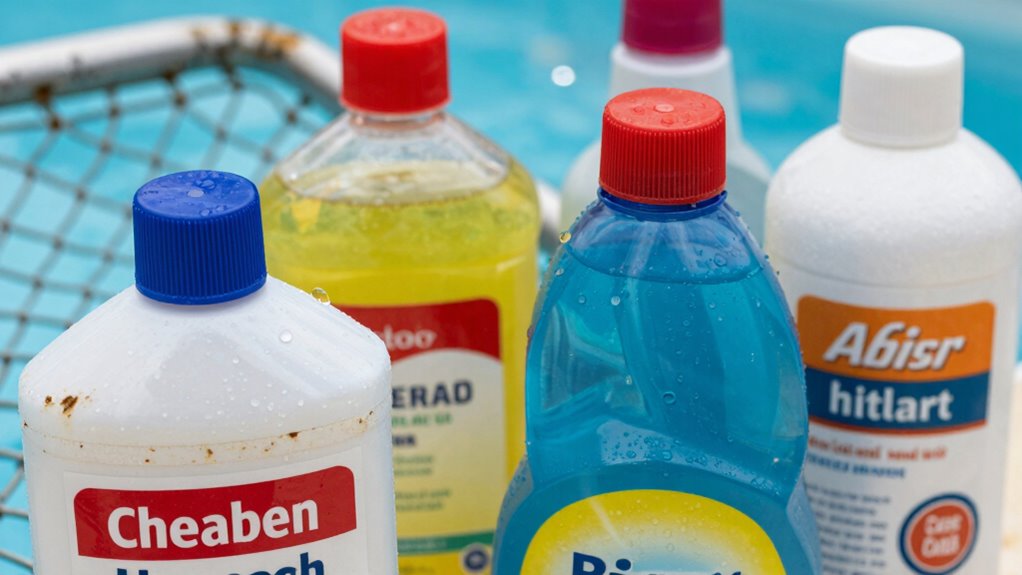
Maintaining a clean and safe pool is essential, but if you have sensitive skin, certain pool maintenance products can cause irritation or allergic reactions. When you use chemicals like chlorine, pH adjusters, or algaecides, they can lead to chemical reactions that affect your skin’s health. When you swim in chlorinated water, your skin might feel dry, flaky, or develop rashes. The chemical reactions inside the water can strip your skin’s natural oils, weakening its protective barrier and increasing susceptibility to irritation. Using water treatment chemicals properly and maintaining optimal levels can help reduce these adverse effects. Proper handling and storage of these products also minimize accidental exposure that might trigger skin reactions. Additionally, ensuring that your application techniques are correct can prevent unnecessary skin contact with concentrated chemicals.
Similarly, pH adjusters such as muriatic acid or sodium carbonate are used to keep the pool water balanced. If the water’s pH swings outside the ideal range, it can cause or worsen skin irritation. Low pH levels can make the water acidic, leading to stinging sensations and dryness, while high pH can cause the water to feel slippery and induce irritation over time. When you come into contact with improperly balanced water, your skin’s natural pH balance gets disrupted, leading to discomfort and potential allergic reactions. Regular testing and adjustments are key to preventing these issues and protecting sensitive skin. Additionally, using pH balancing agents correctly can help maintain a comfortable and skin-friendly environment. Ensuring that the pool’s chemical levels are consistently monitored helps prevent chemical imbalances that could irritate your skin.
organic pool maintenance products
As an affiliate, we earn on qualifying purchases.
As an affiliate, we earn on qualifying purchases.
Frequently Asked Questions
Can Natural or Organic Pool Products Reduce Skin Sensitivity Risks?
Yes, natural or organic pool products can reduce skin sensitivity risks. Organic alternatives often contain fewer harsh chemicals, making them gentler on your skin. They also support proper pH balancing, which helps prevent irritation. By choosing these safer options, you can enjoy your pool experience without the worry of sensitivity or allergic reactions. Just make sure you follow the manufacturer’s instructions for maximum use and maintenance.
How Often Should I Test My Pool Water for Skin-Irritating Chemicals?
You should test your pool water at least twice a week to keep it in check. Regular testing ensures your pool water pH stays balanced and chemicals are within safe ranges, preventing skin irritation. Don’t wait until problems arise—staying on top of chemical balancing helps avoid skin sensitivity issues. Using a reliable testing kit, check for chlorine, pH, and other chemicals, and adjust as needed to keep your pool safe and skin-friendly.
Are There Specific Ingredients to Avoid in Pool Maintenance Products?
You should avoid pool maintenance products containing harsh chemical additives like ammonia or chlorine-based stabilizers, which can irritate your skin. Also, steer clear of pH balancers with strong acids or bases that disrupt your skin’s natural barrier. Look for gentle, skin-friendly formulas and always read labels carefully. Using products with natural or soothing ingredients helps reduce the risk of skin sensitivity and keeps your pool safe and enjoyable.
Do Certain Pool Covers Help Minimize Chemical Exposure and Skin Reactions?
Yes, certain pool covers can help minimize chemical exposure and skin reactions. Look for covers with high durability and UV protection, as they resist wear and break down that might release chemicals or irritants. These covers act as a barrier, reducing direct contact with pool chemicals and limiting skin irritation. Investing in a quality, UV-protected cover guarantees safer pool use, especially for sensitive skin, and extends the lifespan of your cover.
Can Showering Immediately After Swimming Prevent Skin Sensitivity Issues?
Think of your skin as a sponge, soaking up everything it touches. Showering immediately after swimming washes away pool chemicals, reducing the risk of allergic reactions and skin sensitivity. This post swim skincare routine helps remove residual chemicals, toxins, and irritants that could cause discomfort later. By rinsing off promptly, you protect your skin’s barrier, keeping it healthy and less prone to allergic reactions, ensuring your pool days stay fun, not itchy.
Conclusion
Remember, your skin is like a delicate garden, and pool chemicals are the unpredictable weather. When you plunge into pool maintenance without caution, those products can become storms that damage your skin’s gentle blooms. But with proper care and mindful choices, you can turn this turbulent weather into a calm, sunny day. Protect your skin as you would your favorite flowers—tenderly and wisely—so your poolside moments stay invigorating, not harmful.
Halloween Picks
halloween
As an affiliate, we earn on qualifying purchases.