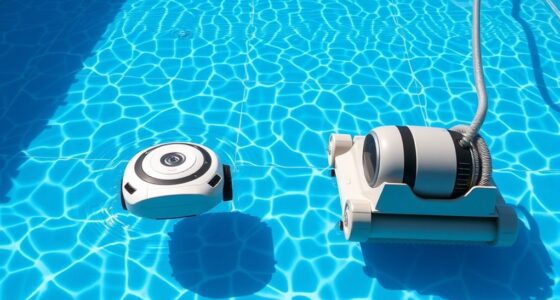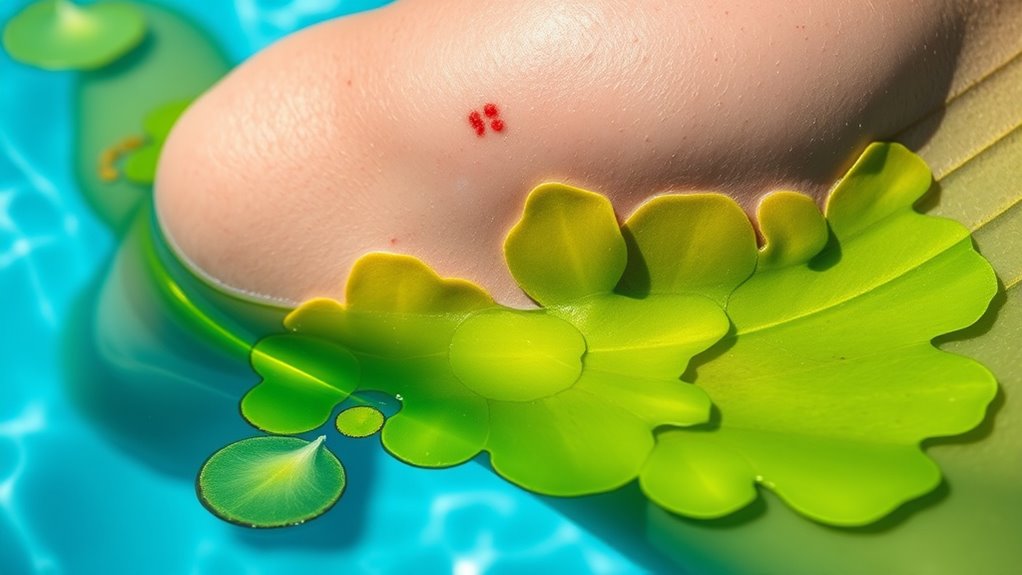

When pool algae grows, it can cause skin irritation, itching, or rashes after swimming. To prevent this, you need to keep your water properly balanced with chlorine and pH levels, regularly scrub surfaces, and run your filter thoroughly. If algae persists, shocking the pool with high chlorine or using algaecides helps eliminate it. Staying on top of maintenance reduces the risk of skin issues—keep exploring to learn more about effective solutions.
Key Takeaways
- Algae in pool water can cause skin irritation, redness, itching, and rashes upon contact.
- Low chlorine levels and pH imbalance promote algae growth, increasing skin irritation risks.
- Proper chemical balancing, regular cleaning, and sanitation prevent algae and reduce skin issues.
- Rinsing off immediately after swimming minimizes skin exposure to algae and bacteria.
- Persistent skin reactions may indicate algae presence or contamination, requiring medical advice and treatment.
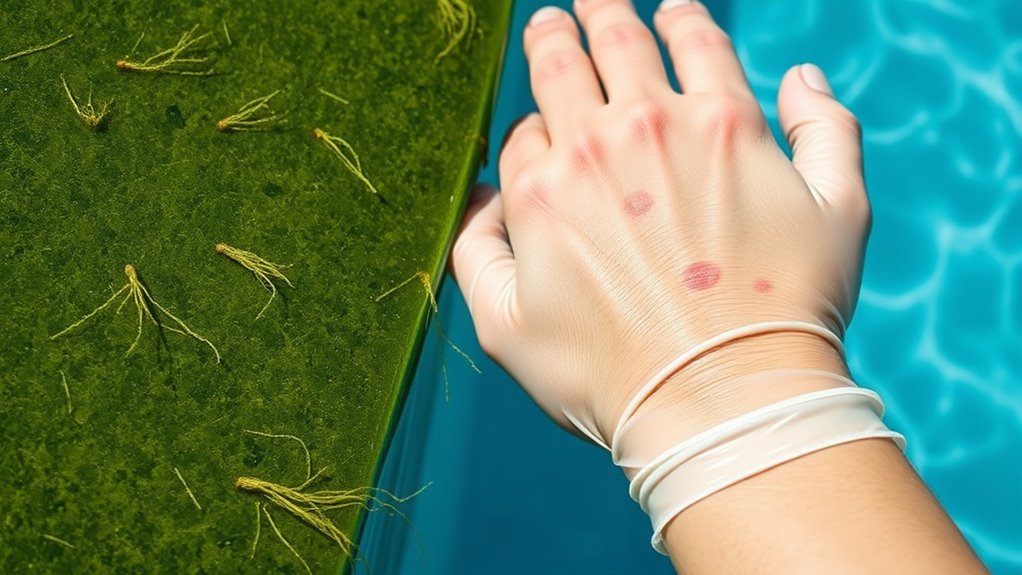
If your pool has visible algae or your skin feels itchy and irritated after swimming, you might be dealing with more than just an unsightly problem. Algae can quickly take over a pool, making the water look cloudy or green, but the issues don’t stop there. When algae proliferate, they can contribute to skin inflammation, causing discomfort and potential skin reactions. Addressing algae treatment promptly isn’t just about aesthetics; it’s about protecting your skin and overall health.
Visible algae and skin irritation after swimming can indicate health risks beyond appearance.
Algae treatment involves proper chemical balancing and sanitation. You want to make sure your pool’s chlorine levels are adequate because chlorine is essential for keeping algae at bay. If your pool water tests show low chlorine or pH imbalances, algae can flourish, increasing the risk of skin irritation. Shocking your pool with a high dose of chlorine or using algaecides can eradicate existing growth, but you’ll also need to scrub surfaces and vacuum debris to remove algae residues thoroughly. Regular maintenance, including brushing and filtering, prevents algae from returning and reduces the chances of skin inflammation caused by algae remnants or chemical imbalances.
In addition to chemical treatment, maintaining proper water circulation is vital. Poor circulation allows algae to settle and multiply, which can lead to persistent skin irritation. Ensuring your pool pump and filter work efficiently helps distribute sanitizers evenly and removes algae spores before they grow out of control. After treatment, always test your water regularly to maintain ideal chemical levels. This proactive approach helps prevent future algae outbreaks and keeps the water gentle on your skin.
The link between algae and skin inflammation is noteworthy. When algae are present, they can produce irritants or harbor bacteria that irritate your skin upon contact. If you notice persistent itching, redness, or rash after swimming, algae or contaminated water might be the culprit. Using skin-friendly products, rinsing off immediately after swimming, and avoiding swimming in heavily algae-infested water reduce your risk of skin inflammation. Additionally, understanding the contrast ratio of your pool’s lighting and water clarity can influence how visible and problematic algae appear. If irritation persists, it’s wise to consult a healthcare professional to rule out infections or allergic reactions.

Clorox® Pool&Spa™ Swimming Pool Algaecide and Clarifier, Prevents and Treats Pool Algae, Clears Water, 128 Fl Oz (Pack of 1)
Pool Algae Treatment: Our Pool Algaecide and Clarifier is specially formulated to treat existing algae while providing long-lasting…
As an affiliate, we earn on qualifying purchases.
As an affiliate, we earn on qualifying purchases.
Frequently Asked Questions
Can Algae in Pools Cause Long-Term Skin Allergies?
Algae exposure in pools can contribute to long-term skin allergies if you have skin sensitivity. When you swim in algae-contaminated water, your skin might react over time, causing persistent irritation or allergic responses. To prevent this, guarantee proper pool maintenance and avoid swimming in heavily algae-infested water. If you notice ongoing skin issues, consult a dermatologist to determine if algae exposure is affecting your skin health.
Does Algae Exposure Increase the Risk of Skin Infections?
Yes, algae exposure can increase your risk of skin infections because algae toxins can weaken your skin barrier, making it more vulnerable. When you swim in algae-contaminated water, bacteria and other pathogens can latch onto your skin, leading to infections. To protect yourself, shower promptly after swimming, avoid scrubbing too hard, and guarantee your pool is well-maintained to prevent algae growth and reduce toxin buildup.
Are Certain Skin Types More Prone to Irritation From Algae?
Yes, certain skin types are more prone to irritation from algae, especially if you have sensitive skin or experience skin discoloration. Your skin sensitivity can make you more reactive to algae’s compounds, leading to redness, itching, or discomfort. If you notice irritation after swimming, consider using barrier creams or showering promptly afterward. Always test new skincare products and consult a dermatologist if irritation persists, to protect your skin effectively.
How Quickly Can Algae Develop in a Well-Maintained Pool?
Once algae bloom takes hold, it can develop in just a few days if your pool maintenance slips. Warm temperatures, sunlight, and nutrients accelerate growth, so staying vigilant is key. If you notice a green tint or slimy surface, don’t wait—algae can spread quickly, turning your pool into a breeding ground. Regular cleaning and proper chemical balancing are your best defenses to keep algae at bay and enjoy crystal-clear water.
Can Algae-Related Skin Issues Be Prevented With Specific Skincare Products?
You can often prevent algae-related skin issues by using algae-resistant skincare products, which create a barrier against irritants. Additionally, applying appropriate pool water additives helps keep algae growth in check, reducing the risk of skin irritation. Make sure to shower promptly after swimming and maintain proper pool chemistry. These steps work together to protect your skin from algae-related problems, keeping your swimming experience safe and enjoyable.
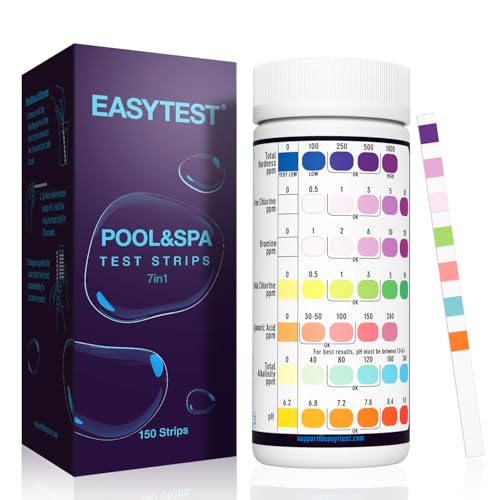
EASYTEST 7-Way Pool Test Strips, 150 Strips Water Chemical Testing for Hot tub and Spa, Accurate Test Bromine, Total Alkalinity, pH, Free Chlorine, Total Hardness, Cyanuric Acid, and Total Chlorine
AFFORDABLE 150 STRIPS: This water chemical testing kit contains 150 test strips. Enough balanced for your swimming pool,…
As an affiliate, we earn on qualifying purchases.
As an affiliate, we earn on qualifying purchases.
Conclusion
Just like a spotless mirror reflects your best self, keeping your pool algae-free prevents skin irritation and keeps you swimming happily. I once ignored the signs of algae, only to find my skin itchy and red after a swim—like a warning sign flashing in bright neon. Regular maintenance and proper chemical balance are your shield against these problems. Think of your pool as a crystal-clear window—when it’s clean, everything looks better, and your skin stays happy.

HTH 52036R Pool Care Shock Advanced, Swimming Pool Chemical – Cal Hypo Formula, Prevents Bacteria & Algae, Restores Crystal Clear Water – Shock Treatment, (6 Pack)
BENEFITS: Stay all clear for cannonballs; This fast-dissolving, convenient 4-in-1 formula kills bacteria and algae, reduces chlorine odor…
As an affiliate, we earn on qualifying purchases.
As an affiliate, we earn on qualifying purchases.

Sepetrel 17.5" Pool Brush Head for Cleaning Walls,Heavy Duty Inground/Above Ground Swimming Pool Scrub Brushes with Premium Strong Bristle & Reinforced Aluminium Back
The brush features a reinforced aluminum alloy metal structure that is not only sturdy and durable but also…
As an affiliate, we earn on qualifying purchases.
As an affiliate, we earn on qualifying purchases.