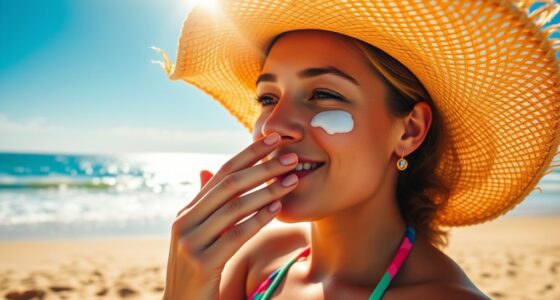
Many believe tanning improves skin hydration, but it actually doesn’t. Sun exposure can strip away your skin’s natural oils and lead to dryness or damage, making your skin less moisturized over time. Relying on tanning for moisture is a common myth; proper skincare and moisturizers are what truly keep your skin hydrated. If you want to protect and enhance your skin’s health, understanding these facts can make a big difference—there’s more to learn below.
Key Takeaways
- Tanning does not inherently hydrate or moisturize the skin.
- Sun exposure can damage skin and lead to dryness, not improved hydration.
- Proper moisturizers with humectants like glycerin and hyaluronic acid are essential for hydration.
- Overexposure to sun increases skin damage and reduces natural oils, harming hydration.
- Short, safe sun exposure or supplements are better for vitamin D than prolonged tanning.
Many people believe that tanning automatically improves skin hydration or that spending time in the sun can boost moisture levels, but these ideas are myths. While sunlight can have some benefits, such as stimulating your body to produce vitamin D, it doesn’t directly hydrate your skin. In fact, prolonged sun exposure can strip away your skin’s natural oils, leaving it drier and more vulnerable to damage. Instead of relying on tanning for moisture, focus on using proper skin moisturizers that lock in hydration and protect your skin barrier. These products are specially formulated to replenish lost moisture and keep your skin soft and supple, regardless of how much sun you get.
Vitamin D often gets linked to sun exposure, and rightly so—your skin synthesizes this essential nutrient when exposed to sunlight. Vitamin D plays an important role in maintaining your overall health, supporting immune function, and even aiding skin repair. However, simply tanning or spending hours in the sun isn’t the best way to ensure adequate vitamin D levels. Overexposure increases your risk of skin damage and skin cancer, which outweighs any potential benefits. Instead, consider short, safe sun exposures and supplement with vitamin D-rich foods or supplements if needed. This approach helps you enjoy the benefits of vitamin D without risking unnecessary harm to your skin.
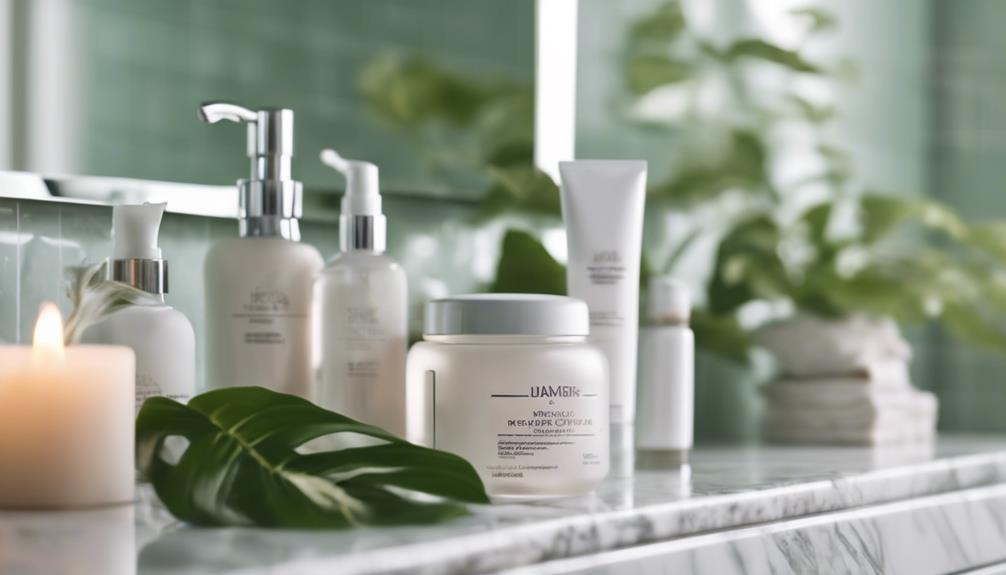
When it comes to keeping your skin hydrated, relying solely on tanning or sun exposure isn’t effective. Your skin’s moisture content depends largely on external factors like humidity, your skincare routine, and hydration habits. Using skin moisturizers regularly is the most effective way to maintain hydration. Look for products containing humectants like hyaluronic acid or glycerin, which draw water into the skin, and emollients like ceramides that help restore the skin’s barrier. Applying these products after bathing or whenever your skin feels dry ensures that moisture stays locked in, preventing dehydration and flakiness. Additionally, understanding the importance of skin barrier health can help you make better choices for maintaining optimal hydration and protecting your skin from environmental stressors.

The Ordinary Natural Moisturizing Factors + Hyaluronic Acid, Lightweight Hydrator for Skin Barrier Support & Hydration, 3.4 Fl Oz
NON-GREASY MOISTURIZER: This lightweight formula keeps the outer layer of your skin protected and hydrated without feeling greasy.
As an affiliate, we earn on qualifying purchases.
As an affiliate, we earn on qualifying purchases.
Frequently Asked Questions
Does Drinking Water Increase Skin Tan Longevity?
Drinking water doesn’t directly increase your skin tan’s longevity, but staying hydrated helps maintain your skin’s overall health. Proper hydration supports your skin’s pH balance, preventing dryness that can cause fading. While water doesn’t boost melanin production, well-hydrated skin appears more vibrant and resilient, which can help your tan last longer. Keep drinking enough water daily to support healthy skin, but remember, factors like skincare and sun protection are also key.
Can Eating Certain Foods Improve Skin Hydration?
You can definitely boost your skin hydration by eating certain foods, so don’t judge a book by its cover. Superfoods rich in dietary nutrients like watermelon, cucumbers, and berries are packed with water and antioxidants that help keep your skin moist and healthy. Including these in your diet can make a real difference, as they support hydration from the inside out, giving you that glow you’re after.
Is It True That Tanning Beds Are Safer Than Sunbathing?
No, tanning beds aren’t safer than sunbathing. Tanning bed safety is often misunderstood, but they expose you to intense UV radiation, increasing skin cancer risks. Many skin hydration myths suggest tanning helps hydrate your skin, but it actually damages it. Both tanning beds and sunbathing can harm your skin, so prioritize sun protection and avoid UV overexposure to keep your skin healthy and hydrated.
How Does Humidity Affect Skin Hydration During Tanning?
Sure, humidity’s the secret weapon for perfect skin during tanning, right? It actually affects your hydration levels by locking in moisture, making your skin less prone to dehydration. High humidity boosts hydration, so your skin stays soft and supple, while low humidity zaps moisture away. So, next time you tan, thank humidity for helping you look dewy—unless, of course, you prefer flaky, dry skin.
Are There Natural Remedies to Enhance Tanning and Hydration?
You can naturally enhance your tanning and hydration by using herbal supplements like aloe vera or chamomile, which support skin health from within. Incorporate essential oils such as coconut or jojoba oil into your skincare routine to boost moisture and improve glow. Stay hydrated by drinking plenty of water, and consider applying these natural remedies regularly to maintain a radiant, well-hydrated tan.

NOW Solutions, Vegetable Glycerin, 100% Pure, Versatile Skin Care, Softening and Moisturizing, 4-Ounce
MULTI-PURPOSE AND VERSATILE SKIN CARE: Pure vegetable glycerin is an outstanding moisturizer and skin cleanser that also provides…
As an affiliate, we earn on qualifying purchases.
As an affiliate, we earn on qualifying purchases.
Conclusion
Think of your skin as a delicate garden. Believing myths about tanning and hydration is like watering your plants with sugar—initially tempting but ultimately harmful. When you ignore real care and rely on false ideas, your skin suffers, just like a neglected garden wilts. But with truth and proper hydration, your skin can bloom beautifully. Listen to genuine advice, tend to your outer self, and let your natural glow flourish like a well-tended oasis.

Illiyoon Ceramide Ato Concentrate Cream | Moisturizer for Dry & Sensitive Skin, 100hr Lasting Hydration, For Face & Body, Gentle for Infants, Moisture Barrier Repair, Vegan Certified, 2.53 fl.oz.
REVOLUTIONARY MULTI-CERAMIDE COMPLEX: Our innovative formula features plant-sourced Ceramides, structurally akin to those your skin naturally. Its multi-molecular…
As an affiliate, we earn on qualifying purchases.
As an affiliate, we earn on qualifying purchases.

Nature Made Vitamin D3 1000 IU (25 mcg), Vitamin D Supplement for Bone, Teeth, Muscle and Immune Health Support, 300 Softgels, 300 Day Supply
Immune, muscle, teeth and bone health support supplement: contains one 300 count bottle of Nature Made Vitamin D3…
As an affiliate, we earn on qualifying purchases.
As an affiliate, we earn on qualifying purchases.