Tanning oils don’t protect you from sunburn and can actually give you a false sense of security. Most contain little to no SPF, meaning they don’t block harmful UV rays effectively. Relying on them may cause you to stay in the sun longer, increasing your risk of skin damage, burns, and long-term harm. To stay safe, it’s essential to use proper sunscreen and follow sun protection tips—there’s more you should know.

Get beauty and skincare favorites delivered free with Prime
- Fast, free delivery on millions of items
- Prime Video, Amazon Music and more included
- Member-only deals all year
Key Takeaways
- Tanning oils typically have little or no SPF, providing minimal protection against sunburn.
- They can create a false sense of security, leading to longer, more damaging sun exposure.
- Relying on tanning oils instead of sunscreen increases the risk of skin burns and damage.
- Most tanning oils are not water-resistant and do not offer reliable UV protection.
- Proper sun protection requires broad-spectrum sunscreen with SPF 30 or higher, not tanning oils.
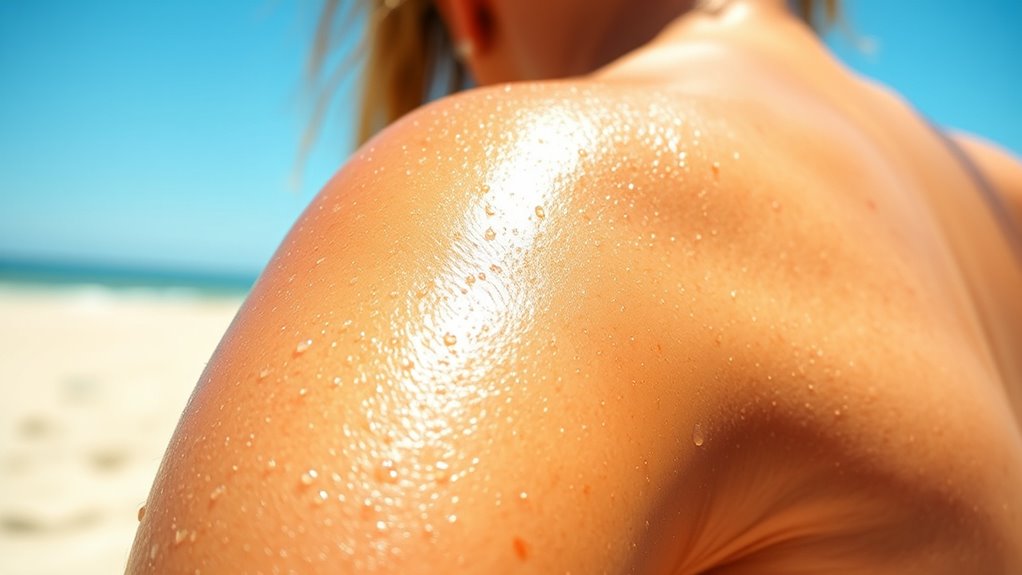
Many people believe that applying tanning oils can safeguard their skin from sunburn, but this is a dangerous misconception. Tanning oils often give the illusion of protection, but in reality, they provide little to no SPF effectiveness. Most tanning oils either contain minimal SPF or none at all, which means they don’t effectively block harmful UV rays. Relying on these products can lead you to stay in the sun longer than safe, increasing your risk of skin damage. Overexposure to UV radiation accelerates skin aging, causes sunburn, and raises your chances of developing skin cancer. The misconception that tanning oils protect you from sunburn can have serious consequences, especially if you’re not vigilant about additional sun protection measures.
The core problem lies in the misunderstanding of what SPF actually does. SPF, or Sun Protection Factor, measures how well a product can shield your skin from UVB rays—the rays responsible for burning and skin damage. Many tanning oils either don’t specify their SPF or claim to have low SPF levels, which aren’t sufficient for prolonged sun exposure. Without a proper SPF, your skin remains vulnerable to UV damage. Even products labeled as “sunscreen” with SPF ratings should be reapplied frequently, especially if you’re swimming or sweating. Tanning oils often lack this guidance or may not be water-resistant, further diminishing their protective effectiveness.
Relying on tanning oils also increases skin damage risks. They often contain ingredients that can intensify UV absorption, which might cause your skin to burn faster or suffer more severe damage. Instead of protecting you, they can give a false sense of security, prompting you to spend more time in the sun without adequate protection. This not only increases your risk of sunburn but also damages the deeper layers of your skin over time. The cumulative effect of UV exposure results in premature aging, dark spots, and higher chances of skin cancers like melanoma.
It’s essential to understand that no tanning oil can replace a broad-spectrum sunscreen rated with an SPF of at least 30. If you want to enjoy the sun safely, apply a reputable sunscreen generously, reapply regularly, and seek shade during peak hours. Wearing protective clothing and sunglasses adds extra layers of defense. Remember, the idea that tanning oils offer real protection is a myth, and trusting that myth can have long-term consequences for your skin health. Protecting yourself means choosing products with proven SPF effectiveness and following sun safety guidelines consistently.
As an affiliate, we earn on qualifying purchases.
Frequently Asked Questions
Can Tanning Oils Increase the Risk of Skin Cancer?
Using tanning oils can increase your skin cancer risk because they often don’t contain SPF and may encourage longer UV exposure. Without proper protection, you’re more vulnerable to harmful UV rays, which damage your skin and raise the risk of skin cancer. So, if you want to protect yourself, choose sunscreens with high SPF and avoid relying on tanning oils alone, especially during prolonged sun exposure.
Do All Tanning Oils Contain SPF?
Like Pandora’s box, not all tanning oils contain SPF. Some rely on tanning oil ingredients that offer minimal or no sun protection, risking skin damage. You should always check the label for ingredient safety and SPF levels before applying. Many tanning oils don’t provide adequate protection, so don’t assume they shield you from sunburn. Always choose products with true SPF to safeguard your skin during sun exposure.
Are There Natural Tanning Oils That Offer Sun Protection?
You might wonder if natural tanning oils provide sun protection. While some natural ingredients like coconut or jojoba oil can hydrate your skin and improve glow, they typically don’t offer significant SPF. If you want sun protection, look for oils with added SPF or use a dedicated sunscreen. Relying solely on natural oils without SPF can leave your skin vulnerable to sunburn, so always prioritize proper sun protection.
How Often Should I Reapply Tanning Oil?
You should reapply tanning oil every two hours or immediately after swimming, sweating, or towel drying. This application frequency guarantees you maintain the tanning oil effects and hydration benefits without risking overexposure. Keep in mind, tanning oils don’t offer sun protection, so don’t rely on them alone. Regular reapplication helps you enjoy your time in the sun safely while achieving the desired tan, but always complement it with a broad-spectrum sunscreen.
Do Tanning Oils Attract More UV Rays Than Lotions?
You might think tanning oils lure in more UV rays, but ironically, they often increase UV reflection and skin absorption, making your sun exposure riskier. Instead of acting as a shield, they can intensify UV rays’ impact on your skin, giving a false sense of protection. So, if you’re aiming for a safe tan, don’t rely solely on tanning oils—they don’t block harmful rays and can even deepen UV penetration.
Conclusion
Remember, tanning oils don’t protect you from sunburn—only SPF products do. In fact, studies show that people who use tanning oils are twice as likely to get burned because they believe they’re protected. So, don’t be fooled by the myth. Always apply a broad-spectrum sunscreen with adequate SPF, seek shade, and wear protective clothing. Protecting your skin now helps prevent painful burns and long-term damage later. Your skin will thank you!
Halloween Picks
halloween
As an affiliate, we earn on qualifying purchases.