
Many believe that being near the ocean shields your skin from sunburn, but that’s just a myth. Water and sand reflect UV rays, increasing your exposure beyond direct sunlight. Wet skin also allows deeper UV penetration, raising your risk of burns even under umbrellas or shade. To stay safe, remember that sunscreen, protective clothing, and awareness are essential, regardless of the water’s cooling effects. Keep going to discover why this common misconception could leave you unprotected.
Key Takeaways
- Water does not block or reflect UV rays; being near water does not prevent sunburn.
- UV reflection from water’s surface increases skin UV exposure, heightening sunburn risk.
- Wet skin allows deeper UV penetration, making sunburn more likely even with water nearby.
- The belief that ocean shields skin from sunburn is a misconception; proper sun protection is essential.
- Sunscreen, protective clothing, and shade are necessary regardless of proximity to water or ocean.

Many people believe that spending time in the ocean shields their skin from sunburn, but this isn’t true. The idea that the ocean provides protection is a common misconception. While being near water can feel invigorating and cooling, it doesn’t reduce your risk of UV damage. In fact, the ocean’s surface can actually intensify your exposure to harmful rays through a process called UV reflection.
UV reflection occurs when sunlight bounces off the water’s surface and hits your skin from different angles. This means you’re not only exposed to direct sunlight but also to UV rays reflected upward from the ocean, which can considerably increase your overall exposure. Without proper protection, this heightened exposure can lead to quicker and more severe sunburns, even if you’re sitting in the shade or under an umbrella. The water’s reflective surface can make it seem like you’re safe, but in reality, you’re still vulnerable to UV damage.
UV rays reflect off water, increasing exposure and risk of sunburn even in shade.
Another important factor often overlooked is skin moisture. When you’re in the ocean, your skin gets wet, which temporarily affects its ability to protect itself. Moist skin can sometimes feel more comfortable and less prone to burning initially, but water actually facilitates deeper UV penetration. Wet skin doesn’t absorb UV rays as effectively as dry skin, but it also doesn’t block or reflect them. As a result, UV rays can penetrate more deeply into your skin, increasing the risk of burns and long-term damage. Plus, the cooling sensation of water can tempt you to stay out longer without reapplying sunscreen, which only heightens your vulnerability.
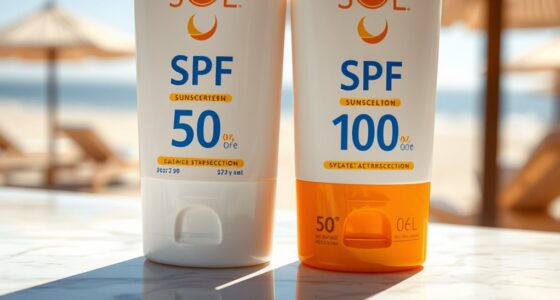
Additionally, the composition of UV rays in sunlight can vary depending on the weather and atmospheric conditions, further influencing your risk at the beach. Sunscreen is essential when you’re at the beach or near water, regardless of the misconception that the ocean offers protection. It’s vital to choose a broad-spectrum sunscreen with a high SPF, apply it generously, and reapply frequently—especially after swimming or sweating. Wearing protective clothing, hats, and UV-blocking sunglasses further reduces your risk. Remember, water doesn’t block UV rays; it reflects them, making your exposure even more intense. Staying hydrated and aware of the sun’s intensity can help you enjoy your time at the beach without risking sunburn or skin damage.
Frequently Asked Questions
Does Water Reflect Sunlight and Increase Sunburn Risk?
Water reflection does increase your sunburn risk because it amplifies sun exposure. When sunlight hits the water, it reflects and bounces onto your skin, doubling the UV rays you’re exposed to. This means even if you’re in the shade or under an umbrella, the reflected light can still cause sunburn. To protect yourself, apply broad-spectrum sunscreen, wear protective clothing, and seek shade, especially near water where reflection is strongest.
How Does Ocean Water Affect UV Radiation Levels?
Ocean water actually amplifies UV radiation exposure, not shields you from it. When sunlight hits the water’s surface, some UV rays reflect, increasing your overall exposure. This means you might think you’re protected while swimming, but the water can intensify UV radiation levels around you. So, even when you’re in the ocean, it’s essential to wear sunscreen and protective clothing to guard against harmful UV rays.
Can Swimming in the Ocean Reduce the Need for Sunscreen?
Swimming in the ocean doesn’t reduce your need for sunscreen. Water temperature and ocean currents won’t block UV rays effectively. Even when you’re immersed in water, UV radiation can penetrate and cause skin damage. Plus, as you swim, you might spend time out of the water or reapply sunscreen, so it’s essential to wear broad-spectrum SPF. Protect your skin by applying sunscreen properly, regardless of water conditions.
Are There Specific Times When Ocean Sun Exposure Is Safer?
The ocean’s sun exposure can be safer during early mornings or late afternoons when the sun’s rays are gentler, almost like whispering instead of shouting. Timing considerations matter because weather patterns, like cloudy days or wind, can reduce UV exposure. You should always check the UV index and avoid peak hours between 10 a.m. and 4 p.m. to protect your skin, no matter how tempting the ocean’s allure may be.
Does Saltwater Offer Any Skin Protection Against UV Rays?
Saltwater doesn’t protect your skin from UV rays; in fact, it can dry out your skin and make sun damage worse. However, saltwater benefits include temporary skin hydration and some soothing effects, but these don’t replace sunscreen. To stay safe, apply broad-spectrum sunscreen, wear protective clothing, and seek shade. Remember, relying on saltwater alone isn’t enough—always take proper sun protection measures.
Conclusion
Don’t be fooled into thinking the ocean shields you from sunburn. Even on cloudy days, up to 80% of UV rays can penetrate water, putting your skin at risk. Remember, water might make you feel cooler, but it doesn’t deflect UV rays. Always wear broad-spectrum sunscreen, reapply regularly, and seek shade when the sun’s hottest. Protecting your skin ensures you enjoy beach days without the painful consequences of sunburn.