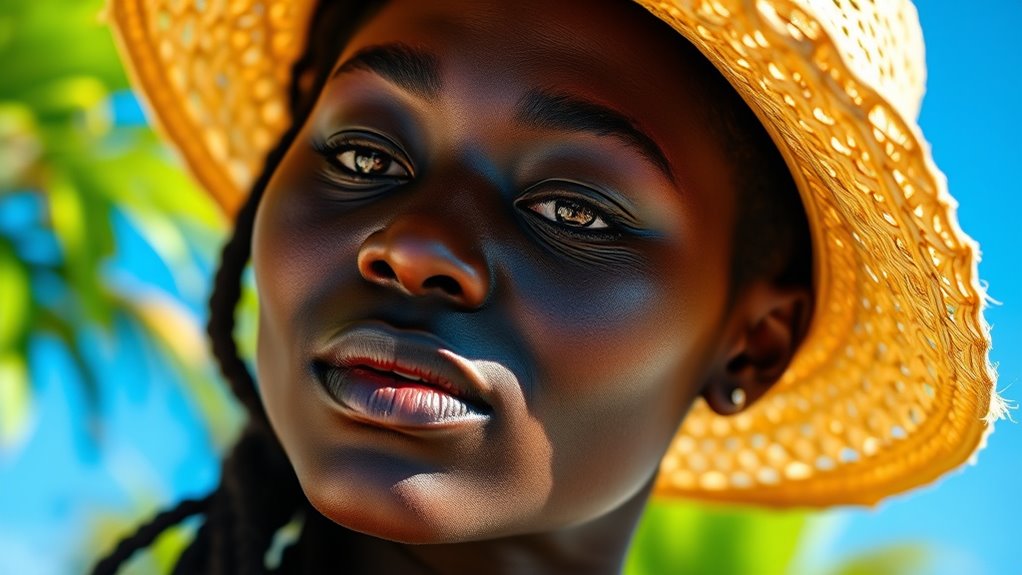

Many believe darker skin doesn’t need sunscreen, but that’s a myth. While melanin offers some natural UV protection, it doesn’t eliminate your risk of sun damage or skin cancer. UV rays can cause damage deep within your skin over time, often going unnoticed until it’s severe. To keep your skin safe, it’s essential to wear broad-spectrum sunscreen daily, regardless of your skin tone. Keep exploring to learn how to protect your skin effectively.

Get beauty and skincare favorites delivered free with Prime
- Fast, free delivery on millions of items
- Prime Video, Amazon Music and more included
- Member-only deals all year
Key Takeaways
- Melanin provides some UV protection but does not eliminate the risk of skin damage or skin cancer.
- Darker skin can still develop skin cancer, often diagnosed later and more aggressively.
- UV rays can cause deep cellular damage regardless of skin tone, increasing long-term risks.
- Sunscreen helps prevent premature aging and reduces skin cancer risk across all skin types.
- Wearing sunscreen daily is essential, even for darker skin, to maintain skin health and early detection.

Many people with darker skin believe they don’t need to wear sunscreen, but this is a hazardous misconception. While melanin provides some natural protection against UV rays, it doesn’t eliminate the risk of skin damage or skin cancer. UV protection is essential for everyone, regardless of skin tone. Understanding this is a key aspect of skin cancer awareness because darker skin doesn’t mean immunity. In fact, skin cancer often goes undetected in darker-skinned individuals because they may not associate their skin with risk factors. As a result, diagnoses tend to be made at later, more dangerous stages. By recognizing that UV rays can harm all skin types, you can better protect yourself and your loved ones.
Sunscreen isn’t just about preventing sunburns; it’s an indispensable tool in reducing the long-term effects of UV exposure, including premature aging and skin cancer. Even if you rarely burn or think your skin is too resilient, UV rays can cause cellular damage deep within your skin layers over time. This damage accumulates silently, increasing your risk of developing melanoma, basal cell carcinoma, or squamous cell carcinoma, regardless of your skin color. Wearing sunscreen consistently creates a barrier against these harmful rays, helping you maintain healthy skin and reduce your chances of skin cancer. It’s especially important to apply broad-spectrum sunscreen with a high SPF before going outdoors, even on cloudy days or during winter months. UV protection should become part of your daily routine, not just a summer activity.
Many people with darker skin underestimate the importance of skin cancer awareness because they believe their skin is less vulnerable. However, statistics show that skin cancer in darker-skinned individuals often presents later and tends to be more aggressive. This delayed diagnosis can lead to poorer outcomes, making prevention and early detection even more critical. Regular skin checks and being aware of any unusual changes, such as new growths or persistent sores, are essential steps in managing your skin health. Using sunscreen is a simple, effective way to reduce UV damage and support skin cancer awareness efforts. Don’t wait until you notice a problem—taking proactive steps now can save your life.
Ultimately, understanding that UV protection applies to everyone regardless of skin tone empowers you to make informed choices. Protecting your skin is an ongoing commitment, not a seasonal one. Make sunscreen a daily habit, seek shade during peak sun hours, and wear protective clothing when needed. By doing so, you’re taking control of your skin health and helping to dispel dangerous myths about darker skin and sun safety. Remember, skin cancer awareness and prevention are for all, and your proactive actions can make a meaningful difference in your long-term health.
Products Worth Considering

Bowflex SelectTech 840 Adjustable Kettlebell

Garmin Venu 3 Fitness Smartwatch, 45 mm, Black
Withings Body Smart Wi-Fi and Bluetooth Smart Scale
As an affiliate, we earn on qualifying purchases.
Frequently Asked Questions
Can Darker Skin Tones Still Develop Skin Cancer From Sun Exposure?
Yes, darker skin tones can still develop skin cancer from sun exposure. Although they have more melanin, which offers some protection, it doesn’t eliminate the risk. Sun sensitivity varies, and prolonged exposure can lead to skin aging, sun spots, and cancer. Wearing sunscreen daily helps protect your skin, reduces the risk of damage, and keeps your skin healthier and more youthful over time.
Does Sunscreen Prevent Hyperpigmentation in Darker Skin?
Sunscreen can be your superhero against hyperpigmentation in darker skin! It helps prevent dark spots by blocking harmful UV rays. Look for sunscreens with ingredients like zinc oxide or titanium dioxide, which are especially effective. Regular application protects your skin’s tone and brightness, keeping hyperpigmentation prevention on point. Don’t underestimate this simple step—your skin’s future glow depends on it!
How Often Should Darker-Skinned Individuals Reapply Sunscreen?
You should reapply sunscreen every two hours to maintain its effectiveness, especially since sunscreen durability can diminish with time and exposure to sweat or water. If you’re outdoors, reapplication frequency increases, and you might need to reapply more often. Even with darker skin, this helps protect against UV damage and hyperpigmentation. Always follow the instructions on your sunscreen to ensure you get the best protection possible.
Are SPF Ratings Equally Effective for All Skin Tones?
SPF ratings are equally effective across all skin tones because they measure protection against UVB rays, regardless of skin color. Skin tone differences don’t alter SPF efficacy, but darker skin might not show sun damage as visibly, leading some to overlook protection. You should always choose an SPF suited to your activity level and reapply regularly, ensuring thorough protection regardless of your skin tone.
What Ingredients Should Darker Skin Tones Look for in Sunscreens?
When selecting sunscreens for darker skin tones, look for ingredients like zinc oxide and titanium dioxide, which provide broad-spectrum protection and are less likely to cause irritation. These ingredients help with skin tone protection by blocking both UVA and UVB rays effectively. Additionally, opt for sunscreens labeled as suitable for all skin types and guarantee they have a high SPF to maximize skin tone protection and prevent hyperpigmentation.
Conclusion
Don’t fall for the myth that darker skin doesn’t need sunscreen. Ignoring protection is like inviting dangerous rays to attack your skin’s fortress—think of it as leaving your front door wide open to damage. Your skin, no matter its shade, is vulnerable to long-term harm and skin cancer. Protect it fiercely, because ignoring sunscreen is risking your health for a false sense of security. Shield your skin now—your future self will thank you endlessly.