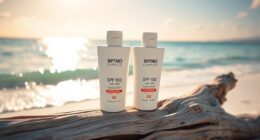

To protect your skin as an outdoor athlete, use broad-spectrum SPF 30+ sunscreen and reapply every two hours, especially when sweating. Wear protective clothing like hats and UV sunglasses, and stay well-hydrated by drinking plenty of water throughout your activity. Incorporate moisturizers with hyaluronic acid or glycerin to lock in moisture and prevent dryness. Balancing sun protection and hydration helps preserve your skin’s health, so stick with these tips to maximize your outdoor performance.
Key Takeaways
- Use broad-spectrum SPF 30+ sunscreen and reapply every two hours during outdoor activities.
- Stay well-hydrated with water and use moisturizers containing hyaluronic acid or glycerin.
- Choose non-comedogenic, sweat-resistant moisturizers suited to your skin type.
- Combine sun protection with regular hydration to prevent skin damage and maintain resilience.
- Practice consistent skincare routines to reduce long-term risks like premature aging and skin cancer.

Are you an outdoor athlete who neglects your skin? It’s easy to focus on your training, your gear, and your performance, but overlooking your skin can lead to long-term damage. Sun protection isn’t just about applying sunscreen; it’s about creating a thorough plan to shield your skin from harmful UV rays. When you’re out in the sun for extended periods, your skin is vulnerable to burns, premature aging, and even skin cancer. Using broad-spectrum sunscreen with at least SPF 30 is essential, but don’t rely on it alone. Reapply every two hours, especially if you’re sweating or swimming, and consider wearing protective clothing like hats and UV-blocking sunglasses. These small steps can considerably reduce your risk and keep your skin healthier over time.
Protect your skin with SPF 30+ sunscreen, reapply often, and wear protective clothing during outdoor activities.
Hydration plays an essential role in maintaining healthy skin, particularly when you’re pushing your body outdoors. Sweat, wind, and sun exposure dehydrate your skin, leading to dryness, cracking, and irritation. Drinking plenty of water before, during, and after your activity helps keep your skin supple and resilient. Also, incorporate a good moisturizer into your routine to lock in moisture. Look for products that contain hyaluronic acid or glycerin—they attract water and help your skin stay plump and hydrated. Applying moisturizer immediately after showering or washing your face is a smart move, as damp skin absorbs hydration better. Maintaining proper skin hydration isn’t just about comfort; it’s about protecting your skin’s barrier function, preventing damage, and helping your skin recover after exposure. Additionally, understanding the importance of regulatory compliance can help you choose safe and effective skincare products that meet industry standards.
Balancing sun protection and skin hydration is essential for outdoor athletes. When you’re active outside, sweat can wash away sunscreen and strip your skin of natural oils, making hydration even more important. Carry a water bottle and hydrate regularly, especially during intense workouts. Use a moisturizer suited for your skin type to replenish moisture lost through sweating and environmental exposure. If you tend to sweat heavily, look for products labeled as non-comedogenic and sweat-resistant. These will stay on your skin longer and keep you protected without clogging pores. Remember, sun protection and skin hydration aren’t just one-time concerns—they should be part of your daily routine, especially when your outdoor activities expose you to the elements for hours on end.
Investing in your skin now benefits you in the long run. Your dedication to outdoor sports shouldn’t come at the expense of your skin’s health. By prioritizing sun protection and maintaining skin hydration, you’ll not only improve your comfort during workouts but also preserve your skin’s youthful appearance and overall health. Keep these habits consistent, and you’ll find that your skin withstands the rigors of outdoor adventures much better, setting you up for success both now and years from now.
Frequently Asked Questions
How Often Should Outdoor Athletes Reapply Sunscreen During Activity?
You should reapply sunscreen every two hours during outdoor sun exposure, especially if you’re sweating or swimming. Sunscreen reapplication is essential to maintain protection and prevent skin damage. If you’re engaging in intense activity or prolonged outdoor exposure, reapply more frequently, such as after sweating heavily or taking breaks. Staying consistent with sunscreen reapplication helps you stay protected and enjoy your outdoor activities safely.
What Ingredients Are Best for Outdoor Athlete Skincare Products?
Choose skincare products with natural oils, antioxidants, and broad-spectrum sunscreens. Natural oils like jojoba or argan hydrate and nourish your skin, while antioxidants such as vitamin C or green tea protect against environmental damage. Look for ingredients that soothe, repair, and shield—keeping your skin resilient during outdoor activities. By selecting products with these components, you guarantee your skin stays healthy, protected, and ready for any adventure.
Can Outdoor Sports Cause Long-Term Skin Damage?
Yes, outdoor sports can cause long-term skin damage if you don’t protect yourself. UV exposure accelerates skin aging and increases the risk of sunspots, wrinkles, and even skin cancer. To prevent this, wear broad-spectrum sunscreen, seek shade when possible, and wear protective clothing. Consistent care helps maintain your skin’s health and youthful appearance, ensuring you enjoy your outdoor activities without worrying about long-term damage.
How to Prevent Chafing and Skin Irritation During Outdoor Activities?
To prevent chafing and skin irritation during outdoor activities, you should focus on your moisturizing routines and clothing choices. Apply a good, hydrating moisturizer before heading out to keep your skin supple and reduce friction. Wear moisture-wicking, seamless clothing that fits well, avoiding rough fabrics that can cause irritation. Take breaks to reapply moisturizer if needed, and stay dry to minimize chafing risks.
Are Natural or Synthetic Skincare Products Better for Outdoor Athletes?
You might think synthetic formulations are better with their high-tech buzz, but natural ingredients often serve outdoor athletes better. They tend to be gentler on your skin, reduce irritation, and provide essential nutrients without harsh chemicals. While synthetic products can offer longer-lasting protection, natural options are more eco-friendly and less likely to cause allergic reactions. So, for outdoor adventures, natural skincare products usually strike the perfect balance between effectiveness and safety.
Conclusion
Your skin is your armor on every adventure, facing sun, wind, and dirt head-on. By caring for it with the right routines and products, you’re strengthening that armor, making it resilient and ready for whatever comes your way. Think of skincare as the steady beat that keeps your outdoor spirit alive—protecting, nourishing, and empowering you to conquer each trail, wave, or climb with confidence. Stay committed, and let your skin be your best teammate on every journey.