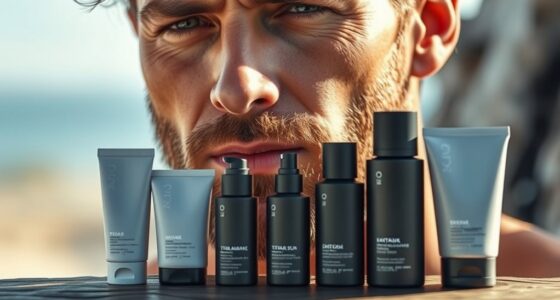
Men do need a different sun care approach because facial hair can block sunscreen application without proper attention, and oilier skin may cause products to slide off or become less effective. Men often have less structured routines, which can lead to missed or inadequate protection. Using suitable, oil-free, and fast-absorbing sunscreens tailored for your skin type can make a big difference. Discover more tips to guarantee your skin stays protected and healthy long-term.
Key Takeaways
- Men often have facial hair, requiring thorough sunscreen application around edges to prevent sunburns.
- Increased oil production in men’s skin can reduce sunscreen effectiveness, favoring oil-free, mattifying formulas.
- Men’s skincare routines are typically less structured, risking under-application and inadequate sun protection.
- Facial hair and oiliness in men influence how effectively sunscreens protect and stay in place.
- Tailoring sun protection to men’s skin characteristics ensures better long-term skin health and damage prevention.

When it comes to sun care, men and women often approach it differently, influenced by habits, skincare routines, and awareness levels. As a man, you might notice that facial hair impacts how you protect your skin from the sun. Facial hair can create shadows and uneven coverage, making it easier for UV rays to reach your skin. If you have a beard or stubble, you need to be more diligent about applying sunscreen thoroughly, especially around the edges where hair meets skin. Otherwise, those areas can become prone to sunburn or damage. Additionally, facial hair can trap sweat and oil, which can lead to clogged pores and breakouts if not cleaned properly. Regular cleansing and using a broad-spectrum sunscreen that suits your skin type are essential to prevent these issues.
Skin oiliness is another factor that influences your sun care routine. Men generally produce more sebum than women, which can make their skin appear shiny and greasy. This excess oil can create a barrier that seems to repel sunscreen, but in reality, it can cause products to slide off or become less effective. If your skin is oily, you might prefer oil-free or mattifying sunscreens that help control shine without clogging pores. You should also consider using lightweight formulas that absorb quickly and don’t feel heavy on your skin. Applying sunscreen as the final step in your morning routine guarantees that it forms a protective layer, even if your skin tends to produce more oil. Keep in mind that if you’re sweating or spending extended periods outdoors, reapplying sunscreen every two hours is vital for consistent protection.
Being aware of skin type differences can help you choose the most effective sun protection products. Men’s skincare habits tend to be less regimented compared to women, which can leave gaps in sun protection. If you’re not used to applying sunscreen daily, you might skip it altogether or not use enough, reducing its effectiveness. Being aware of these differences is key to developing a tailored sun care routine that works for you. Pay special attention to areas where facial hair might prevent even coverage and choose products formulated for oily skin. By understanding how facial hair and skin oiliness influence your sun protection needs, you can better prevent sun damage and keep your skin healthier in the long run. Remember, protecting your skin from UV rays isn’t just about avoiding sunburn; it’s about maintaining skin health and preventing premature aging, regardless of your gender.
Frequently Asked Questions
Do Men’s Skin React Differently to Sun Exposure Than Women’s Skin?
Your skin reacts differently to sun exposure depending on gender, mainly due to biological differences like skin thickness and hormonal factors. Gender-specific skincare considers these variations for better protection. Don’t fall for sun protection myths that suggest one-size-fits-all solutions; tailored approaches matter. Men might need different sun protection routines to prevent damage, so understanding these differences helps you choose the right products and habits for ideal skin health.
Are There Specific Ingredients Men Should Look for in Sun Protection?
Imagine your beard coverage trapping sweat and oil, making oil-based formulas ideal for your skin. When choosing sun protection, look for ingredients like zinc oxide or titanium dioxide for physical barriers, or antioxidants like vitamin C and E to combat free radicals. These ingredients help protect your skin effectively while considering your beard’s coverage. Avoid heavy, pore-clogging formulas, and opt for lightweight, breathable options tailored for men’s skin needs.
How Does Facial Hair Affect Sun Protection Effectiveness for Men?
Facial hair can impact sun protection effectiveness by creating uneven coverage. Beard coverage may block some UV rays, but exposed skin around your face remains vulnerable. To maximize facial hair protection, apply sunscreen thoroughly beneath your beard and on exposed areas. Keep in mind, facial hair doesn’t substitute sunscreen; it’s just a partial shield. Be diligent with your sun protection routine to ensure full coverage and reduce skin damage risk.
Should Men Use Different SPF Levels Than Women?
Imagine you’re planning outdoor activities, and SPF customization becomes essential. Men often have different skin types, like oilier or thicker skin, which may require higher SPF levels for effective protection. You should choose an SPF based on your skin’s needs, maintaining skincare consistency. While women might opt for lower SPF in daily routines, men may benefit from higher SPF during extended sun exposure to prevent damage.
Can Sun Care Routines Differ for Men With Different Skin Types?
You can definitely tailor your sun care routine based on your skin type. Different skin types require specific skincare product formulations to provide effective sun protection and prevent damage. For example, sensitive skin needs gentle, hypoallergenic formulas, while oily skin benefits from lightweight, non-comedogenic options. Adjust your sun protection habits accordingly to guarantee your routine provides ideal coverage and shields your skin from harmful rays.
Conclusion
As you venture into the sun, remember that everyone’s skin has its own story to tell. By choosing a gentle, tailored approach, you can keep your skin’s natural glow shining through the seasons. Think of it as nurturing a delicate garden—each seed needs just the right care. So, whether you’re a man or a woman, embracing the right sun care routine helps your skin stay vibrant and resilient, day after day.