TL;DR

Get beauty and skincare favorites delivered free — and shop member deals
- Fast, free delivery on millions of items
- Access to Prime Big Deal Days deals on October 6–7
- Prime Video, Amazon Music and more included
Dermaself used selfie-based AI skin analysis at a five-day Milan Beauty Week 2026 activation with Shaka Beauty Hotel and OVS. The company reported more than 2,600 completed analyses and used results to recommend products available through OVS, but the figures do not show whether recommendations led to purchases or better outcomes for shoppers.
Dermaself brought AI skin analysis into a multi-brand beauty retail setting during a five-day Milan Beauty Week 2026 activation with Shaka Beauty Hotel and OVS, linking visitors’ selfies to skincare recommendations from products available through the retailer. The company reported more than 2,600 completed analyses, offering an early measure of participation but not evidence that the service increased sales or improved skin outcomes.
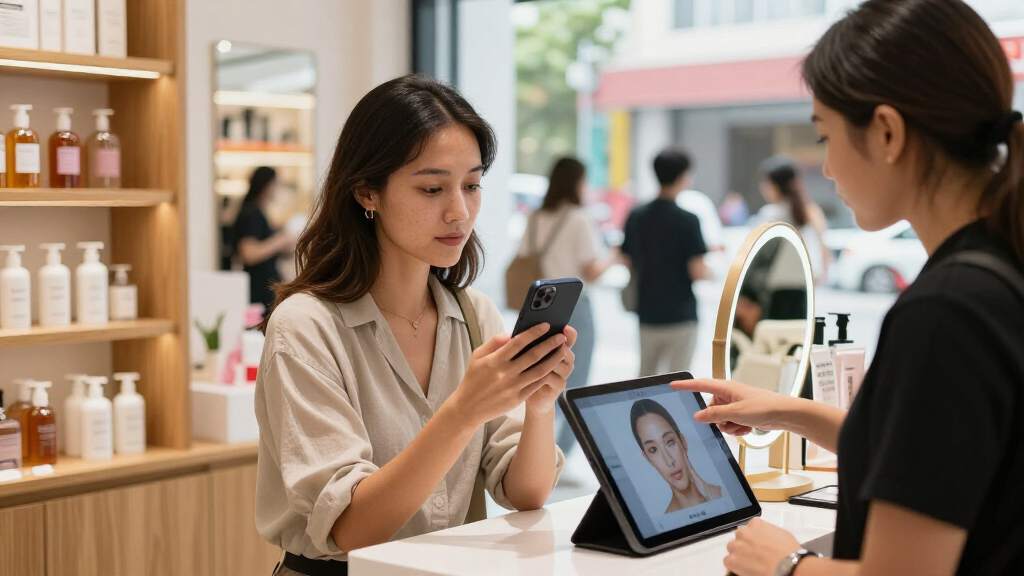
At the activation at Garden Senato in Milan, visitors took a selfie for an AI analysis of visible skin characteristics. The platform assessed parameters including blemishes, dark spots, wrinkles, pores, redness, hydration and skin laxity. Results were connected to skincare recommendations featuring products available through OVS, a multi-brand retailer.
According to the report, visitors could receive their suggested routine by email, along with a 20% discount on recommended products. The discount was redeemable at selected OVS stores in Milan. The activation featured 37 beauty brands; the report does not say how many products were recommended to each visitor or how recommendations were ranked.
The report gave three engagement figures for the five days: more than 2,600 completed analyses, a 75% completion rate and an average of one completed analysis every 55 seconds. These figures describe participation in the activation. No comparison with another retail experience, sales results or longer-term customer data was provided.
From Skin Data to Store Choices
The retail proposition is to use a shopper’s stated or detected skin needs as a starting point for navigating a large catalogue, rather than asking them to choose a brand first. Dermaself says its system connects visible skin analysis with ingredient information in product INCI lists, the standard ingredient declarations used on cosmetics. That could help a multi-brand retailer present relevant options across its assortment.
For customers, this model may make discovery feel more tailored, while for retailers it offers a way to connect digital recommendations with store inventory and consultations. The Milan activation also joined an online step—receiving a routine by email—to a discount redeemable at selected physical shops. However, the reported completion numbers alone do not establish whether shoppers found the suggestions useful, bought the products or returned to the service.
The distinction matters because a skin analysis is not the same as a clinical assessment. The source describes analysis of visible characteristics from a selfie and product matching; it does not establish that the tool diagnoses skin conditions or verifies how well a product will work for a particular person.
As an affiliate, we earn on qualifying purchases.
A Retail Test Across 37 Brands
Beauty retailers are managing increasingly specialised skincare ranges, while shoppers may find it difficult to compare products across brands, categories and formulations. The report frames AI skin analysis as a possible way to narrow that choice by connecting visible skin characteristics to ingredient information and a retailer’s existing catalogue.
Dermaself’s described process runs from selfie to analysis to ingredient matching, then to a recommended routine. The Milan event put that sequence into a temporary, in-person retail experience. The report also describes possible uses beyond events, including retailer e-commerce, QR codes, tablets, smart mirrors and tools for beauty advisers during consultations. Those are potential formats, not deployments confirmed by the event figures.
Engagement Is Not Purchase Proof
The reported numbers do not clarify how the 75% completion rate was calculated, including how many people began an analysis or how completion was defined. The report also gives no breakdown by age, skin type, brand or recommendation, and does not state how many recipients used the discount or purchased a recommended product.
Other unanswered questions include how the platform handles image quality, lighting and differences in skin tone, and how selfie data is stored, retained or shared. The report does not describe validation of the analysis or provide evidence that recommendations outperform other ways of finding skincare. Its figures are attributed to the activation, rather than independently audited results.
Testing Beyond the Milan Event
The source does not announce a follow-up event, a wider OVS rollout or a timetable for adding the tool to e-commerce. The next evidence to watch for is whether the retailer or Dermaself publishes results on discount redemption, product sales, customer feedback and repeat use, alongside clearer information about the analysis and data practices.
If the service moves into permanent online or store settings, retailers will need to explain how recommendations are generated and what limits apply to selfie-based assessments. For now, the Milan activation shows that a multi-brand retailer can connect a short digital analysis with product suggestions and a store offer; whether that translates into sustained shopping value remains unreported.
Key Questions
What happened at the Milan Beauty Week activation?
Dermaself, Shaka Beauty Hotel and OVS ran a five-day experience at Garden Senato. Visitors could receive a selfie-based analysis of visible skin characteristics and skincare recommendations featuring products available through OVS.
How many people completed an analysis?
The report said the activation recorded more than 2,600 completed analyses and a 75% completion rate. It did not explain the completion-rate calculation or provide a comparison with another event.
How were products matched to visitors?
According to the report, Dermaself connects its analysis of visible skin characteristics with product ingredient information, including INCI lists, to identify relevant products in a retailer’s catalogue. The report does not provide the matching criteria in detail.
Does the activation show that AI recommendations increased sales?
No sales impact was reported. Visitors could receive a routine by email and a 20% discount on recommended products at selected OVS stores in Milan, but the source does not say how many used the offer or made a purchase.
Can selfie-based AI analysis diagnose a skin condition?
The source describes analysis of visible skin characteristics for product recommendations, not medical diagnosis. It provides no evidence that the tool diagnoses conditions or replaces advice from a qualified health professional.
Source: rss
Halloween Picks
halloween
As an affiliate, we earn on qualifying purchases.