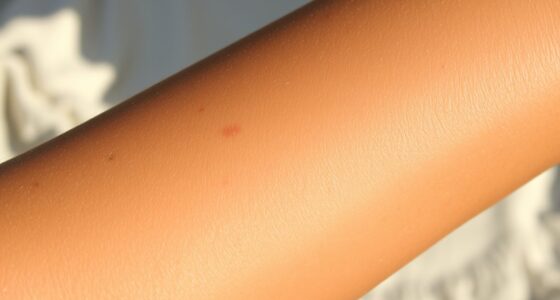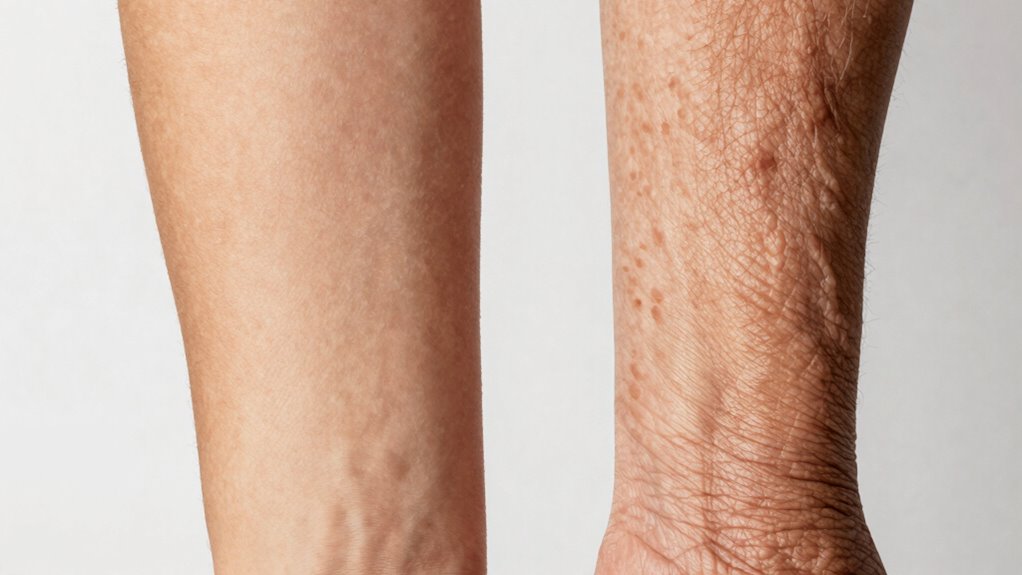
As you age, your tanned skin becomes less firm, more textured, and prone to pigmentation issues like age spots and uneven tone. Repeated sun exposure accelerates the breakdown of collagen and elastin, leading to sagging and wrinkles. Over time, your skin’s protective barrier weakens, making it more vulnerable to damage. For details on how to protect and maintain youthful skin, keep exploring what the experts recommend.
Key Takeaways
- Tanned skin shows more pronounced signs of aging due to loss of elasticity and increased fine lines.
- Sun-induced collagen breakdown accelerates skin sagging and wrinkling over time.
- Age spots and uneven pigmentation become more noticeable on tanned skin.
- The skin’s ability to recover from damage diminishes, leading to rougher texture.
- Protective barrier weakness makes aged, tanned skin more prone to irritation and further damage.
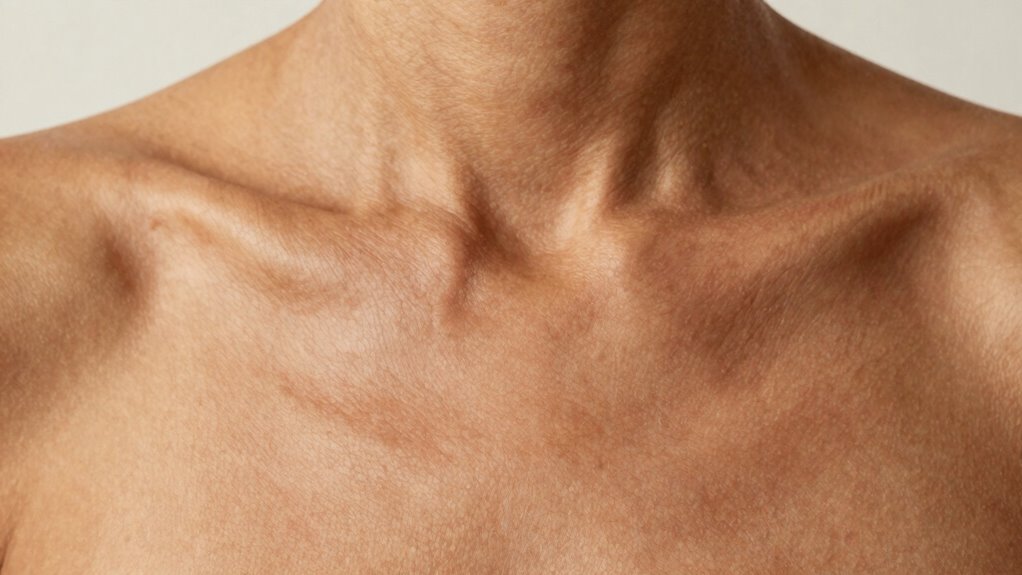
As you age, your skin’s appearance and texture naturally change, and this process is especially noticeable in tanned skin. When you spend time in the sun, your skin produces more melanin, which gives you that bronzed glow. But over the years, repeated sun exposure can take a toll, causing your skin to lose its youthful firmness and become more fragile. The more you’ve tanned over time, the more these changes become apparent, especially as your skin’s elasticity begins to decline.
Sun exposure accelerates the breakdown of collagen and elastin, the proteins responsible for keeping your skin firm and supple. When these fibers weaken, your skin starts to sag and develop fine lines or wrinkles, which are particularly visible in areas where you’ve tanned regularly. Tanned skin, which initially appears smooth and vibrant, can become dull, rough, and less resilient as you age. You might notice that your skin doesn’t bounce back as quickly after stretching or pinching, a clear sign that its elasticity has diminished. As a result, the cumulative effects of sun exposure can lead to more pronounced signs of aging, especially in tanned skin.
Furthermore, the cumulative effects of sun exposure cause age spots, uneven pigmentation, and a rougher texture. Tanned skin often appears more prone to these issues because the melanin response to UV rays is heightened, leading to hyperpigmentation. Over time, the protective barrier of your skin weakens, increasing your vulnerability to further sun damage and making your skin more sensitive and prone to irritation. This weakening of the skin’s defenses is also linked to a decline in skin barrier function, which plays a crucial role in maintaining skin health. With less elasticity, your skin struggles to recover from daily stressors, which results in a less youthful appearance overall. Protecting your skin from further UV damage through proper sunscreen use can help slow these aging processes.
If you don’t take steps to protect your skin, the effects become more pronounced. The loss of elasticity not only impacts your skin’s appearance but also its function. You may find that your skin feels drier and less smooth, and fine lines deepen into wrinkles. The damage caused by sun exposure is cumulative, meaning that the more you’ve tanned without protection, the more noticeable these changes become as you age. Incorporating skincare ingredients like glycolic acid can support renewal and help counteract some of these effects. Additionally, understanding the role of antioxidants in protecting skin cells from oxidative stress can be beneficial in your skincare routine.

Bio Mimic Foundation Light Spectrum by Forever Bloom; Hydrating, Anti-Aging, Concealing, Evening skin tone, Protecting from Sun with SPF50; Lifestyle Lightweight Foundation for Gym, Sports, Dancing
BEST FULL COVERAGE FOUNDATION MAKEUP; This WATERPROOF moisturizing light foundation Instantly mimics your skin tone and creates a…
As an affiliate, we earn on qualifying purchases.
As an affiliate, we earn on qualifying purchases.
Frequently Asked Questions
Can Tanning Accelerate Skin Aging?
Yes, tanning can accelerate skin aging. Whether you choose sunless tanning or aim for a natural glow, exposing your skin to UV rays damages collagen and elastin, leading to wrinkles and sagging over time. Sunless tanning products offer a safer alternative, helping you achieve a youthful, bronzed look without harmful UV exposure. Protect your skin to maintain its firmness and youthful appearance longer.
Does Tanning Affect Skin Cancer Risk Over Time?
Tanning increases your skin cancer risk over time, with about 1 in 3 Americans developing skin cancer. Tanning bed risks are especially high, doubling your chances of melanoma. Regular sunburn prevention helps reduce this danger, but tanning accelerates DNA damage. Even if you tan naturally, frequent exposure can lead to mutations that raise your risk. Protect your skin to enjoy a healthier, youthful glow without compromising your safety.
How Does Sun Exposure Impact Skin Elasticity?
Sun exposure causes your skin’s elasticity to decline by accelerating collagen breakdown. Over time, UV rays damage skin pigmentation, leading to uneven tone and sagging. This process weakens the skin’s structure, making it less firm and more prone to wrinkles. By protecting your skin from excessive sun, you help preserve collagen and maintain better elasticity, keeping your skin looking youthful and resilient longer.
Can Tanning Cause Permanent Skin Damage?
Yes, tanning can cause permanent skin damage. Cosmetic tanning and indoor tanning expose your skin to UV rays, which can lead to DNA damage, premature aging, and increased skin cancer risk. Even if the damage isn’t visible right away, it accumulates over time. Protect your skin by avoiding excessive tanning, opting for safer alternatives like self-tanners, and always wearing broad-spectrum sunscreen when outdoors.
Is There a Safe Way to Maintain a Tanned Look?
A stitch in time saves nine—so, the safest way to maintain a tanned look is through natural or artificial tanning products. While natural tanning involves sun exposure, it risks skin damage. Artificial options like self-tanners provide a safer, consistent glow without harmful UV rays. Remember, moderation is key, and always choose products with skin-friendly ingredients to protect your skin’s health and appearance.

Anti-Aging Face Moisturizer for Face, Face Moisturizer with SPF, Collagen, Retinol, Hyaluronic Acid Cream, Age-Defying, Lift & Firm Cream, Sunscreen for Face, Lotion, Great for Dry, Aging Skin 1.7oz
[ FACE MOISTURIZER WITH SPF ] Moisturizer with SPF for women, face sunscreen lotion that hydrates skin, visibly…
As an affiliate, we earn on qualifying purchases.
As an affiliate, we earn on qualifying purchases.
Conclusion
As you age, your once radiant tan fades like a sunset slipping below the horizon, leaving behind the story of time etched into your skin. The glow of youth may dim, but each wrinkle and line becomes a chapter, whispering tales of sunlit days gone by. Embrace these changes as your skin’s own poetry—beautiful, unique, and a proof of the journey you’ve traveled. After all, your skin’s story is as timeless as the stars in the night sky.

ForestLeaf Multi Collagen Pills with Hyaluronic Acid + Vitamin C | Hydrolyzed Collagen Supplements for Women or Men | Multi Collagen Capsules Peptides for Skin, Wrinkles, 120 Caps
HYDRATE HAIR, SKIN & NAILS – Collagen is the main protein that gives our skin elasticity. Our unique…
As an affiliate, we earn on qualifying purchases.
As an affiliate, we earn on qualifying purchases.

Palmer's Cocoa Butter Formula Eventone Fade Cream, Anti-Dark Spot Fade Cream with Vitamin E and Niacinamide, Helps Reduce Dark Spots & Age Spots, 2.7 Ounce
Face Cream: This cocoa butter lightening cream targets dark spots, age spots, uneven skin tone and discoloration while…
As an affiliate, we earn on qualifying purchases.
As an affiliate, we earn on qualifying purchases.