Engaging in tanning culture for the long term can distort how you see yourself, making natural skin and features seem less attractive. You might rely more on external validation, which can lead to feelings of insecurity and lowered self-esteem. Over time, this focus on appearance can cause body image issues, making you less appreciative of your authentic self. If you want to learn how these habits impact your mental health, keep exploring further.
Key Takeaways
- Tanning culture can distort self-perception, leading to long-term body image issues and diminished self-esteem.
- Reliance on external validation from tanning reinforces insecurities and hampers authentic self-acceptance.
- Persistent focus on external appearance shifts attention away from appreciating natural beauty.
- Long-term tanning behaviors may cause emotional dependence on societal beauty standards.
- Continued pursuit of tanned skin can result in emotional distress and decreased overall mental well-being.
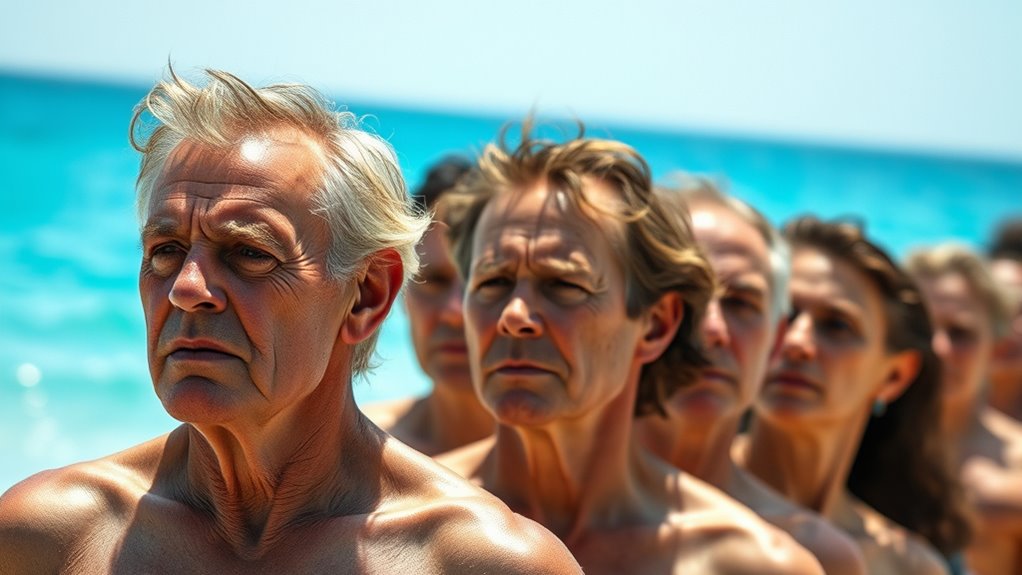
Many people seek a tanned appearance because it boosts their confidence and aligns with societal standards of beauty. However, this pursuit often comes with underlying psychological effects that can last long after the tan fades. One significant area affected is your body image. When you constantly chase the perfect tan, you might develop body image issues, feeling dissatisfied with your natural skin tone or appearance. This dissatisfaction can lead to a distorted perception of yourself, where you focus more on imperfections or perceived flaws rather than your true self. The desire for a tan becomes a way to mask insecurities, but it can also reinforce feelings of inadequacy if you’re unable to achieve or maintain that ideal look. Over time, this cycle can deepen your dissatisfaction with your body, making you rely more heavily on tanning to feel better about yourself.
Social comparison plays a *vital* role in the long-term psychological effects of tanning culture. When you compare yourself to others who have tanned skin, especially on social media or in advertising, it’s easy to fall into the trap of thinking your natural skin isn’t good enough. You might notice images of people with bronzed skin and believe that they’re more attractive, confident, or successful, which pushes you to emulate those traits through tanning. As a result, you measure your worth against external standards that are often unrealistic or manipulated. This constant comparison can erode your self-esteem, making you feel less satisfied with who you are naturally. It also fosters a belief that your value depends on conforming to these beauty ideals, which are often promoted by a society obsessed with youthful, tanned appearances.
Over time, these psychological pressures contribute to a cycle of validation-seeking behaviors. You might spend more time and money on tanning sessions or products, reinforcing the idea that your natural skin isn’t enough. This not only affects your mental health but can also lead to risky behaviors, such as excessive sun exposure or tanning bed use, which carry their own health consequences. The more you associate your self-worth with external appearances, the harder it becomes to accept yourself authentically. Ultimately, the long-term psychological effects of tanning culture can diminish your self-confidence and create an ongoing struggle with body image, making it difficult to appreciate your natural beauty and unique features.

Self-Esteem: A Proven Program of Cognitive Techniques for Assessing, Improving, and Maintaining Your Self-Esteem
As an affiliate, we earn on qualifying purchases.
As an affiliate, we earn on qualifying purchases.
Frequently Asked Questions
How Does Tanning Culture Influence Body Image Perceptions Long-Term?
Tanning culture influences your body image perceptions long-term by reinforcing a color obsession that equates tanned skin with beauty and confidence. You may start to believe that a darker hue boosts your skin confidence, leading to frequent tanning and dissatisfaction with natural skin tones. Over time, this obsession can cause negative self-esteem issues, making you feel less attractive without a tan and perpetuating unrealistic beauty standards.
Are There Generational Differences in Psychological Impacts of Tanning?
Yes, there are intergenerational differences in the psychological impacts of tanning. Younger generations often embrace tanning for beauty and social acceptance, which can lead to greater pressure and anxiety. Older generations might view tanning more critically, fostering resilience against such pressures. Your attitudes are shaped by these differing perspectives, influencing your psychological resilience and how you cope with societal standards around appearance. Recognizing these differences can help you develop healthier body image perceptions.
What Role Does Social Media Play in Shaping Tanning-Related Body Ideals?
You’re often influenced by social media’s shimmering allure, where influencer marketing promotes idealized tanning bodies. Virtual reality adds to this fantasy, immersing you in perfect sun-kissed images that seem attainable. This digital environment subtly shapes your perceptions of beauty, encouraging you to chase a bronzed look. As you scroll, you might find yourself more focused on fitting into these shimmering standards, affecting your self-esteem and body image over time.
Can Tanning Addiction Develop Into a Psychological Dependency?
Yes, tanning addiction can develop into a psychological dependency. You might find yourself developing behavioral dependence, feeling compelled to tan despite the risks. An emotional attachment to the tanning experience can reinforce this cycle, making it harder to break free. Over time, your desire to maintain that sense of beauty or relaxation can deepen, leading you to rely on tanning as a coping mechanism or source of self-esteem.
How Does Tanning Culture Affect Self-Esteem Beyond Physical Appearance?
You might feel a rush of confidence when you see a sun-kissed glow, but peer pressure and societal standards push you to chase that perfect tan. Beyond looks, tanning becomes a way to fit in, boosting self-esteem temporarily. Yet, this reliance on appearance can mask deeper insecurities, creating a cycle where external validation becomes more important than inner confidence. The glow may fade, but the psychological effects linger.

Perfect Image Gly + Sal Exfoliating Body Lotion, 8% Glycolic Acid and 2% Salicylic Acid Lotion Enhanced with Green Tea, Papaya, Bearberry, Licorice and Amino Complex
MULTI-PURPOSE – body care designed for arms, legs, back, elbows, knees, and other areas where smoother-looking skin is…
As an affiliate, we earn on qualifying purchases.
As an affiliate, we earn on qualifying purchases.
Conclusion
As you reflect on tanning culture, remember it’s like chasing a mirage—you think you’ll find happiness in that perfect glow, but it’s fleeting. Studies show those obsessed with tanning often grapple with anxiety and body dissatisfaction long after the tan fades. Imagine a sunflower constantly turning toward the sun, but never truly feeling warm inside. Recognizing this cycle can help you break free, choosing health and authenticity over fleeting appearances. Your well-being should always shine brighter than any tan.

Natural Skin Care with Essential Oils: 30 Best Anti-Aging Homemade Products: (Healthy Skin Care, Homemade Skin Care) (Natural Beauty Book)
As an affiliate, we earn on qualifying purchases.
As an affiliate, we earn on qualifying purchases.

Beauty by Earth Self Tanner – USA Made with Natural & Organic Ingredients, Moisturizing Self Tanning Lotion with Aloe Vera & Coconut for a Natural Glow, Streak-Free Fake Tan, Medium to Dark
A NATURAL, SUN-KISSED GLOW: Goodbye to orange hues and hello to a natural-looking tan. Our bronzing tanning lotion…
As an affiliate, we earn on qualifying purchases.
As an affiliate, we earn on qualifying purchases.