When sunlight hits your skin, it activates cells called melanocytes to produce melanin, which is influenced by your genetic makeup. Your genes determine how quickly and how much melanin you produce in response to UV exposure, shaping your skin’s color and protection level. Sunlight can also impact how your genes regulate melanin production over time, leading to changes like tanning, freckles, or dark spots. To understand the full picture of how your genes and sunlight interact, keep exploring further.
Key Takeaways
- Sunlight activates melanocytes, increasing melanin production regulated by pigmentation genes.
- UV exposure influences gene expression related to melanin synthesis and skin pigmentation.
- Genetic variants determine individual skin’s response to sunlight, affecting tanning and pigmentation changes.
- Sunlight-induced DNA damage triggers genetic pathways involved in skin repair and pigmentation regulation.
- Repeated UV exposure can lead to long-term genetic effects, like freckles, sunspots, and uneven skin tone.
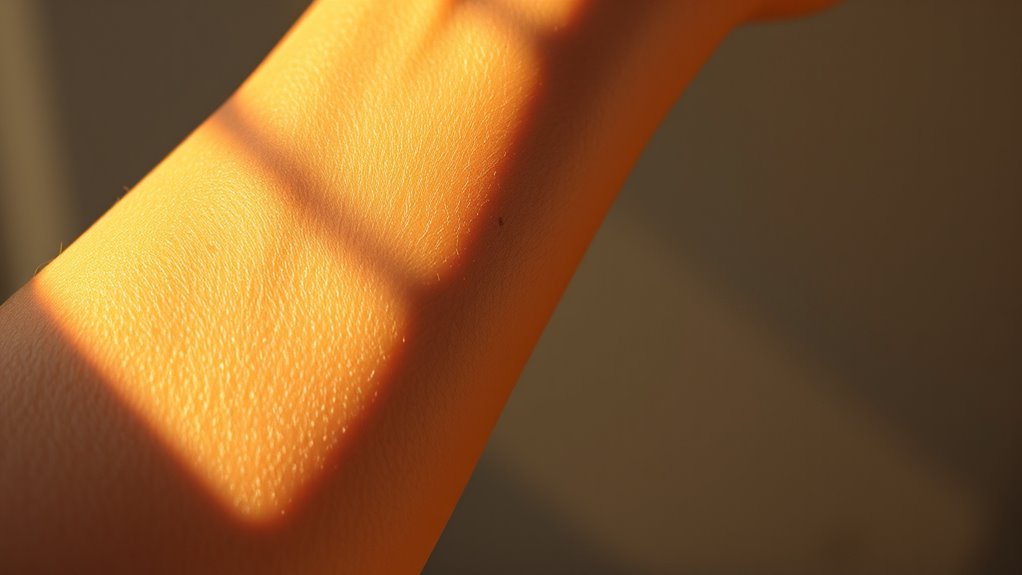
Sunlight plays a pivotal role in shaping your skin’s pigmentation, driven by the complex interaction between environmental factors and your genetic makeup. When your skin is exposed to sunlight, particularly ultraviolet (UV) radiation, it triggers a series of biological responses that influence your pigmentation levels. UV radiation penetrates the skin and activates cells called melanocytes, which are responsible for producing melanin—the pigment that gives your skin its color. The process of melanin synthesis is a protective mechanism, helping to shield your deeper skin layers from the damaging effects of UV rays. As UV radiation increases, your body responds by producing more melanin, resulting in a darker skin tone or a suntan. Conversely, reduced exposure leads to less melanin production and lighter skin.
Your genetic makeup plays a significant role in determining how your skin responds to UV radiation. Certain genes regulate the activity of melanocytes, influencing how much melanin you produce and how quickly your skin can adapt to changing sunlight levels. For example, some individuals have gene variants that promote higher baseline melanin production, giving them naturally darker skin that offers more protection against UV damage. Others carry variants that result in lower melanin levels, making their skin more vulnerable to sunburns and long-term damage. Your genes also influence how efficiently your body can repair UV-induced DNA damage, further shaping your skin’s response to sunlight. Additionally, melanin production itself can vary based on genetic factors, impacting overall skin pigmentation.
Your genes determine melanin levels and skin’s ability to repair UV damage, shaping your response to sunlight.
The interaction between UV radiation and your genetic predisposition can lead to a wide range of skin pigmentation outcomes. For some, exposure to sunlight results in a rapid increase in melanin synthesis, leading to a noticeable tan. For others, the same exposure might cause minimal pigmentation change due to genetic factors that limit melanin production or accelerate its breakdown. Over time, repeated UV exposure can cause lasting changes in your skin’s pigmentation, including sunspots, freckles, or uneven tone, which are influenced by how your genes regulate melanin distribution and degradation.
Understanding how sunlight influences your skin pigmentation genes underscores the importance of protecting your skin from excessive UV radiation. While your genetics set the baseline for your skin’s response, limiting direct sun exposure and using protective measures like sunscreen can help prevent damage and unwanted pigmentation changes. Recognizing this delicate interplay helps you appreciate the biological complexity behind your skin’s color and the importance of safeguarding it against UV harm.

Blue Lizard Sensitive Mineral SPF 50 Sunscreen Lotion, 100% Mineral Sunscreen, UVA/UVB Protection, Infused with organic Aloe Vera, Soothes and Hydrates, 5 fl oz
POWERFUL MINERAL SUNSCREEN – Protect sensitive skin from the sun’s harmful rays with Blue Lizard Sensitive Mineral SPF…
As an affiliate, we earn on qualifying purchases.
As an affiliate, we earn on qualifying purchases.
Frequently Asked Questions
Can Skin Pigmentation Genes Be Inherited From Grandparents?
Yes, you can inherit skin pigmentation genes from your grandparents. Genetic inheritance passes pigmentation genetics through multiple generations, so your grandparents contribute to your skin color. These genes influence melanin production and distribution, which determine your pigmentation. While sunlight can affect how these genes express, your inherited genetics from grandparents play a significant role in your natural skin tone. So, your grandparents’ genetics shape your pigmentation just as your parents’ do.
Do All Skin Types Respond Equally to Sunlight Exposure?
You might think everyone responds to sunlight the same way, but that’s far from true. Ironically, your skin’s melanin production and UV response vary wildly; some tan easily, while others burn or hardly change. This difference means your skin type influences how much UV exposure affects pigmentation. So, don’t assume your friend’s sun experience mirrors yours—your skin’s unique response shapes your sun safety needs entirely.
How Quickly Do Skin Pigmentation Genes Adapt to Changing Sunlight Levels?
Your skin’s pigmentation genes respond to changing sunlight levels within days through gene expression adjustments. These adaptations involve epigenetic changes, which modify how genes are turned on or off without altering DNA itself. As you’re exposed to more sunlight, your skin quickly increases melanin production, leading to a darker tone. Conversely, reduced exposure prompts a decrease, showing how dynamic and rapid your skin’s genetic response can be in adapting to environmental changes.
Are There Genetic Differences in Sunlight Sensitivity Across Populations?
You have genetic variation that influences how sensitive your skin is to sunlight, and these differences are shaped by evolutionary adaptation. Populations from regions with intense sunlight tend to have genes favoring darker skin, protecting against UV damage. Conversely, those from areas with less sunlight often have lighter skin, aiding vitamin D production. These genetic differences reflect long-term adaptations to local environmental conditions, impacting how your skin responds to sunlight.
Can Skin Pigmentation Genes Influence Vitamin D Production?
Imagine sunlight as nature’s gift, shaping your health in profound ways. Your skin pigmentation genes directly influence Vitamin D synthesis; darker skin, with more melanin, acts like a natural sunscreen, reducing Vitamin D production. Conversely, lighter skin allows more UV rays to trigger synthesis. This genetic influence highlights how your DNA determines your body’s ability to produce essential Vitamin D, making it crucial to balance sun exposure for ideal health.

MAGCOMSEN Sun Protection Shirts for Women Long Sleeve UV Lightweight Moisture Wicking Summer T Shirt for Running Workout
Polyester Material, Lightweight, Quick Dry, Moisture Wickingand Comfortable
As an affiliate, we earn on qualifying purchases.
As an affiliate, we earn on qualifying purchases.
Conclusion
You now see how sunlight plays a vital role in influencing your skin pigmentation genes. It’s clear that exposure can either brighten or darken your skin, depending on your genetics. Remember, understanding this connection helps you make smarter choices about sun safety. Don’t let the opportunity slip through your fingers—being aware of how sunlight affects you means you can better protect your skin and embrace your natural beauty. Stay informed and keep your skin happy!

Tan Optimizer Plus+ – Sugar-Free Tanning & Skin Health Supplement with Beta Carotene, L-Tyrosine, Collagen & Antioxidants for Radiant Skin & Immune Support – 30 Capsules
SUGAR-FREE and CLEAN FORMULA – Unlike sugar-packed tanning gummies, our filler-free capsules deliver pure, potent skin-enhancing nutrients without…
As an affiliate, we earn on qualifying purchases.
As an affiliate, we earn on qualifying purchases.

Banana Boat Moisturizing After Sun Lotion with Aloe and Vitamin E, 16Fl Oz, After Sun Care, Banana Boat After Sun Lotion, Sunburn Relief, 16Fl Oz
MADE WITH ALOE–Moisturizing lotion provides sunburn relief and helps preserve your tan
As an affiliate, we earn on qualifying purchases.
As an affiliate, we earn on qualifying purchases.